IMAGE VIA FACEBOOK
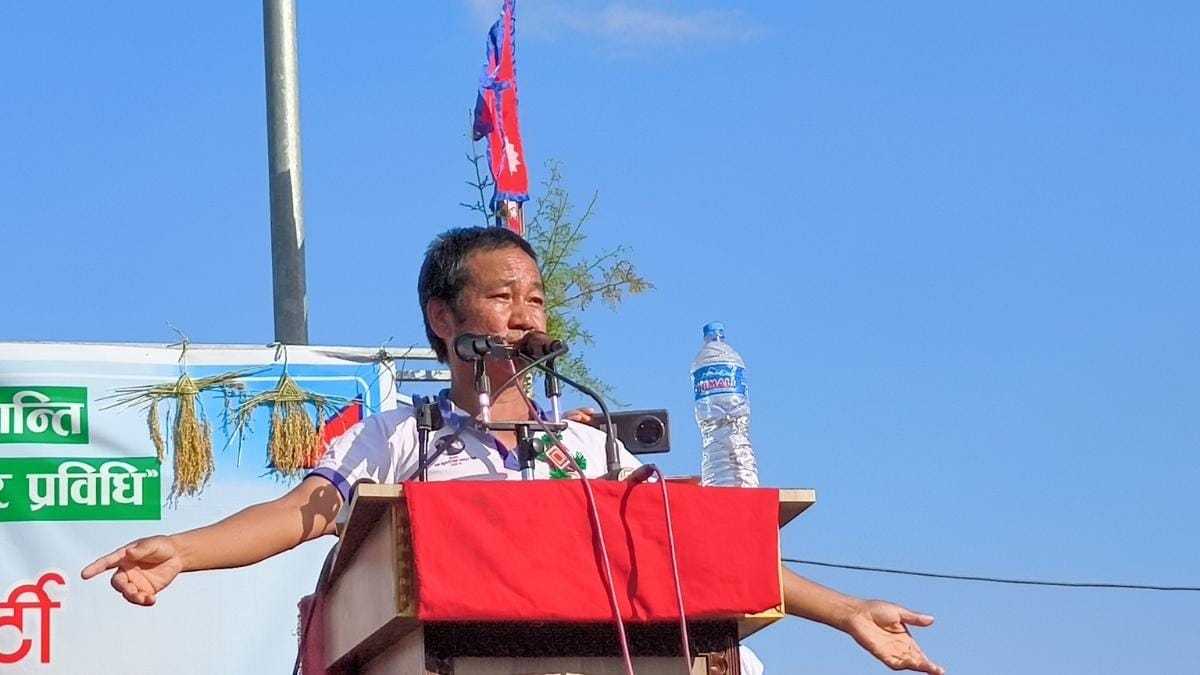
FROM A hillside in eastern Nepal, you can witness a certain kind of miracle. Volunteers from across the community—students, shopkeepers, retired soldiers—are digging trenches and laying pipes to mend a broken water supply. They are unpaid, fuelled by rice and a sense of shared purpose. Their leader, Harka Sampang, an ascendant political force campaigning to become prime minister, walks among them. He sees in this sweat and solidarity the model for an entire nation. This, he declares in village squares and at political rallies, is the “shram sanskriti”—the culture of labour—that will finally bring Nepal true sovereignty and prosperity.
It is a powerful, romantic image. It is also a dangerous illusion. If Mr Sampang’s vision becomes policy, it will not herald a new dawn for Nepal. It will usher in an economic ice age.
The appeal is easy to grasp. Nepal is sick of being a client state, defined by the billions in aid that flow in and the millions of young people who flow out. Its politics are messy, its institutions corrupt. Mr Sampang’s promise is to cut through all that. He offers a politics of purity: banish the foreign NGOs and development partners, distrust the Western-educated technocrats, rely instead on the collective moral will and muscle of the Nepali people. His doctrine, “Harkavād”, elevates self-reliance from a tactic to a theology. The trouble is, this is not a development strategy. It is an aesthetic pose. And mistaking one for the other would condemn Nepal to permanent stagnation. Harkavād is best understood as “autarkic developmental romanticism”.
Look past the calluses and consider the calculus. Modern economies do not grow primarily by working harder. They grow by working smarter. The engine of long-term prosperity is total factor productivity—a wonky term for a simple truth: it is ideas, technology and know-how that let you get more from less. You can think of it as the magic ingredient—the innovation that lets one farmer with a tractor out-produce a hundred with hoes. South Korea did not claw its way from poverty by doubling down on manual labour in rice fields. It did so by deliberately absorbing foreign technology, educating its people brutally well and pushing into global markets. The sweat was necessary, but it was the synapses that made the difference.
Mr Sampang’s philosophy reduces development to a dumb equation of hours worked. It is a pre-industrial mindset for a post-industrial age. The Soviet Union mobilised oceans of sweat and mountains of capital; yet it collapsed because its closed system bred technological stagnation and grotesque inefficiency.
More troubling still is his open disdain for the nation’s greatest hope: hydropower. At one rally in the eastern hills he declared that “we don’t need electricity”. Yet every sensible planner’s ambition is for Nepal to become the “green battery of South Asia”, selling clean power to energy-starved India and Bangladesh. Building large, efficient hydro plants means you need specialised foreign technology, as well as international finance and binding export contracts. It is a game of complex diplomacy and deep capital markets. Mr Sampang’s isolationist instinct would leave Nepal capable of little more than small run-of-river projects—a fraction of the potential, condemning the country to keep buying dear power from neighbours rather than selling it.
The same autarkic logic runs through his thinking elsewhere. Consider his wish to foster a digital economy while shunning global links. This is nonsense. Tech ecosystems thrive on openness: on venture capital that ignores borders, on cloud infrastructure hosted continents away, on the constant, churning exchange of talent and code. Cut Nepal off from that to preserve some notion of digital sovereignty, and you do not get innovation. You get a digital backwater. The very programmers or inventors he hopes will build the future will instead book one-way tickets to Dubai or Berlin.
Then there is the human cost. Banning international NGOs and development agencies, as Mr Sampang threatens, would not be a bold stroke of sovereignty. It would be an act of self-sabotage. These groups provide essential services to millions of Nepalis, from health care and sanitation to disaster relief. More subtly, they are filaments in a global web of knowledge: on climate adaptation, public-health practice, agricultural science and so on. Severing them would not make Nepal stronger. It would make it ignorant and more vulnerable.
This is the autarkic trap. By defining all foreign engagement as a threat to purity, you ensure you have nothing of value to engage with. You confuse the tools of development—foreign capital, technical partnerships—for the causes of dependency. The result is not strength, as his supporters might assume, but a brittle fragility. Nepal’s economy would rely entirely on remittances from those citizens smart enough to leave, while those who stay grind away in noble, back-breaking poverty. This is not a future. It is a museum.
There is an alternative path, but it means ditching the romance for some hard-nosed pragmatism. Nepal does not need less engagement with the world: it needs smarter, more strategic engagement. The goal should be to move from aid to trade and from receiving technical assistance to absorbing and improving upon technology. That means creating a state that is competent rather than pure, one that can negotiate tough deals with foreign investors to ensure technology transfer, that can regulate NGOs to meet national goals without chasing them away, that invests ferociously in education and research to build its own stock of ideas.
It also means playing to genuine strengths. Nepal will not be a manufacturing giant overnight. But it could be a hub for sustainable tourism, for niche high-value agriculture, for specialised IT services. This does not call for grand, top-down schemes. It demands getting the basics relentlessly right: clearing the bureaucratic thicket that strangles business; ensuring the lights stay on; and making the courts honest and swift. It is less glamorous than a revolution of the callus. But it works.
Mr Sampang channels a real and justified frustration. The post-civil-war order in Nepal has been corrupt and disappointing. His vision of community and dignity resonates. But he provides a solution that is a mirror image of the problem: where the current system is open but corrupt, he offers a system that would be pure but closed. Nepal needs neither. It needs openness with integrity, as well as pride without prejudice and sweat guided by synapses. The volunteers on that hillside deserve a future where their children fix code not just pipes. ■