Image: Tyrone Siu/Reuters
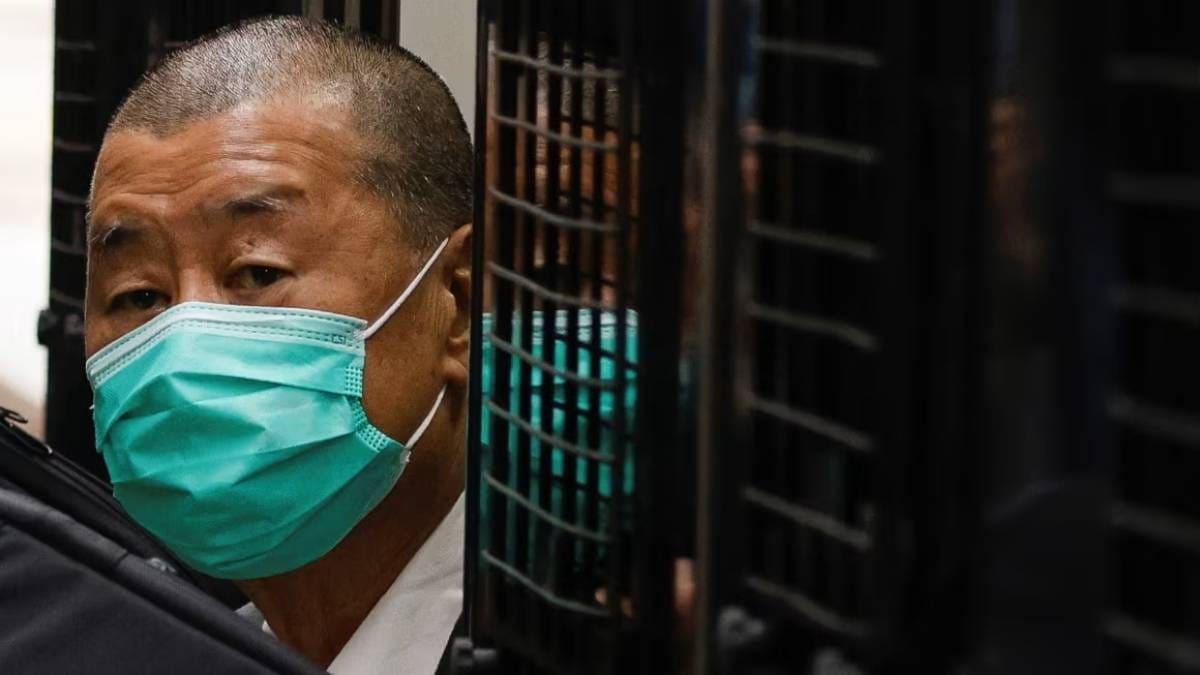
On December 15th a predictable drama reached its finale. Three handpicked national-security judges found Hong Kong’s Jimmy Lai, a 78-year-old media baron and pro-democracy agitator, guilty of conspiring to collude with foreign forces and publishing seditious material. The trial had dragged on for 156 days; the verdict took only moments. Mr Lai, who has already spent four years in custody, now faces the prospect of dying behind bars.
For the government in Beijing and its proxies in Hong Kong, the conviction is a triumph of order over chaos. For the city’s dwindling band of liberals, it is the tombstone on the grave of a free press.
The outcome was never truly in doubt. Since Beijing imposed a draconian national security law on the territory in 2020, the conviction rate in such cases has hovered near 100%. The proceedings were a demonstration of sovereign power rather than an inquiry into truth. Yet to treat Mr Lai merely as a defendant is to miss the point. He is a metaphor. His life story tracks the trajectory of Hong Kong itself: a scrappy ascent from poverty to riches, a golden age of freewheeling liberty and finally a collision with an authoritarian state that prizes obedience above all else.
Mr Lai’s biography reads like a fable of the rampant capitalism that once defined the city. He arrived in Hong Kong in 1960 as a 12-year-old stowaway from mainland China, fleeing the famine and madness of the Mao era. He worked on factory floors, taught himself English and eventually founded Giordano, a clothing retailer that became ubiquitous across Asia. For decades he was the archetype of the “Hong Kong dream”: a man who believed that if you worked hard and kept your head down, the colonial government would leave you alone to count your money.
But the Tiananmen Square massacre of 1989 changed the calculus. Mr Lai concluded that economic freedom could not endure without political liberty. Whereas other tycoons bought insurance by courting Communist Party cadres, Mr Lai bought a printing press. He founded Next Magazine and, in 1995, Apple Daily. The newspaper was a raucous, populist tabloid that mixed celebrity gossip with ferocious criticism of the Chinese leadership. It was often sensationalist but it was undeniably popular. It gave voice to a distinct Hong Kong identity: Cantonese, cosmopolitan and defiant.
For a long time the existence of such a paper was cited as proof that “one country, two systems”—the formula under which Britain returned Hong Kong to China in 1997—was working. The city was part of China yet apart from it. But as Beijing’s patience with Hong Kong’s unruliness waned, particularly after the massive, occasionally violent protests of 2019, Mr Lai’s position became untenable. The authorities viewed him as a “black hand” orchestrating unrest and inviting American interference.
The specific charges against him centred on these international connections. Prosecutors presented his meetings with foreign officials, such as Mike Pence when he was America’s vice-president, and his calls for sanctions on Chinese officials, as criminal conspiracies. Under the old common law, lobbying is politics; under the national security law it is a crime. The prosecution did not need to prove that Mr Lai’s actions caused actual harm to national security, only that he intended to undermine the state. That the trial was conducted without a jury—a departure from Hong Kong’s 179-year legal tradition—ensured the technicalities of the law would be interpreted with the requisite severity.
Critics of the trial point out the retroactive moral logic at play. Mr Lai was essentially prosecuted for behaviour that was legal, or at least tolerated, at the time he committed it. He was operating under the assumptions of the old Hong Kong, where meeting a foreign diplomat was a social diary entry rather than an act of treason. The verdict confirms that the legal geography of the city has been redrawn. The distinct line that once separated the Hong Kong judiciary from the mainland’s politicised courts has been erased.
The irony is that the authorities have already dismantled the instrument of Mr Lai’s influence. Apple Daily was forced to close in 2021 after police raided its newsroom and froze its assets. Its final edition sold a million copies, sparking queues that snaked around city blocks in the sultry darkness of the early morning. By keeping Mr Lai in the dock for years, the government has inadvertently kept his memory alive. Had they simply bankrupted him, he might have faded into obscurity. Instead by placing him in the glare of a show trial, they have cast him as a martyr.
Mr Lai could have avoided this fate. As a holder of British citizenship and a man of immense means, he could have fled to London or Taipei years ago. Many of his peers did exactly that. His decision to stay was a deliberate act of witness. In letters from prison, he has written of finding peace in his faith and accepting his “destiny”. It is a romantic, perhaps even stubborn, stance. But it lends his imprisonment a moral weight that inconveniently complicates the government’s narrative of him as a mere traitor.
The Hong Kong that convicted Mr Lai is outwardly functioning. The subway runs on time; the stockmarket is booming; fancy restaurants in the Central district are full. But the silence is deafening. Civil society groups have disbanded. Trade unions have folded. The rowdy, chaotic energy that fuelled both Mr Lai’s tabloids and the city’s protests has been extinguished. The government has achieved the stability it craved, but the cost is a city that looks increasingly like just another wealthy Chinese municipality—Shenzhen with better investment bankers.
Foreign businesses observing the verdict will take note. They have long comforted themselves with the belief that the national security law targets only political dissidents, leaving the commercial sphere untouched. Mr Lai’s case suggests the distinction is illusory. When the definition of national security is broad enough to encompass editorial lines and diplomatic conversations, the rule of law becomes the rule of law as interpreted by the party.
The tragic arc of Jimmy Lai is complete. The stowaway who swam towards freedom has been locked away by the very power he sought to escape. His conviction closes the book on the era of open defiance in Hong Kong. What remains is a city of whispered conversations and careful compliance. The judges have done their job; the prison door will shut. But silencing a man is not the same as winning the argument. ■