Photograph: Denis Allard/Leextra/Opale/Eyevine
FROM THE upper floors of the Élysée, you might expect the Seine’s winter mist. Instead the view is smudged by diesel exhaust. Hundreds of tractors are parked under the Eiffel Tower, around the Arc de Triomphe, and across Paris. French farmers have made the capital their blockade. They are protesting the EU–Mercosur trade deal, complaining that cheap South American imports threaten French farmers and that bureaucracy makes even simple tasks a struggle. More than anything, their tractors have become a symbol: a country that has come to a standstill.
For the second year running, France enters the new year without a budget. The state is on fiscal life support, limping along on emergency “special laws” that allow taxes to be collected and lights to stay on in government offices. The National Assembly, meanwhile, has become a scene of constant chaos. Since President Emmanuel Macron lost his majority in 2024, the Palais Bourbon has chewed through three prime ministers. Michel Barnier lasted ninety days. François Bayrou fell after proposing a €44bn austerity plan. Sébastien Lecornu, the current occupant of Matignon, is walking a political tightrope that seems increasingly frayed with every passing week.
No combination of votes seems to make sense in parliament. The Assembly is split three ways: Macron’s shrinking centrists; the populist left under the fiery Jean-Luc Mélenchon; and the populist right led by Jordan Bardella. No single bloc can pass a law; any two can scupper a government. Analysts call it “collective political uselessness”. The opposition has no interest in governing—they are in it to let France twist in the wind, hoping the chaos will hasten Mr Macron’s exit.
And the cost is piling up. Whereas once-troubled Greece and Italy spent years scrubbing their balance sheets, France has let its finances fester. Public debt sits at a record 117% of GDP—around €3.48trn. The deficit clings stubbornly to 5.3%, far from the the European Union’s cap of 3%. In a bid to mollify the left and avoid a no-confidence vote, Mr Lecornu backtracked on the 2023 pension reform that had nudged the retirement age to 64. The fiscal hit is €100m this year, but the symbolic damage is bigger. The Macron-era promise of a “start-up nation” has ended, silently, in a U-turn.
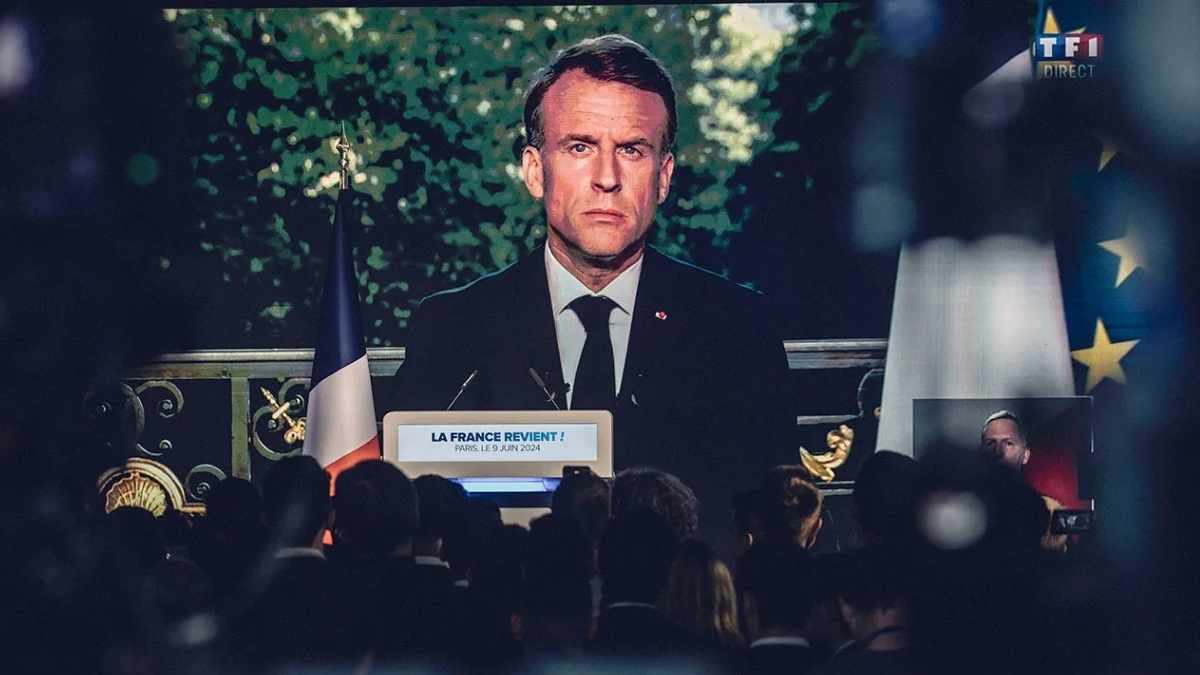
Mr Macron himself has become a strangely peripheral figure. Fifteen months from the finish line, with approval ratings below 20%, he is the archetypal lame duck. Abroad, he is still busy playing world leader, recently hosting a “coalition of the willing” on Ukraine in Paris. Back home, these gestures feel like distractions from decay. Hard to spearhead a European military renaissance when your parliament can’t cover a €6.7bn shortfall in the defence budget.
And who is filling the vacuum? Look no further than Jordan Bardella. At thirty, the National Rally leader is morphing from insurgent to president-in-waiting. Polls put him ahead in every hypothetical second-round matchup for 2027. His mentor, Marine Le Pen, is tangled in a legal battle that could bar her from office; if she falls Bardella becomes the undisputed king of the French right. He plays the long game, letting the budgetary chaos undermine faith in centrism.
Markets, usually indulgent with French exceptionalism, are twitchy. The spread between French and German borrowing costs—a barometer of investor unease—hovers at 71 points. Delay the budget much longer and the “market chastisement” that toppled Liz Truss in Britain might land in Paris. Investors do not reward indecision over tax collection and debt repayment; France is testing the limits of their patience.
The tragedy is that solutions exist. What is missing is compromise. Unlike neighbours Germany or the Netherlands, French politicians have no coalition tradition. Barricades beat committee rooms. The welfare state cannot be cut, yet anyone who tries to modernise it is punished.
As the tractors idle beneath the Eiffel Tower, a sense of ending hangs in the air. Macron’s “Jupiterian” presidency, designed to showcase executive will, is petering out in stopgap laws and parliamentary squabbles. For citizens, the next fifteen months may feel interminable, a waiting game for a future that seems inevitable yet deeply uncertain. The French have a word for it: ennui. A boredom born not of calm, but of paralysis. Meanwhile the financial markets are unlikely to share their patience. ■