Image: Getty Images
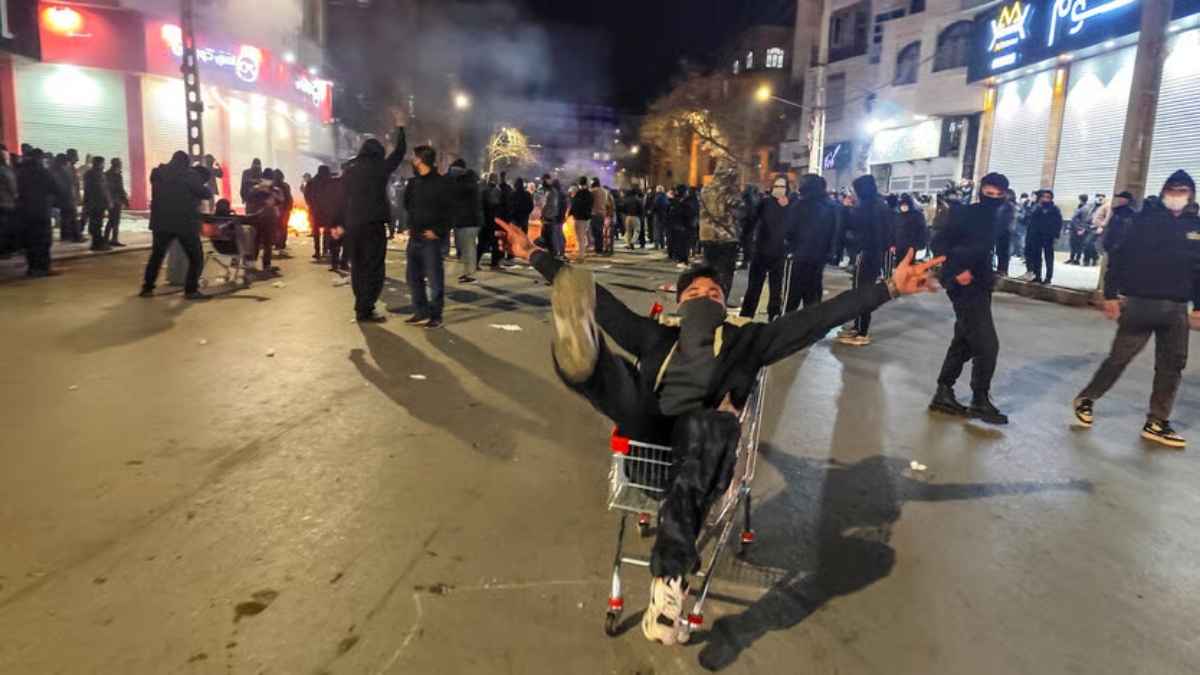
IRAN’S STREETS are gripped by a level of defiance not seen for almost half a century. What began in late December as small, local protests in provincial towns has, within two weeks, hardened into a nationwide upheaval. By January 9th the unrest had spread to all 31 provinces, pulling in groups the Islamic Republic once relied on for stability. In Tehran the smell of burning tyres hangs in the air as thousands shout for the downfall of the supreme leader, Ayatollah Ali Khamenei.
The scale of the unrest recalls the revolution of 1979, but its fuel is more corrosive. Iran’s rulers once traded obedience for a promise of dignity and modest prosperity. That bargain has collapsed. Masoud Pezeshkian, the president, now admits the depth of the crisis as power cuts and water shortages are joined by a lack of basic food. The rial is falling so fast that shopkeepers prefer to sit on their goods rather than sell them for a currency that shrinks by the hour. Over the past 15 years around 15m Iranians have fallen out of the middle class into the working poor. Nearly one in three now lives in poverty.
Dig deeper: Why Iran’s streets are boiling again
The rot at home is matched by a loss of standing abroad. For years the Islamic Republic defended hardship by pointing to its regional clout and its so-called “axis of resistance”. That claim now rings hollow. Israeli air strikes last year have battered Iran’s proxies and killed much of its senior military leadership. Mr Khamenei, 86 and said to fear for his life, reportedly spends long stretches in hiding. It is a posture of retreat, ill-suited to a regime that once styled itself as the spearhead of a revolution.
Donald Trump’s return to the White House has sharpened the sense of siege. His revived campaign of “maximum pressure” has choked oil exports and made it hard for Iran to bring home what money it earns. Rumours, unproven but persistent, of American troops gathering along the Iraqi border add to the unease. In this brittle moment, Iranians appear to have settled on a rare point of focus. Reza Pahlavi, the late shah’s son, has emerged from exile in Washington as a rallying figure. Few on the streets are committed royalists, but his name offers a shorthand for a single demand: that the present order should end.
The response from the top has been predictably rigid. Mr Khamenei appears to believe that the shah fell in 1979 because he lacked the “iron resolve” to be truly brutal. Following this logic, the supreme leader has refused to distinguish between those with legitimate grievances and those he labels as terrorists. More than 40 people have been killed and thousands arrested, yet the fear that usually keeps the public indoors seems to have faded. Even within the security apparatus, the silence is beginning to feel heavy. Murmurs in closed online forums suggest that some officials are questioning the wisdom of prioritising the security of an ageing leader over the stability of the state.
Mr Khamenei shows no sign of seeking an exit. For a man of his generation, the idea of martyrdom is far more appealing than the indignity of exile. He seems prepared to fight to the end, even if the country he leads is crumbling beneath him. Whether the regime can survive another month of such pressure depends on a grim calculation: who will tire first, the men with the guns or the people who no longer fear them. The authorities would be wise to remember that while bullets can clear a street, they cannot fill a stomach. ■