IMAGE: BLOOMBERG
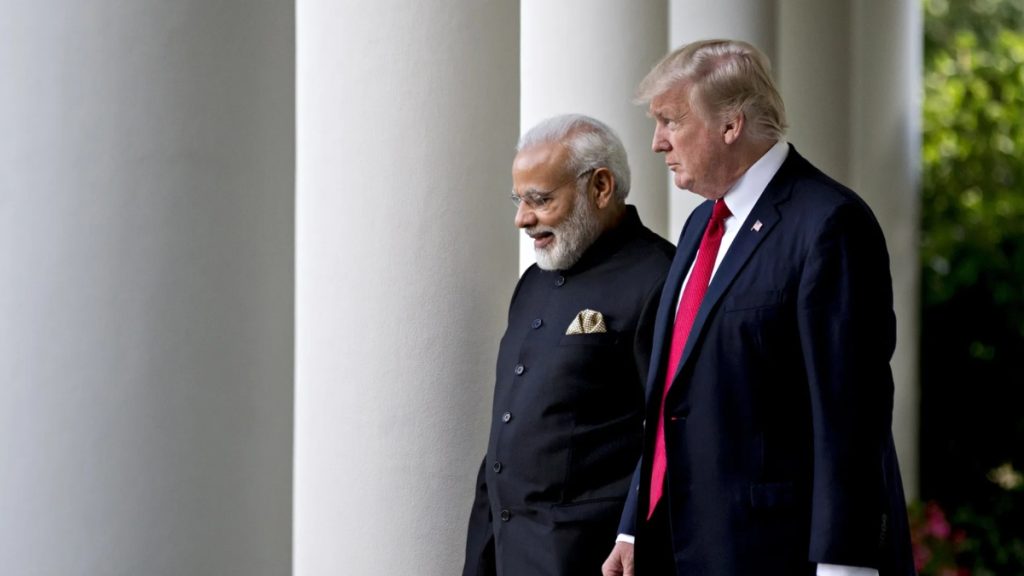
THE RUPEE ticked up and Indian equity futures rallied. Such was the relieved market reaction to news on February 2nd that America would slash its punitive tariffs on Indian goods. After months of trade friction, President Donald Trump announced a deal. The US “reciprocal” tariff would fall from 25% to 18%, and an additional 25% levy, imposed last August to punish India for buying Russian oil, would vanish. In return, claimed Mr Trump, Prime Minister Narendra Modi had agreed to halt purchases of Russian crude and buy American goods worth more than $500bn.
A closer look suggests more declaration than deal. Mr Modi’s confirming post on social media thanked Mr Trump for the tariff cut but made no mention of Russian oil or a half-trillion-dollar American shopping spree. That gap between Washington’s assertions and New Delhi’s silence reveals much about the fragile and transactional nature of the truce.
The tensions had been building. Mr Trump’s re-election in 2024 initially warmed relations with Mr Modi. But by last summer, the American president’s focus had turned to what he called India’s role in funding Russia’s war machine through oil purchases. The extra 25% tariff, layered on top of the existing 25% levy, brought total duties on many Indian goods to 50%. While India’s export-oriented pharmaceuticals and electronics were largely exempt, the bigger message was brutal. India, long touted as a strategic alternative to China for Western supply chains, was suddenly a target. HSBC, a bank, estimated the tariffs could shave 0.7 percentage points off Indian growth.
The pressure worked, up to a point. India has already been slowly reducing its intake of cheap Russian crude. Fewer Russian tankers have been docking at Indian ports. The country’s oil minister recently hinted at buying more from Venezuela. Halting purchases entirely, however, seems improbable given India’s long-standing defence and diplomatic ties to Moscow. “The word ‘potentially’ is doing a lot of work in Trump’s statement,” notes Kevin Book of ClearView Energy Partners, referring to the suggestion India might buy Venezuelan oil.
The other grand American claim—that India will drop all tariffs and non-tariff barriers on US goods to zero—is even less credible. India has historically protected its vast agricultural sector, and its small-scale farmers are a powerful political constituency. Restrictions on American dairy products and genetically modified crops are not about to vanish. As for the $500bn promise, it strains belief. Total bilateral goods trade was $212bn last year; India bought just $41.5bn worth of American products. “There is no way it’s going up to $500bn,” says Pratik Dattani of the Bridge India think-tank.
Why announce a deal now? One trigger appears to be geopolitical FOMO. Mr Trump’s announcement came less than a week after India and the European Union unveiled their own trade pact, following a similar deal with Britain last year. Being left out of a rapidly aligning economic bloc does not suit America’s “winning” narrative. Sergio Gor, the new American ambassador in Delhi credited with smoothing relations, likely pushed for a showy victory.
The immediate economic relief for India is real. The effective tariff rate on its exports to America will fall from a prohibitive 50% to a merely steep 18%. Investor sentiment, bruised by capital outflows and a weak rupee last year, gets a boost. But the truce is built on shaky foundations. Mr Trump’s maximalist claims set a benchmark for compliance that India cannot and will not meet. When the details fail to materialise, the tariffs could just as quickly return. For New Delhi, patience has paid off for now. The art will be managing the inevitable American frustration when the promised $500bn fails to arrive and Russian oil, however reduced, continues to flow. ■