IMAGE: FAZRY ISMAIL
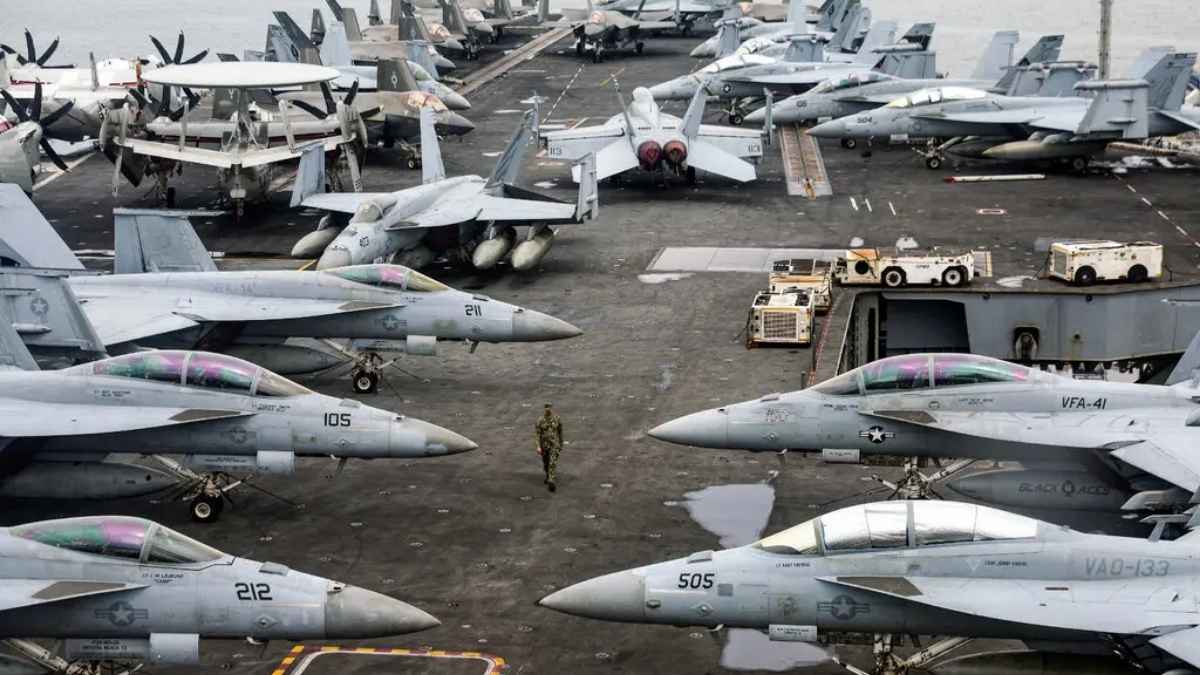
WHEN THE aircraft-carrier USS Abraham Lincoln arrived in the Persian Gulf last month, accompanied by fighter jets, destroyers and enough aerial refuelling tankers to sustain weeks of operations, regional diplomats drew a grim conclusion: this had moved beyond showmanship. America, they reckoned, was preparing for something graver: regime change in Tehran or leadership decapitation.
This moment differs from past crises because Iran has never looked so fragile. Its nuclear programme lies in ruins after Israeli strikes. Its regional proxies—Hizbullah in Lebanon, Hamas in Gaza and militias in Syria—have been battered into irrelevance. Its economy is in free fall; the currency collapsed in January, sparking protests that the state crushed with at least 6,800 confirmed deaths, possibly far more.
That toll marks the bloodiest crackdown in modern Iranian history and an irreparable rupture between the Islamic Republic and its people. For the first time since 1979, internal unrest and external pressure are aligned. Regime change, once unthinkable, is now openly discussed.
Trump wants to be the president who “finished” the Iran problem. He has long believed that Iranian leaders outmanoeuvre timid Americans, a grievance forged in the hostage crisis era. Ideologically flexible but emotionally anchored to a few obsessions—strength and deals over restraint and stalemates, as well as personal legacy—he sees the half-century conflict as unfinished business.
Yet talks are happening anyway. On February 6th Trump’s envoy Steve Witkoff will meet Iran’s foreign minister, Abbas Araghchi, in Oman, the first such encounter since last summer’s Iran-Israel war. Arab states and Turkey brokered the meeting to avert regional conflagration. Jared Kushner’s, his son-in-law, involvement underlines Trump’s personalised diplomacy.
What America wants goes further than the 2015 nuclear deal (which limited Iran’s nuclear programme). Washington demands permanent limits on nuclear activity; curbs on ballistic missiles; an end to support for militias; and improved treatment of Iranian citizens. In effect it is asking Tehran to dismantle the pillars of its revolutionary state.
Iran’s supreme leader, Ali Khamenei, views that as surrender. He refuses to negotiate missile capabilities or proxy support, believing concessions would weaken regime control and accelerate collapse. For Khamenei, compromise is existential danger.
Inside Iran, the opposition is fractured but emboldened. Mir-Hossein Mousavi, the opposition leader under house arrest, says the game is over and calls for the regime to step down. Moderate reformists such as former president Hassan Rouhani reject collapse but argue that reform within the system, supported by a deal with Washington, provides the only path to survival. Both camps agree the status quo is unsustainable.
Yet many Iranians fear Syria- or Libya-style chaos and civil war. This fear tempers enthusiasm for abrupt upheaval and reinforces arguments for internal transition, possibly involving the elite military-political force, the Revolutionary Guards. Hardliners meanwhile exploit such anxieties to justify repression.
The dominant view in Washington is that talks will fail and escalation is increasingly probable. The open questions now concern what Trump would strike and when. Options range from symbolic military targets to leadership decapitation strikes against Khamenei and senior figures. A large-scale assault could embolden mass unrest and trigger succession crises. Even without invasion, political collapse could follow military shock. This would constitute regime change, whether planned or accidental.
The confrontation will shape Iran’s political future and regional stability. The tragedy is that diplomacy demands concessions neither leader can politically afford while war risks outcomes neither can control. America may not be planning regime change, but it is engineering conditions where it becomes increasingly likely. The clash between Trump’s impatience and Khamenei’s inflexibility is pushing the Middle East towards a once-in-a-generation rupture, the consequences of which are unknowable and irreversible. ■