IMAGE: PASCAL MORA/BLOOMBERG
THE SWISS have a reputation for order. Trains run on time, streets are clean, decisions are made by popular vote with Teutonic thoroughness. On June 14th citizens will go to the polls to answer a question that would test any nation’s self-restraint: should the country cap its permanent population at 10m people?
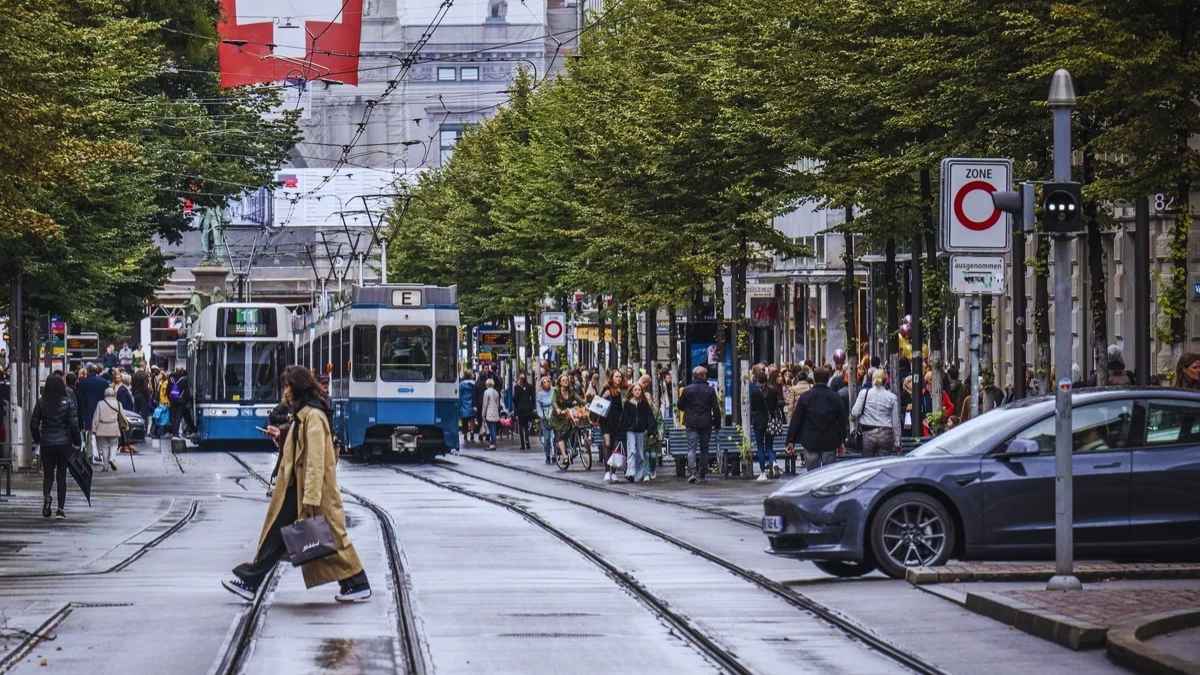
The proposal comes from the Swiss People’s Party (SVP), the largest in parliament, which has built a career on turning unease into ballots. The country’s population has grown by 25% since 2000, faster than almost anywhere in Europe. Foreign residents now make up 27% of the total, drawn by high wages, low taxes and the peculiar stability of a country that is not even in the EU. For many Swiss, the influx has come to feel like an invasion. Rents are soaring, trams are packed, the Alps themselves seem under threat from the sprawl. The SVP’s slogan—“stop the population explosion”—has found an audience.
The target is clear: 10m, a threshold the country could cross by 2035 on current trends. Once triggered, the cap would bite first on asylum seekers and family reunification. If that failed, the government would have to renegotiate or terminate international treaties that drive population growth. The most consequential of these is the free-movement agreement with the EU, which allows 1.5m Europeans to live and work in Switzerland. Scrapping it would unravel a web of bilateral deals that give Swiss companies privileged access to the single market.
Yet the economics of the cap are brutal. Switzerland’s labour force already relies on foreigners to fill gaps that locals cannot or will not cover. A 2024 government report estimated the country would need an extra 430,000 workers by 2040 to sustain its social-security system and care for its ageing population. The pharmaceutical giants of Basel—Novartis, Roche—and the consumer-goods behemoth Nestlé depend on cross-border talent. Google and Disney have planted flags in Zurich. Rudolf Minsch, chief economist at the business lobby Economiesuisse, calls the initiative a “chaos proposal”. His organisation points out that EU workers pay more into the pension system than they take out; choking off the flow would strain the finances of the very welfare state the SVP claims to defend.
The politics are tighter than the economics. A poll in December put support at 48%, with 41% opposed and 11% undecided. In Switzerland’s direct democracy, such initiatives tend to lose steam as voting day approaches. But a previous survey in July recorded identical numbers, suggesting the idea has legs. The government and parliament have recommended a “no”, warning that a cap would endanger prosperity and isolate the country. The SVP’s base is energised; the business class is nervous.
If the vote passes, the consequences would ripple far outside Switzerland’s borders. A country that has built its wealth on openness would signal that the doors are closing. The EU, already fraying at the edges, would lose one of its most stable relationships. And the Swiss would discover whether a smaller nation can still pay its way. The irony is that the very success that draws the crowds, such as the wages and the scenery, is what the initiative seeks to preserve. Switzerland built its fortune on openness; in June it decides whether to lock the door. ■