IMAGE: THE KATHMANDU POST
THE MANNER of Shishir Khanal’s arrival in Singha Durbar was historic. The election that brought him there was a rupture. Nepal’s voters, sick of more than a dozen governments in 18 years, of corruption that leaches into every pore of public life, and of watching over 2,000 of their countrymen leave each day for foreign labour, handed the Rastriya Swatantra Party a supermajority in all but name. Mr Khanal, the country’s youngest foreign minister, inherits a popular mandate that most leaders can only dream of. He also inherits a foreign policy portfolio from hell.
The assets look enviable, on paper. A single-party government can at last speak with one voice to a world used to hearing Kathmandu stammer. Mr Khanal is no provincial novice: a co-founder of Teach For Nepal, fluent in the idioms of development finance, he has the profile to charm Washington and the credentials to hold his own in Beijing. The reclusive prime minister, Balendra Shah, a rapper and former mayor who stormed to power on a wave of youth rage, commands a domestic legitimacy that ought to give him the political cover to make hard choices with India and China without being accused of treason.
That is the fairy tale. Mr Khanal takes office at the moment when the architecture that has propped up small states like Nepal for three decades is being dynamited from all sides. The rules-based order, under which Kathmandu could play India and China off against each other and appeal to the United States for aid and shelter, is in a state of advanced collapse.
America’s development agency, USAID, has been gutted. Britain is slashing aid. The multilateral institutions where Nepal once punched above its weight—SAARC is a corpse and the UN a shadow—offer dwindling shelter. Meanwhile, India and China, without asking permission, have begun reopening trade through Lipulekh Pass, territory Nepal’s constitution claims as its own. The two giants found common ground and Nepal was the ground.
This, then, is the inheritance: a popular mandate to assert sovereignty, and a geopolitical environment in which sovereignty is being steadily eroded. Mr Khanal’s first challenge is to manage the contradiction without breaking.
The India relationship is the most consequential and the most mined. The structural asymmetries—such as open borders and transit dependence—do not bend to election results. But the new government brings baggage that New Delhi will find uncomfortable. Mr Shah, as mayor, displayed a “Greater Nepal” map in his office and briefly banned Bollywood films. His party condemned the Lipulekh arrangement “in the strongest terms”. That was easy in opposition.
In government Mr Khanal must decide whether to make a diplomatic stand over territory India and China have already carved up without him. Push too hard and Nepal risks economic isolation. Push too softly and a nationalist electorate—which voted exactly for this sort of assertion—will howl. The 1950 Treaty of Peace and Friendship, a relic of a bygone era that still shackles Nepal’s defence policy, is another live wire. Renegotiating it is correct in principle; doing so clumsily would be a disaster.
China offers a different flavour of the same dilemma. The Belt and Road Initiative has produced more memoranda than megawatts. Mr Khanal is right to demand project-by-project scrutiny and to treat the trans-Himalayan railway as a long-term aspiration rather than a near-term deliverable.
But Beijing’s price for patience is the continued suppression of Tibetan activism in Nepal, and the acceptance of Chinese strategic interests that sometimes trample on Nepali claims. The Lipulekh arrangement is a case in point: Nepal’s constitutional map says the territory belongs to Kathmandu; both India and China have chosen to behave as if it does not. Mr Khanal’s aspiration to be a “dynamic bridge” between the two is lovely rhetoric. Bridges, however, tend to get walked on.
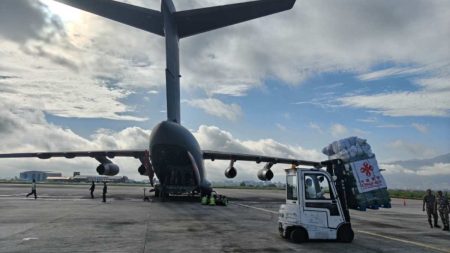
The collapse of the American aid architecture is the most immediate practical headache. Over $400m in USAID support vanished overnight, taking with it programmes in maternal health, education and governance that had become embedded in Nepal’s development landscape. The development contractor ecosystem—often derided as “dollar farming”—has imploded. Mr Khanal’s “development diplomacy”, which seeks to mobilise diaspora skills and foreign investment, is the right long-term answer.
Yet the transition will be brutal. The MCC transmission line, which would allow Nepal to sell hydropower to India and Bangladesh, is a rare piece of infrastructure with real transformative potential. Fighting to keep it alive with a Trump administration that has little patience for multilateral niceties will call for diplomatic finesse that the new government has yet to demonstrate.
Domestically, Mr Khanal’s biggest problem may be his own prime minister. Mr Shah’s past foreign policy pronouncements were made as a social-media-savvy outsider, not as a head of government. His last year’s post criticising the United States, India and China simultaneously—later deleted—was the kind of three-for-one diplomatic insult that usually takes a seasoned minister years to accumulate. Mr Khanal will need to build institutional relationships with career diplomats and foreign counterparts; Mr Shah commands the political base that got them elected. If the two are not singing from the same score, the old problem of multiple, contradictory voices will return—only this time amplified by megaphone.
So what can Mr Khanal actually do? He has one real ace: water. Nepal’s untapped hydropower potential—43,000 megawatts of technically feasible capacity, of which barely 4,000 is exploited—is the sort of strategic asset that can turn a landlocked country into an energy partner rather than a perpetual supplicant. The MCC transmission line, if completed, would enable cross-border electricity trade with India, generating revenue and reducing Nepal’s lopsided trade deficit. Negotiating power-purchase agreements with Bangladesh and India simultaneously would be a diplomatic coup: it would demonstrate that Kathmandu can manage its relationships without choosing sides.
He also has a window—perhaps 18 months—to capitalise on Nepal’s “new government premium”. The RSP’s reform mandate, its youth and its lack of ideological baggage are reputational assets in international development circles. Mr Khanal can pitch Nepal to multilateral banks, climate-finance institutions and impact investors in a way his communist and Congress-era predecessors could not. But that window will close as governing reality sets in.
The larger truth here is one that small states everywhere are learning the hard way. The post-Cold War settlement that allowed countries like Nepal to hedge, to play great powers off against each other and to rely on Western aid and multilateral institutions as a cushion is gone. In its place is a world of great-power competition where the rules are written by the strong and the weak are expected to accommodate. Mr Khanal’s mandate is historic; but history is moving against him.
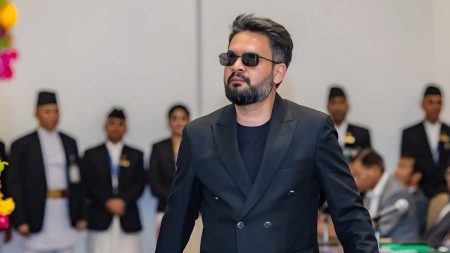
The image of him at his swearing-in—young and polished, flanked by a prime minister who rode to power on a wave of generational fury—suggested a new Nepal. The reality of the job will be older and uglier: managing decline in American influence; absorbing impositions from both neighbours; and explaining to a nationalist electorate why sovereignty sometimes means choosing which compromises to make, not whether to make them. Mr Khanal has the credentials to be a good foreign minister. Whether the world he has inherited will let him be one is another question entirely. ■