IMAGE: RATOPATI
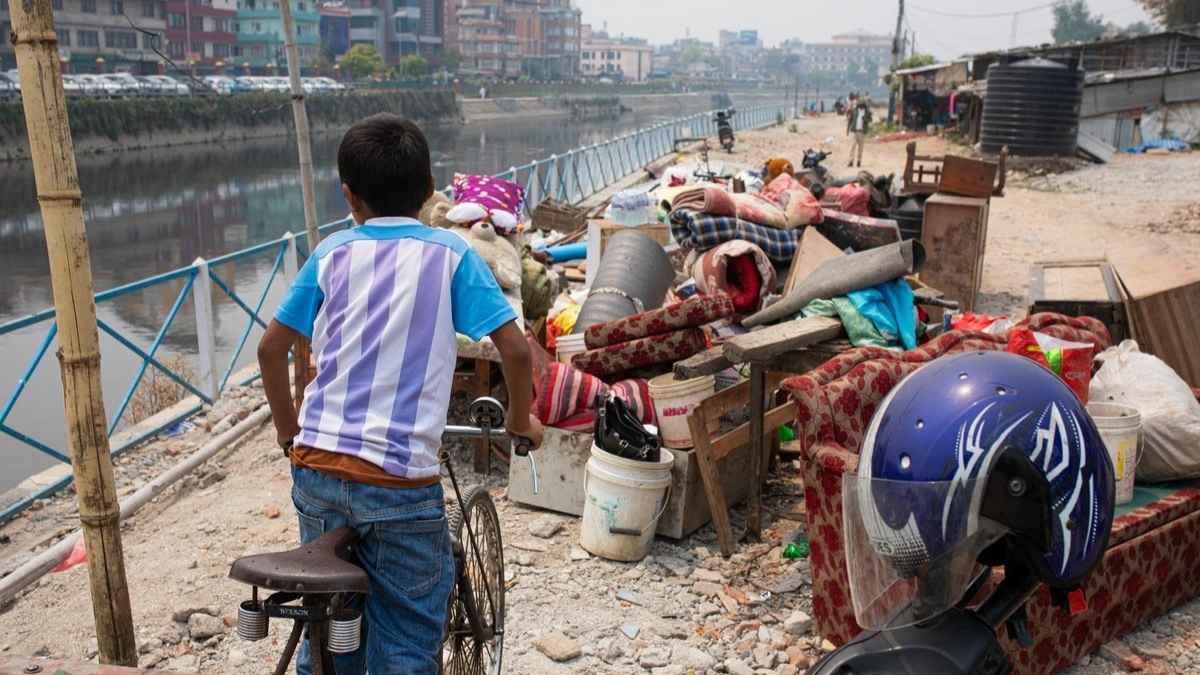
KATHMANDU’S RIVERSIDE shanties are no one’s idea of a solution. They are crowded, unsanitary and vulnerable to floods. Every rational observer agrees that the families living there need better options. A functioning state would relocate them with care, verify who is genuinely landless and offer a path to secure housing. That is what Nepal’s constitution promises. That is what the government’s own manifesto pledged. And that is exactly what appears not to be happening.
Instead prime minister Balendra Shah, known as Balen, has reportedly decided to clear the settlements with police and heavy machinery, starting on April 25th. Cabinet discussion? None to speak of. Consultation with affected communities? Forgotten. Proper verification of who actually owns land elsewhere? Skipped. The ruling party, the Rastriya Swatantra Party, says it was never formally consulted. The government spokesperson admits the cabinet has taken no official decision. A 24-hour notice has been issued. Amnesty International calls it a forced eviction. It is hard to argue otherwise.
Mr Shah rose to power as a reformist outsider, a clean-handed technocrat who would cut through Nepal’s sclerotic politics. He has an unusual gift for discovering that governing is harder than campaigning. Evicting squatters is not the problem: every city with limited space and weak property rights must eventually face that task. The problem is doing it without process; without warning; and without a plan for where people will sleep the next night. That is no governance. It is theatre. Cruel theatre.
The consequences will land on the usual shoulders. Hundreds of families will lose their homes. Children will miss school. Possessions will be crushed or stolen. Those with the fewest political connections will suffer most. Meanwhile the genuinely wealthy land-grabber who built a riverside villa on a fake title? He will watch from a safe distance. Already Nepal has a mechanism to identify genuine squatters through local data collection, land commission verification and digital records. It has never been properly used. Mr Shah appears to have decided that due process is too slow for his ego.
In a democracy the state holds a monopoly on force specifically so it does not have to use it against the vulnerable. When a prime minister bypasses his own cabinet, ignores his own manifesto and orders bulldozers before breakfast, he is announcing that procedure, law and human dignity are optional. That is a lesson Nepal’s fragile politics cannot afford to teach.
Stop the eviction. Finish the survey. Follow the law. If Mr Shah wants to be remembered as the man who cleaned Kathmandu’s rivers, he should start by not drowning its poorest citizens in his haste. ■