IMAGE: AP
A WEEK into the largest World Cup ever held, the honest answer to “who will win” is that nobody knows, and the people whose job it is to put a number on uncertainty are telling you so. Spain and France went into the tournament as co-favourites on the prediction markets Polymarket and Kalshi, each given roughly a 17% chance of lifting the trophy on July 19th.
That is the most important number in any World Cup forecast: even the best team in the world, by the market’s own estimate, is more likely to lose the tournament than win it. Football, more than almost any major sport, resists prediction, and the 48-team format introduced this year—with an extra knockout round squeezed in before the old round of 16—has made the tournament longer and, if anything, less hospitable to favourites than before.
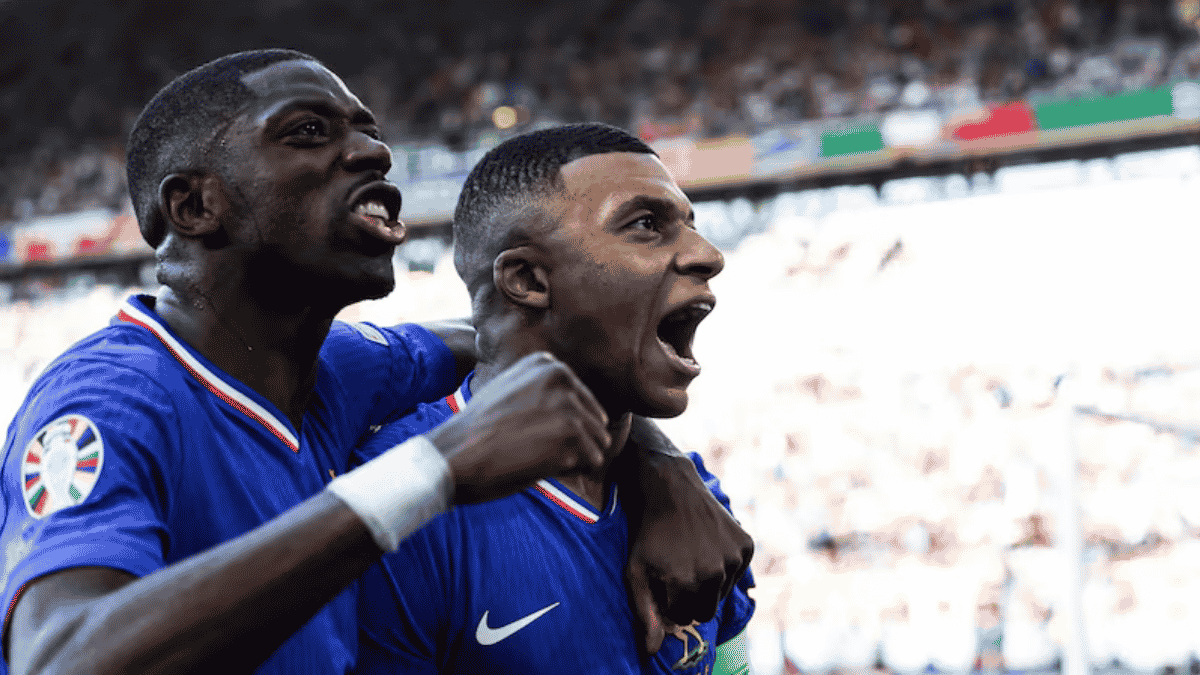
That said, the data has already started moving, and it is moving in an interesting direction. France opened with a workmanlike 3-1 win over Senegal in which Kylian Mbappé scored twice, becoming his country’s all-time leading goalscorer in the process and bringing his personal World Cup tally to 14, level with Gerd Müller for fourth on the all-time list. Spain, by contrast, stumbled to a flat 0-0 draw against Cape Verde, a result nobody in Madrid wanted to see in their opening match. Bookmakers reacted instantly: France is now the outright favourite at roughly +410 on American odds boards (an implied probability around 20%), with Spain still second but with the gap widening. One bad ninety minutes was enough to flip the market’s lead horse.
Argentina occupies a different category entirely: not the bookmakers’ top pick, but the team carrying the tournament’s best story. Lionel Messi opened the defence of his title with a hat-trick in a 3-0 win over Algeria, the first World Cup hat-trick of his career. Should Argentina win again, they would be the first team to retain the trophy since Brazil in 1962, a 64-year gap that says something real about how hard repeating actually is. Champions arrive with a target on their back, opponents who have spent four years specifically studying how to beat them, and squads a year or two further into decline than they were the last time it mattered. The history is not encouraging, but a Messi hat-trick in his almost-certainly final World Cup is the kind of detail that makes neutral fans want the history to be wrong.
Beneath the obvious contenders, the market has been re-pricing one outsider: Norway. Erling Haaland’s side put four goals past Iraq in their opener, and Norway’s odds shortened from roughly 35-1 to the high-20s within a day. It helps that Norway sit in the same group as France, meaning Europe’s two most dangerous attacking sides will collide directly in the group stage rather than waiting for a hypothetical knockout meeting: a reminder that World Cup draws can do as much to shape outcomes as form does. Co-hosts United States and Mexico have also started well, beating Paraguay 4-1 and South Africa 2-0 respectively, though both remain firmly in the long-shot category at well over 30-1; home advantage in football tends to matter, but rarely enough to overcome a gap in squad quality.
If forced to give a single best answer rather than a probability distribution, the evidence at this early stage points to France, on the strength of Mbappé’s form, squad depth and the market’s own real-time judgment, with Spain, Argentina, England and Portugal all live behind them.
But the more useful answer is the base rate itself: in the last six World Cups, the pre-tournament favourite has won exactly once. Whoever lifts the trophy at MetLife Stadium on July 19th will, in all likelihood, be a team that the bookmakers, the modellers and most neutral observers did not expect to be standing there. That unpredictability is not a flaw in the forecasting. It is the entire reason 5bn people will be watching. ■