IMAGE: REUTERS
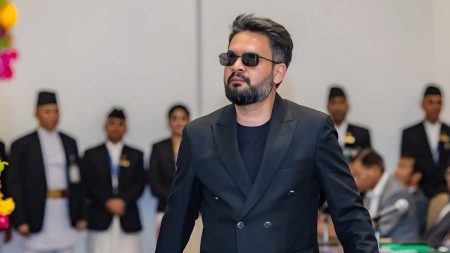
FOUR MONTHS into office, the RSP (Rastriya Swatantra Party) government that young Nepalis burned buildings to bring about is fraying at the top. The split is not yet a crisis. It is something more awkward: a triangle of power — Prime Minister Balendra Shah, RSP chairman Rabi Lamichhane and Finance Minister Swarnim Wagle — in which each figure has a legitimate claim to authority, none has full control. And the ambiguity is producing decisions that look like negotiation rather than governance.
The most immediate flashpoint is Wagle. Shah wants to replace Wagle as Finance Minister following controversies involving tax-rate changes and alleged budget confidentiality leaks. Entrepreneur and MP Vidushi Rana is reportedly being considered as a replacement, while Lamichhane is resisting removing his party’s key intellectual leader.
The rift is substantive. People close to the prime minister describe frustration on several fronts: that the stock market has deteriorated on Wagle’s watch and that Wagle’s own business associate was installed as chair of the Securities Board of Nepal in circumstances critics call a conflict of interest. Moreover Wagle has leaned too heavily on foreign borrowing rather than building productive capital, and that his budget failed to generate any real optimism in the economy.
For his part Wagle has denied wrongdoing, offered to retire from public life if charges against him are proven, and — according to sources close to him — is preparing a political counter-strategy should he be pushed out. For a man who left the Nepali Congress to join the RSP, losing the finance ministry four months in would be a public verdict on the technocratic brand he built his career on.
A reported sit-down between Shah and Lamichhane amounted to an informal performance review of the cabinet, with Wagle singled out — though Lamichhane apparently pushed back by raising his own questions about members of Shah’s secretariat viewed as Shah loyalists, suggesting this is as much an intra-party power struggle as a straightforward policy dispute.
That meeting — conducted privately, not through any formal governance mechanism — is itself a sign of how the RSP operates. A party in government for less than four months is already running parallel accountability processes: parliament on one track, the chairman’s informal performance reviews on another.
Shah’s own relationship with parliament has been, to put it generously, selective. When President Ram Chandra Paudel delivered the government’s policy and programme to a joint sitting, Shah walked out before it ended and did not return for the follow-up sessions. He skipped the ceremonial motion to open debate on his own government’s agenda and, breaking with every precedent, refused to personally field questions from lawmakers — leaving that job to Wagle while opposition MPs shut down proceedings in protest. A prime minister who treats his government’s parliamentary calendar as optional is one who trusts his mandate more than he respects the institution that gave it to him.
The RSP’s national general convention, held in Chitwan last month, exposed a further layer. Lamichhane advocated for financial restructuring of the federal system, whereas Wagle proposed a constitutional overhaul to eliminate provincial assemblies entirely.
The proposed abolition contradicts Shah’s previous stance on decentralisation, creating a policy paradox for an administration that commands a near two-thirds majority in the lower house but holds no seats in the upper house, making constitutional change legally impossible without opposition support. A senior constitutional lawyer in Kathmandu put the problem like this: proposing the wholesale elimination of a tier of government from a position where you cannot constitutionally deliver it introduces systemic unpredictability without the means to resolve it.
Nearly three weeks after the general convention, the RSP had been unable to fully form its central committee or fill all its office-bearer positions as Shah and Lamichhane continued to tussle over the pick of nominees. The party that won a historic mandate in March is still, in late July, negotiating the internal settlement that defines who actually holds power within it.
The health and education levy, reversed by Shah via Facebook post on Tuesday without completing the legal process to formally amend the Finance Act, is the most recent example of what this internal friction produces in practice. Wagle designed the policy. The Cabinet approved it. Parliament passed it. Shah announced its suspension through social media four days after it took effect, without yet establishing the formal legal mechanism to override his own Finance Minister’s legislation.
The reversal may be the right call for the families who were paying it. The method revealed a government that moves by impulse and patches the paperwork later — and a prime minister and finance minister who, on the government’s first hundred days, were not working from the same script.
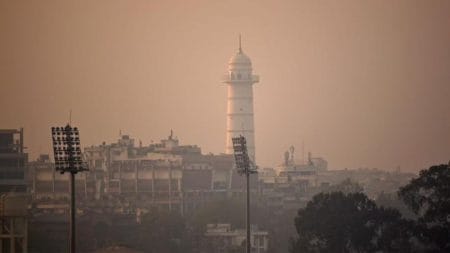
Ordinary citizens are looking towards Singha Durbar, asking one fundamental question: can this government truly deliver on its promise of stability? The answer, four months in, is that the RSP has delivered accountability — the corruption arrests, the judicial proceedings against the old guard — more convincingly than it has delivered policy. The two men who gave the party its electoral identity are now the primary source of its internal instability. That is not fatal, yet. It is the kind of friction that, if unresolved, converts a historic mandate into a familiar story. ■