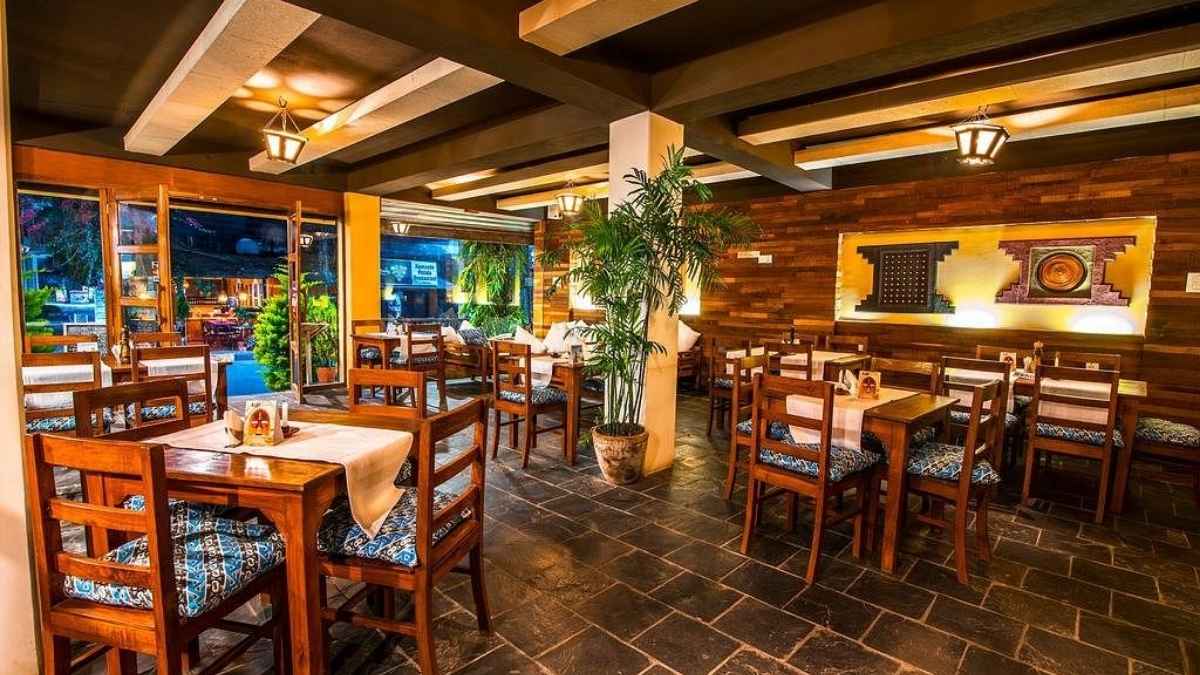
IMAGE VIA TRIP ADVISOR
WALK DOWN Jhamsikhel Road on a Saturday night and you can watch the experiment running in real time. A new brunch café with exposed brick walls and a QR code menu has opened where a stationery shop used to be; the stationery shop closed six months ago; before the stationery shop there was another café. The unit has had three tenants in four years and the landlord has not lowered the rent once. The turnover is not a mystery to anyone who has opened a restaurant in Kathmandu. It is the expected outcome of a market that punishes new entrants with near-mathematical consistency.
Globally, only 15% of new restaurants survive their first year (according to the most recent aggregated industry data from Restaurant365 and Datassential). Nepal has no equivalent national survey of restaurant mortality; the Department of Industry tracks registrations but not closures with any precision. What Kathmandu’s restaurant operators will tell you, without prompting, is that the figure for this city is worse than the global average. The owners of the surviving restaurants know why: rent, food cost inflation, an electricity bill that doubles when the grid fails and a customer base that is smaller and less loyal than every business plan ever written for this market assumed.
Start with rent, because rent is where most restaurants die before they open. Commercial space in Jhamsikhel, Lazimpat, or Thamel runs between Rs150,000 and Rs400,000 a month for a unit capable of seating thirty people at a reasonable density. The industry rule of thumb (codified in every restaurant finance course in every country where restaurants survive long enough to teach courses about) is that rent should not top 10 to 15% of monthly revenue.
On a Rs200,000 rent, that means the restaurant needs to generate Rs1.3m to Rs 2m a month just to keep rent in the safe zone. That requires roughly 200 covers a day at an average spend of Rs300 to 350 a person (reasonable for a mid-tier Kathmandu restaurant). In practice most Kathmandu restaurants do 80 covers on a good weekday and 140 on a weekend. The math was never right; it just wasn’t visible until month three when the cash ran out.
The food cost problem sits underneath the rent problem and compounds it. Nepal’s food import bill reached Rs380bn in fiscal year 2025-26 (cereals, vegetables, fruit, dairy, processed goods combined); the rupee has depreciated at 3.07% annually against the dollar; and the supply chains for the ingredients that mid-range Kathmandu restaurants prefer (imported cheese, specialty coffee, certain proteins) are priced in hard currency and delivered through importers who adjust margins upward whenever the rupee moves. A café that designed its menu at Rs 150 per cup of coffee in 2023 is now buying the same coffee beans at 20% more and is choosing between repricing and margin compression; most choose margin compression until they cannot.
Labour is the third leg of what restaurant economists call prime cost (food plus labour together). Nepal’s restaurant industry pays kitchen staff between Rs15,000 and Rs25,000 a month for trained cooks; service staff slightly less. The Social Security Fund contribution (20% of salary for formal employees) adds cost that smaller restaurants frequently avoid by keeping staff informal; the tax and compliance risk of that informality is another deferred liability. Staff turnover in Kathmandu’s restaurant sector is high by any regional measure; the Gulf and Malaysia absorb trained hospitality workers who leave not because the work is bad but because Rs18,000 a month in Kathmandu is arithmetically inferior to Rs50,000 a month in Qatar for someone without dependents.
The delivery platforms (Foodmandu and Pathao Food) have solved the visibility problem for restaurants with enough volume to make the 20-22% commission economically survivable; they have deepened the margin problem for restaurants without that volume. A restaurant that does Rs300,000 a month in delivery orders pays Rs60,000 to Rs66,000 to the platform before accounting for packaging and the delivery-optimised menu items that typically carry lower margins than dine-in equivalents. The platforms created demand; they also extracted a rent from that demand that sits alongside the landlord’s rent as a fixed structural cost.
What Kathmandu specifically adds to the global restaurant failure dynamic is a customer acquisition problem that the business plans consistently underestimate. Kathmandu’s dining-out population is more concentrated than it appears. The people who regularly eat at mid-range restaurants are mostly the same people; they follow the same accounts on Instagram; they discover the same new openings in the same two weeks; they go once, post a photo and move on to the next opening.
Restaurant operators call this the “opening month illusion”: the first four weeks generate covers from the early-adopter social media audience, the numbers look viable, the owner believes the validation; by month three, the regulars have been exhausted and the restaurant is operating at 40% of opening-month revenue on the same fixed cost base. That is the moment the landlord’s third-month rent cheque is due.
The restaurants that survive beyond twelve months tend to share one feature: they are either very cheap (dal-bhat stops and momo shops with low rent, low complexity and high volume) or very expensive (the Dwarika’s tier, where the customer is a tourist or an expense account and price elasticity is low). The middle, where most of the ambition is concentrated, is where most of the closures happen. The food is often good. The math was never right. ■