Image: Xinhua
The Himalayas are famed for their immovable mountains. Borders across them are less fixed. Lipulekh, a wind-battered pass on the western edge of Nepal, is claimed by Kathmandu, patrolled by India and, as of this week, again incorporated into Beijing and New Delhi’s growing rapprochement. Amid handshakes and summitry, the two Asian giants have agreed to reopen border trade through three crossings, including Lipulekh. For India and China, it is another symbol of a thaw after years of frosty confrontation. It is a familiar humiliation for Nepal.
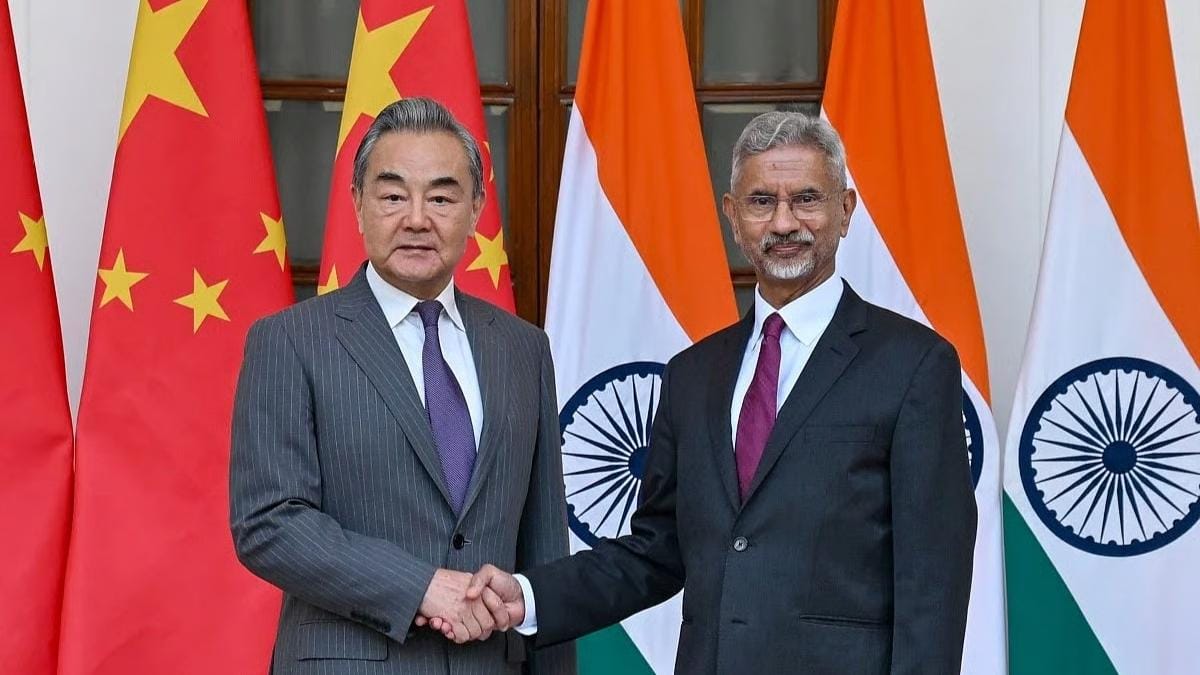
The timing is not incidental. Relations between India and China, soured by the bloody clash in the Galwan Valley in 2020, have entered a new phase. Both capitals now speak of a “new environment” of “peace and tranquillity”. Narendra Modi, India’s prime minister, prepares for his first visit to China in seven years, encouraged by cordial meetings in New Delhi between Wang Yi, China’s foreign minister, and Indian leaders. Trump’s tariff war has accelerated the shift. With both economies squeezed by American trade penalties, pragmatism has overtaken posturing. Beijing and New Delhi are moving to secure alternative trade corridors, supply chains and diplomatic assurances.
Lipulekh fits neatly into this calculus. It links the Indian state of Uttarakhand with Tibet, providing access for pilgrims, traders and soldiers. India has long maintained control of the area, stationing troops and building roads to reinforce its presence. Beijing for its part sees cooperation over Himalayan passes as a token gesture in a bigger effort to stabilise ties with New Delhi. Neither seems keen to invite Nepal into the discussion. The pass lies some 56km inside the frontier that Nepal claims, yet Kathmandu was not consulted before the announcement—much as it was excluded from a similar arrangement in 2015.
For Nepal, the slight is not novel. Its protests over border maps, issued first by India in 2019 and then by China in 2023, have been noted and then ignored. The government in Kathmandu even redrew its own official map in 2020, extending the frontier up to Limpiyadhura, which includes Lipulekh and Kalapani. The exercise satisfied nationalist sentiment but achieved little in practice. India did not budge. China, despite Nepal’s frequent invocations of “special friendship”, has consistently privileged its relationship with the bigger neighbour.
The asymmetry is glaring. China is India’s biggest trading partner in goods, with bilateral flows worth over $127bn in 2024–25. Nepal’s entire GDP is roughly one-twentieth of that figure. Strategic logic points the same way. For Beijing, mending fences with New Delhi undermines Washington’s efforts to forge an anti-China coalition in Asia. For India, calming the Himalayan frontier frees up bandwidth to manage Pakistan, energy imports and manufacturing ambitions. Both prize stability on their border with each other more than scrupulous regard for Nepal’s territorial sensitivities.
That calculus will not change quickly. The reopening of Lipulekh is wrapped into wider commitments: direct flights between India and China, eased visa regimes and expanded trade in rare earths and machinery. These are prizes that dwarf the grievances of a smaller neighbour. Nepal’s complaints may find sympathy in academic forums, but they will not alter the trajectory of regional diplomacy. Its leaders, including KP Sharma Oli, will soon travel to Beijing and New Delhi, but their leverage is thin. At best Nepal can attempt to extract infrastructure or aid concessions as compensation for being sidelined.
The precedent is revealing. Great powers frequently resolve disputes in ways that inconvenience the states caught between them. Nepal’s experience mirrors that of other buffer nations, from Mongolia to Belarus, whose maps are redrawn in practice by decisions made elsewhere. The difference is that the Himalayas give such shifts a veneer of permanence. A road at Lipulekh or a patrol agreement in Galwan alters realities on the ground in ways that cannot easily be undone.
For now Kathmandu must reconcile itself to being an afterthought. The Himalayas may belong to Nepal in poetry and postcard, but in diplomacy they are increasingly negotiated over its head. India and China see each other, in Wang Yi’s phrase, as “partners and opportunities”. Nepal, caught on the ridgeline, sees the landscape shifting under its feet. ■