Image: Jonathan Alpeyrie
Few countries compress so much history into so small a space. Nepal, home to 30m people and wedged between India and China, has been ruled by kings, priests, generals and revolutionaries. Its story is one of remarkable continuity—of mountains and monarchs—but also of repeated reinvention under the shadow of far bigger powers.
Long before it was a country, the territory that is now Nepal sat at a crossroads of civilisations. In the 6th century BCE, Siddhartha Gautama—the Buddha—was born in Lumbini, in Nepal’s southern plains. By the 4th century CE, the Licchavi dynasty had turned the fertile Kathmandu Valley into a hub of trade and temple-building, linking the Gangetic plains to the Tibetan plateau. Their successors, the Malla kings (12th–18th centuries), made the valley a patchwork of rival city-states—Kathmandu, Patan and Bhaktapur—that competed in architecture and ritual as much as in politics. The pagoda temples that now define Nepali skylines date from this era of ornate fragmentation.
The Gorkha conquest
The modern Nepali state was born of ambition and geography. In the mid-18th century, Prithvi Narayan Shah, a minor hill ruler from Gorkha, conquered the valley’s city-states and declared a new kingdom. He described his creation as a “yam between two boulders”—a metaphor that would define Nepal’s foreign policy for centuries. As the British Empire expanded northwards and China’s Qing dynasty extended south, Nepal clung to sovereignty by playing both sides.
The Shah kings’ success was military as much as diplomatic. They fought wars against the British East India Company in the early 19th century, losing a third of their territory but preserving independence—no small feat in a colonised subcontinent.
That independence came at a cost. In 1846, after a bloody palace coup, power passed from the Shah monarchs to the Rana family, hereditary prime ministers who ruled for a century as absolute autocrats. The Ranas kept Nepal closed to the outside world, limited education to a few elite families and exported young men as Gurkha soldiers for Britain’s colonial wars. By 1950, fewer than 2% of Nepalis could read or write.
The regime survived by serving foreign masters while suppressing domestic dissent. It finally fell in 1951 when King Tribhuvan, with Indian backing, returned from exile and restored the Shah monarchy—this time with promises of democracy.
The next half-century was a study in Nepal’s uneasy relationship with power. In 1960 King Mahendra dismissed an elected government and imposed the Panchayat system—a partyless political structure dressed up as “guided democracy”. Real decisions remained with the palace. Rural poverty persisted; by 1980 Nepal’s per capita income was barely $150, among the world’s lowest.
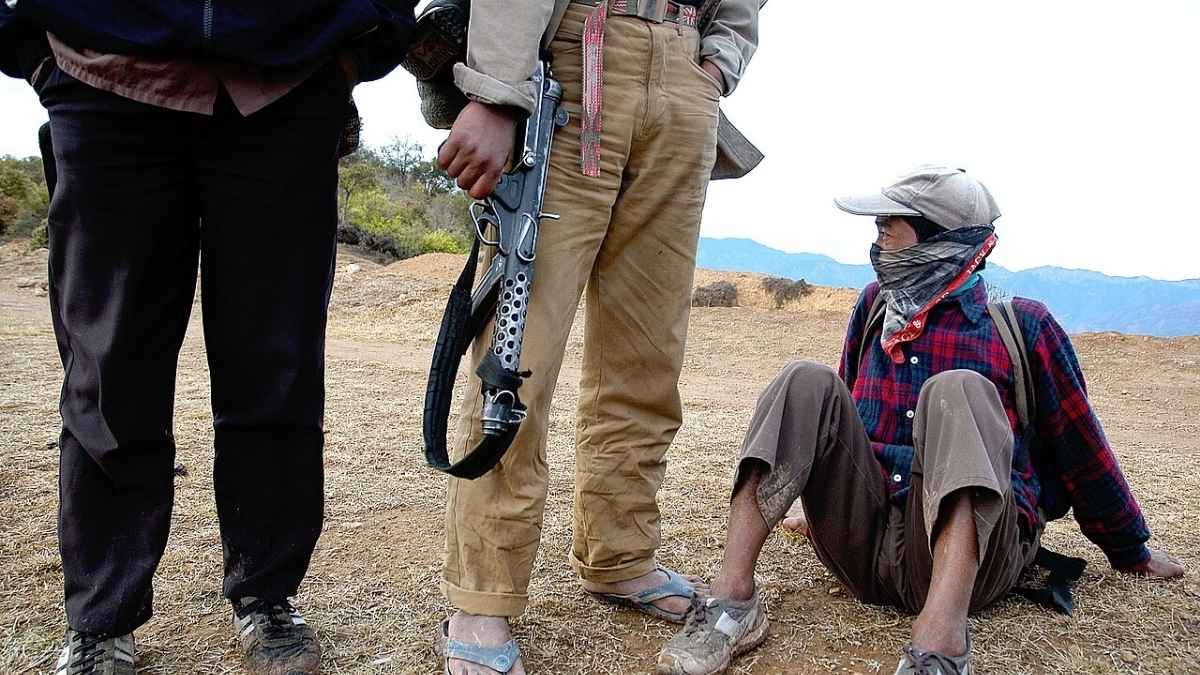
Mass protests in 1990 forced the restoration of multiparty democracy and a constitutional monarchy. But corruption, factionalism and inequality soon corroded faith in the new order. In 1996 Maoist rebels launched an armed insurgency demanding land reform and an end to monarchy. Over a decade the civil war claimed more than 17,000 lives and devastated rural economies.
Then came tragedy of another kind. In 2001 Crown Prince Dipendra allegedly shot dead King Birendra, Queen Aishwarya and several royals before killing himself. His uncle, Gyanendra, seized the throne and, by 2005, absolute power. Protests swelled again.
In 2006 a mass movement—an alliance of Maoists, political parties and civil society—forced the king’s retreat. Two years later the monarchy was abolished. Nepal became a federal democratic republic, one of Asia’s youngest.
The transition was messy. It took seven years and two constituent assemblies to produce a new constitution, promulgated in 2015 amid protests by marginalised ethnic groups who said the federal map excluded them. Since then politics has remained fluid. No government has lasted a full term. Former rebels now trade seats in parliament rather than bullets in the hills.
Yet democracy, however fragile, has endured. Freedom of speech is robust; elections are regular, if uninspiring; and power alternated peacefully between former foes, until the Gen-Z led protests in September toppled the government of K.P. Sharma Oli, leader of the Communist Party of Nepal (Unified Marxist–Leninist) since 2014.
Geography still dictates Nepal’s fortunes. It imports most goods through India, its biggest trading partner, but increasingly courts Chinese investment in roads and hydropower. Remittances from migrant workers—chiefly in the Gulf and Malaysia—make up a quarter of GDP, cushioning the economy but hollowing out the workforce.
Per capita income, now around $1,400, has leapt by nearly 680% since the 1990s, but growth remains hostage to politics and monsoon. The country’s hydropower potential is vast, its climate vulnerability greater still.
Prithvi Narayan Shah’s “yam” remains trapped between the same two boulders—now not empires, but superpowers. Yet if its past century has taught anything, it is that Nepal endures. It outlasted kings, wars and ideology. Survival, for this mountain republic, has always been its most reliable institution. ■