A strange thing happens in Nepal each summer. As monsoon rains lash the Himalayan foothills, rivers swell and turbines hum. The national grid suddenly groans under the weight of excess electricity. In 2023 over $21m worth of this surplus power was simply let go, spilled into the air because there was no way to use it or send it onwards. For a few months, Nepal behaves like an energy king. Then the rains stop, the rivers shrink and the country has to import electricity from India. This seasonal feast and famine points to a deeper crisis. Nepal built its economic dreams on the power of its rivers, but the rivers are no longer reliable.
For three decades Nepal treated its Himalayan waterways as a “climate-proof” national endowment. Policy documents and investor proposals operated on a principle known as stationary hydrology—the assumption that past patterns of rainfall and river flow would predict future ones. The country’s entire energy strategy was founded on this notion. Climate change has shattered that foundation. The mountains now swing between destructive, sediment-choked floods and prolonged winter droughts. The very geography that was supposed to be Nepal’s engine of growth is becoming its Achilles heel.
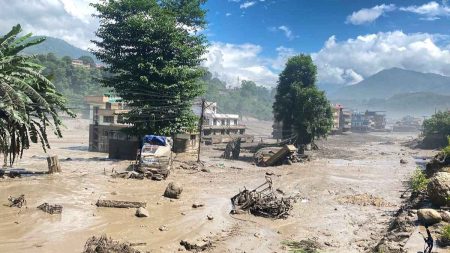
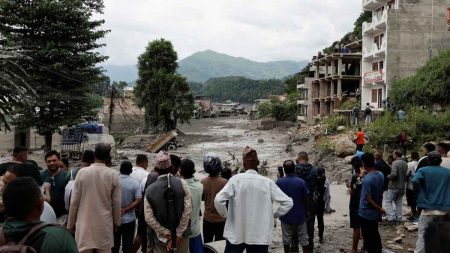
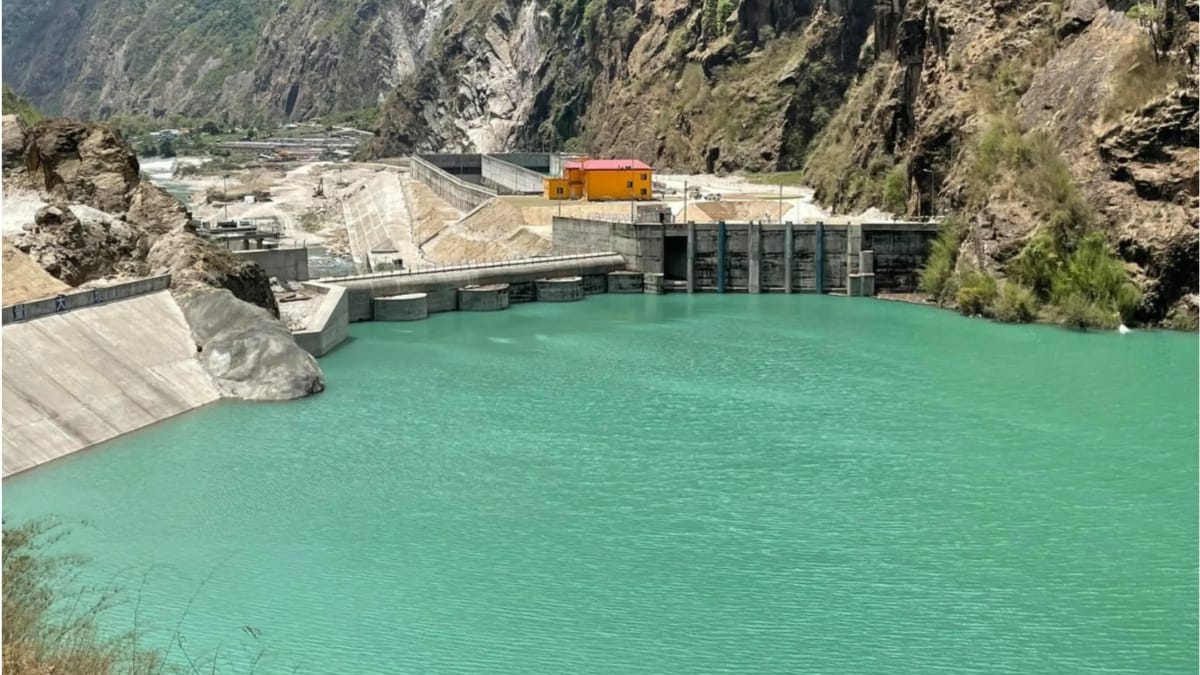
The core of the problem is the type of hydropower Nepal chose to build. Over 90% of its electricity comes from run-of-river projects. These are relatively small, low-dam installations that channel water through turbines but cannot store it. They are cheap and quick to build, and in the 1990s they seemed a sensible choice. But in an era of climate volatility, their lack of storage is a fatal flaw. They deliver a glut of power for four monsoon months and leave the grid parched for the remaining eight. Worse, they are uniquely vulnerable to the new extremes. Each year, heavy monsoons damage dozens of projects, destroying infrastructure and washing away access roads. During winter low-flow periods, many plants operate at less than half their capacity. The system is losing megawatts faster than it can add them.
Even when the power is generated, much of it is wasted. Nepal has focused overwhelmingly on building generation capacity while neglecting the grid required to move the electricity. Ambitious politicians celebrate reaching more than 3,000 megawatts of installed capacity, but the transmission network is a skeletal thing, unable to handle the load. Construction of new power lines is endlessly delayed by disputes over forest clearances and local protests, as well as political interference. The fallout is a power-starved country that must regularly dump the power it produces because its wires cannot carry it.
This supply-side obsession has obscured a more troubling failure: Nepal produces power but does not use it. The country has achieved near-universal grid access; yet its citizens consume less electricity per person than almost any other in Asia. The average Nepalese uses about 400 kilowatt-hours a year, a figure comparable to that of some war-torn states. Rural kitchens still rely on firewood, businesses on diesel generators. Hydropower has been treated primarily as an export commodity, a foreign-currency machine, rather than as a tool for domestic development. The celebrated “surplus” exists only because internal demand is so anaemic.
Globally, hydropower is faltering under climate stress. From Brazil and America to China, dams are producing far below their historical averages. A worldwide drop in hydro output in 2023 was the largest in nearly six decades. But Nepal is brutally exposed. Larger countries possess reservoirs that can buffer variability. Nepal, with its reliance on run-of-the-river schemes, has almost no such storage. Its model is the most climate-sensitive form of hydro imaginable. The global trend of declining reliability hits with particular force here, raising insurance premiums and the cost of capital.
This leaves the country’s grand energy target—28,500 megawatts of capacity—looking like an illusion. The vision assumes a stable climate, predictable rivers and cheap financing. None of these conditions holds. The strategy must pivot from maximising megawatts to building resilience. This means developing reservoir-based hydro and pumped-storage projects that can hold water for dry seasons, integrating solar and wind power to diversify the mix, and reinforcing the grid. Most importantly, it means treating electricity not as an export commodity but as a catalyst for domestic transformation, spurring the shift from firewood to electric stoves and from diesel to electric transport.
Nepal is not suffering because it invested in clean energy. It is suffering because it mistook its rivers for constants, and climate change has proved they are anything but. The hydro honeymoon is over. The task now is to build an energy system that can withstand the new reality of Himalayan water and one that can withstand both the deluge and the drought. ■