Image: Makalu Media Network
IN A tenth-floor office in Kathmandu, history hangs in the air. One imagines a black-and-white photograph that might adorn the wall: Sohan Lal Golyan, an enterprising industrialist from India, standing beside King Mahendra in the 1960s. The monarch had invited him to start a factory in the then largely pre-industrial Himalayas. The umbrella and textile plants he built made the Golyan family wealthy, as well as woven into the modern economic history of Nepal.
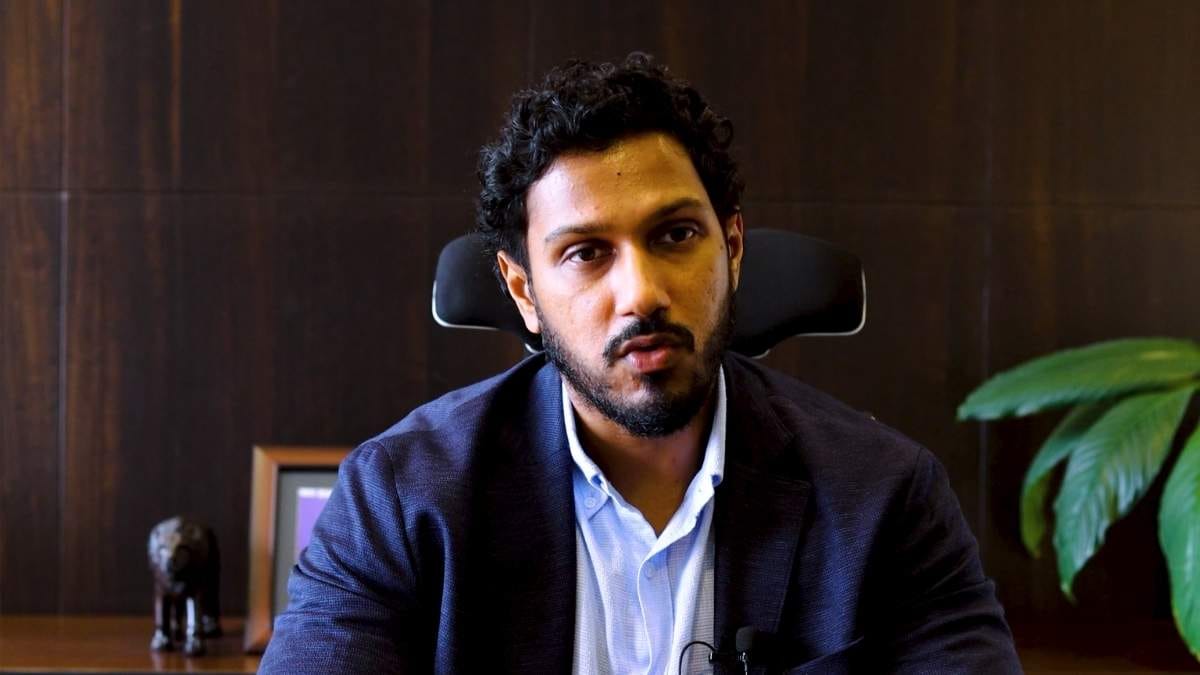
Today, from that same vantage point high above the city, Sohan Lal’s grandson, 37-year-old Akshay Golyan, now presides as the new chairman and managing director of the Golyan Group. His promotion, consolidating all executive authority, is described by the family conglomerate as the dawn of a “new era”. For observers of Nepal’s fragile economy, it is a test of whether its oldest business houses can evolve fast enough to survive the country’s storms.
The Golyan Group is a rare creature: a Nepali multinational. Its crown jewel, Reliance Spinning Mills, is the country’s single largest exporter, sending yarn to more than 60 countries and bringing in over $90m a year. The group employs 10,000 people across textiles, renewable energy, agriculture and hotels. That makes it a vital private-sector pillar in an economy heavily dependent on remittances and aid. But its very prominence lays bare the contradictions of doing business in Nepal. Success rarely comes from a friendly environment. It is forged through constant wrangling with chaos, corruption and relentless hardship.
Consider the group’s core textile business. Its rise was forged in a crisis. In the early 2000s India and Bangladesh imposed anti-dumping measures that suddenly shut down Reliance Spinning Mills’ main export markets. “The company faced extinction,” recalls a veteran former manager. The response was a desperate, global scramble for new customers, eventually finding them in Europe and the Middle East. That painful pivot transformed a regional supplier into a globally diversified one. Today the company boasts some of the most advanced machinery in South Asia. During the pandemic, when the tourism sector collapsed, the mills recorded their highest production in 25 years, a testament to worker loyalty as well as hardened supply-chain resilience.
This narrative of triumph over adversity is a common refrain in Nepali boardrooms. Yet it can also breed a certain insularity. The Golyan Group’s expansion into solar farms, hydropower and luxury hotels, including Kathmandu’s first Hyatt, reflects a desire to modernise and lessen reliance on textiles. But these ventures walk a tightrope. Nepal’s political instability, notorious bureaucracy as well as brittle infrastructure make big capital projects perilous. The group’s ambitious plan to develop some 900 megawatts of renewable energy by 2030 depends on a steady flow of foreign investment and governmental coherence, both of which are unreliable.
The leadership transition itself shows an anxious balance between continuity and change. Akshay Golyan, who holds a business degree from Spain’s ESADE, speaks the language of globalisation, innovation and sustainability. His father, Pawan Golyan, the patriarch who steered the group through its darkest hours, now becomes honorary chairman, a guiding figure in the background. The consolidation of power in the younger Golyan’s hands is meant to signal decisiveness to investors and partners. “The world does not wait for Nepal,” notes a financial adviser in Kathmandu. “A single voice at the top can sometimes move mountains faster than a committee.”
But family conglomerates in South Asia tend to discover, to their horror, that mountains can also tumble down. The Golyan Group’s foray into commercial agriculture, launched with the brand “Mato”, is a case in point. It sought to tackle national food security, a noble goal. Yet it also entangled the group in controversy when it was revealed that its agro-firms had received millions of rupees in government loan-interest subsidies—funds intended for smallholder farmers. Pawan Golyan himself admitted the policy was flawed, telling an investigative outlet that the subsidy amount “doesn’t matter to me much” and that it mostly “fuels rumours”. The episode was a reminder of how even well-intentioned corporate ventures can be distorted by the region’s cronyish economic ecosystems.
The biggest test for Akshay Golyan may not be expansion but staying isolated. The private sector is vulnerably exposed to political shocks. During youth-led protests in September, the group’s headquarters, Golyan Tower, was vandalised. The group’s subsequent pledge of scholarships and health insurance for the families of what it termed “Gen-Z Martyrs” was a humanitarian response, as well as an acknowledgment of how fast business fortunes can be caught in the social crossfire.
The new chairman’s task then is to build a legacy that is more than the sum of its crises. It means turning a company that grew resilient by navigating disasters into one that can prosper during calmer times—should they ever arrive. That will mean professionalising management; attracting international capital without relying on state favours; and perhaps most daunting, helping to foster a wider, more stable business climate for all Nepali firms. The imagined photograph of his grandfather and the king is a reminder of how far one family business has come. The view from the window, of a chaotic, hopeful city, shows how far there still is to go. ■