IMAGE: EPA
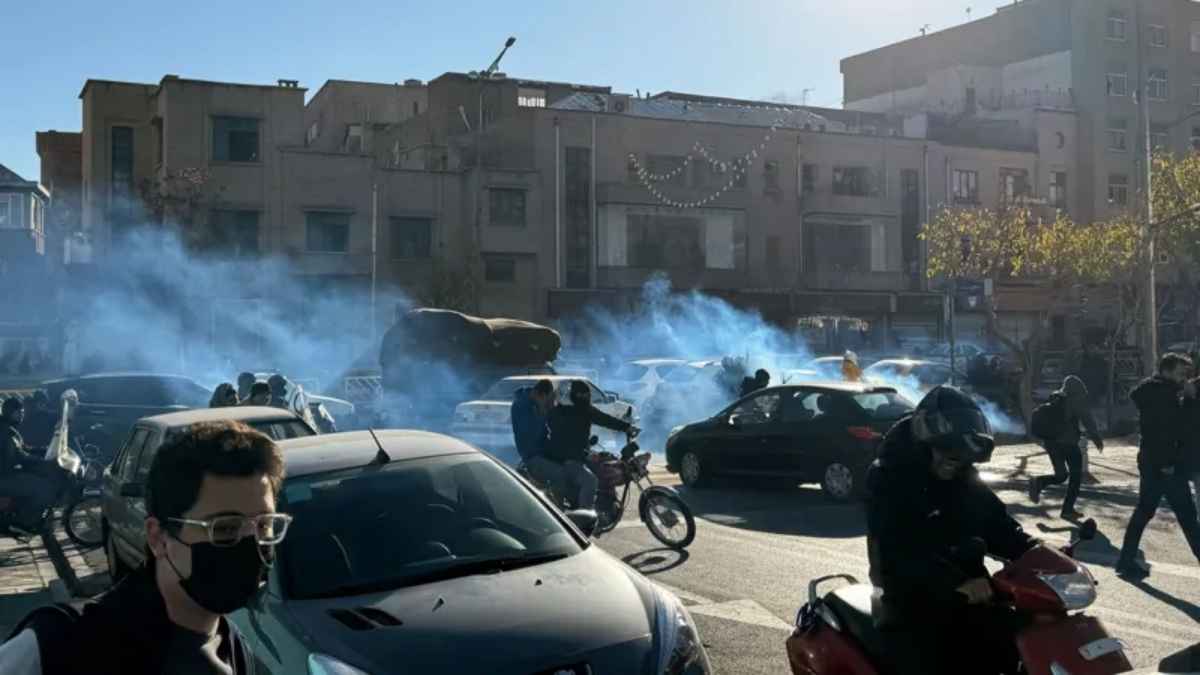
BY THURSDAY evening Tehran felt smaller. The internet had vanished, as it tends to when things turn ugly, and the chants seemed to travel further for it, ricocheting down streets that usually absorb dissent rather than amplify it. “Freedom, freedom,” came the call. Others went further and said the supreme leader’s name out loud. Naming names still carries weight in a system built on hierarchy and fear,
What began in late December as a strike by shopkeepers has metastasised into Iran’s most serious upheaval since Mahsa Amini died in custody in 2022 (she was arrested for allegedly wearing her headscarf “improperly”). Demonstrations have spread to more than a hundred towns and cities, from Tehran and Mashhad to provincial capitals that rarely trouble foreign correspondents. The language has hardened along with the crowds. Reform has fallen out of fashion. The demand is for the Islamic Republic itself to go.
The state has responded from muscle memory. Internet access has been throttled to almost nothing, a method refined during earlier unrest and rehearsed again during last summer’s brief but bruising war with Israel. Tear gas has filled streets; live ammunition has been used in some places. Security forces have raided hospitals to haul away the wounded before they can talk. Police stations and government buildings have burned. Human-rights groups count several dozen dead, including children, with hundreds injured and thousands detained. The true toll is harder to know when the country is almost offline.
The trigger was economic and, at first blush, narrow. Electronics sellers in Tehran depend on imported goods; when the rial began another sharp slide, they closed their shops in protest. The fall worsened after the government scrapped a preferential exchange rate that had allowed favoured importers to buy dollars cheaply. Officials sold the move as reform. Consumers experienced it as a shock. Prices for cooking oil, chicken and eggs jumped overnight. Some items disappeared altogether, replaced by hoarding and suspicion.
Then the Grand Bazaar shut. For centuries the bazaar has been a political barometer, and for decades it has leaned towards the clerics. When its shutters came down, the signal left little room for doubt. Strikes spread quickly, drawing in students, the unemployed and families who had learned, through hard experience, that staying home was usually the safest option. As the police tightened their grip, the argument slid from prices to power. By the time the internet went off, the argument had changed.
The wider picture is grim. The rial now trades at roughly 1.5m to the dollar. It has shed almost half its value in a year and almost all of it over a decade. Inflation runs north of 40%, outpacing wages and far outstripping the state’s ability to soften the blow. Real incomes have collapsed. Food and medicine have become luxuries for many; heating, an anxiety. Add water shortages, power cuts and air pollution, and daily life feels brittle.
Sanctions continue to squeeze oil revenues and hard-currency inflows. War made matters worse. Last summer’s exchange with Israel killed senior commanders and scientists, punched holes in air defences and rattled confidence. Corruption and mismanagement have hollowed out what remains of state capacity. Even the new president, Masoud Pezeshkian, elected on promises of relief, has conceded the limits. His answer so far has been cash transfers worth less than eight dollars a month. It buys a bag of rice, on a good day.
The internet blackout is deliberate. Iran used it in 2019 and 2022 and whenever it expects blood on the pavement. The goal is to fracture coordination, starve the outside world of images and slow diplomatic pressure. On January 2nd Donald Trump warned Iran not to kill peaceful protesters. “America will come to their rescue,” he wrote on social media. “We are locked and loaded and ready to go.”
Yet clips still escape, suggesting a movement larger and more stubborn than the authorities expected. Bazaar merchants stand beside underemployed young men once treated as reliable regime muscle. Middle-class families appear together. Kurdish and Azerbaijani provinces have flared. Fear has thinned. When older Iranians march with their children, a line has been crossed.
So have the demands: end clerical rule by removing Ayatollah Ali Khamenei, the most powerful political and religious figure in the country. Restore dignity, a stable currency and a future that does not require emigration. Some reject both monarchy and theocracy in the same breath. Others shout for the return of the exiled son of the shah overthrown in 1979, the 65-year-old Reza Pahlavi. What unites protesters is the conviction that the current system cannot be patched.
Exile politics circle the edges. Kurdish and Azerbaijani groups have urged coordination. Mr Pahlavi, long dismissed inside Iran as a relic, has become a symbol for those who see no credible alternative at home. Monarchism still alienates many, but desperation lowers standards. Inside the country the movement has no leader, which helps it spread and hinders it from settling on a replacement.
Officials argue the unrest is foreign-made, the work of Israel, America and unnamed “Zionists”. Privately they sound less sure. The Revolutionary Guards, built to face outward, are being pulled inward. Security forces have taken casualties. Repression is working less well; concessions are fiscally impossible. The old playbook has less to offer each time it is opened.
This wave diverges from 2022 in one crucial respect. Then, protests were triggered by moral policing, and the state bought time by loosening enforcement. That option no longer exists. Hunger cannot be placated. When the bazaar pulls away, the regime loses a core support. Pressure from abroad is heavier, too. America has warned against massacres. Donald Trump’s seizure of Venezuela’s Nicolás Maduro has stirred talk in Tehran that once sounded fanciful. The ideas that held the system together have hardened and cracked. Fear still works. Faith no longer does.
Most analysts expect the regime to stagger through again, as it has before, on force alone. Survival, however, is not recovery. Each crackdown eats away at legitimacy and deepens the economic pit. Iran is left with narrowing options: harden into a poorer, harsher state with less reach, or risk elite fracture under pressure from the street and from abroad. Neither looks stable. The next time the bazaar closes, it may not reopen so obligingly. ■