IMAGE: EKANTIPUR
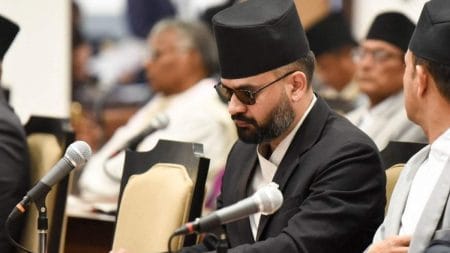
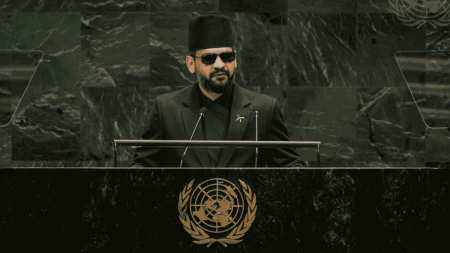
THE YOUNG prime minister was meant to be different. Balendra Shah swept into office on a wave of disgust with the old political class—a man who promised to break the clientelist machine that had run Nepal into the ground. First as mayor of Kathmandu, then as the unlikely occupant of Singha Durbar, he vowed to clear the rivers, unclog the bureaucracy, sweep away the grubby compromises that passed for governance. The middle class cheered. Here, at last, was a leader who would make the country work.
A country works by deciding who belongs in it. And that is where the cheering ought to stop.
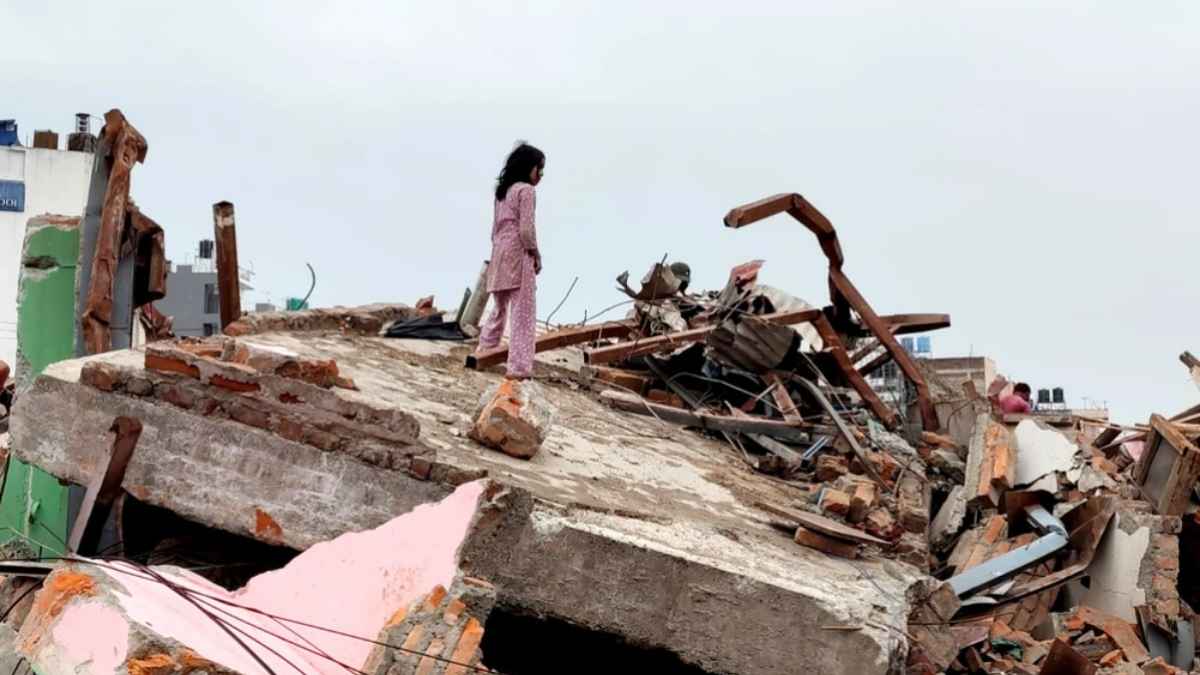
What began as a municipal demolition drive in Kathmandu has, under Mr Shah’s premiership, metastasised into a national campaign of displacement. Bulldozers have rolled through riverside settlements at Thapathali, Sinamangal, Teku and Balkhu. The home ministry has now instructed all 77 of Nepal’s districts to prepare encroachment-clearance plans, complete with security-force deployment. Already around 3,500 families—roughly 17,000 people—have been ordered to leave their homes, often with 24 hours’ notice. Security personnel stand watch as corrugated-iron shacks are reduced to twisted metal. The displaced queue at Dasharath Stadium for screening, clutching whatever they could grab: a rice-cooker, a child’s schoolbooks, a bundle of wet clothes. Many sleep in municipal halls or cheap hotels on the city’s edge, unsure whether they will ever have a roof again.
The conventional wisdom is that Mr Shah is enforcing the rule of law against encroachers. Nepal’s riverbanks are public land, clogged with unplanned settlements that dump sewage into already fetid waterways. The Bagmati is an open sewer; something must be done. This framing has given the prime minister cover, allowing his actions to be read as courageous rather than callous. It is a pleasing narrative for a country that prefers its poor invisible. It is also on closer inspection a fraud.
Begin with the procedure. Proper eviction requires survey, verification, notice and resettlement. Nepal’s own laws envisage a process in which genuine landless households are identified and provided for. Mr Shah’s government has reversed the sequence: demolish first, screen later. Officials are now collecting data and checking land records at holding centres, a bureaucratic ritual that might interest the families camped on the pavement if the bulldozers had not already done their work. The screening process will take two weeks. The evictions took two days. This is not process. In fact this is panic dressed up as policy.
Then consider the numbers. The government has offered resettlement in apartment blocks at Nagarjun Municipality. Capacity: 45 families. The mismatch—between thousands of people needing a home and 45 flats—defines the programme. For the overwhelming majority of the displaced, there is no Plan B. They are expected to disappear into a rental market where landlords refuse to house Dalits and the visibly poor, who are deemed dirty or criminal.
That word—Dalit—is the one Mr Shah’s defenders avoid. The settlements being flattened are disproportionately Dalit communities: landless, marginalised, pushed to the riverbanks over generations by a caste order that denied them ownership of anything more solid than a shack.Nepal’s constitution promises land to landless Dalits at least once. The promise has been a dead letter for years. Mr Shah’s bulldozers have now ground it into the mud. His war on encroachment wears a savarna face, carried out with all the caste-blind confidence of a state that knows which of its citizens can be disappeared without consequence.
There is a larger pathology here. Nepal’s real-estate machine has spent decades shredding any serious attempt at low-income housing. Land is the currency of political power, parcelled out among connected developers while the poor are left to squat on the only scraps the market cannot monetise: riverbanks, steep slopes, public scrubland. The same country that offers Mr Shah standing ovations for clearing slums has never demanded that he build anything to replace them. The appetite for demolition is endless; the appetite for construction, when the beneficiaries are Dalit labourers and street vendors, is nil. Mr Shah did not create this dynamic, but he has exploited it from the prime minister’s office with a talent for making bad situations worse.
Can anything salvage this mess? The obvious, sensible and politically improbable answer is in-situ upgrading. Cities across South Asia have abandoned the fantasy that the poor can be swept away. Mumbai’s slum-rehabilitation model transfers land to private developers in exchange for free housing for eligible residents. Bhubaneswar’s “Jaga Mission” grants land rights to slum dwellers and upgrades infrastructure on the spot. Neither is perfect. Both accept a reality Mr Shah refuses to face: these communities are part of the economy, not a tumour on it. They wash dishes, stitch clothes, haul bricks. Untethering them from their livelihoods to warehouse them on the periphery creates a new problem—destitution—that is more expensive and more destabilising than the one it pretends to solve.
What erupted as one mayor’s crusade has become, under a prime minister who still governs as though he were running a city, a national programme of displacement without destination. The bulldozer is now the state’s preferred instrument of urban policy: swift and utterly indifferent to what comes next. In Teku and Samakhusi, some residents have begun dismantling their own homes, salvaging timber and corrugated sheeting before the machines arrive. They have internalised the logic of the government that is expelling them: save what you can, because no one else will.
Mr Shah was elevated to fix Nepal. A country whose prosperity relies on the broken backs of its most vulnerable citizens is not fixed. It is merely tidied. The prime minister has confused governing with cleansing, and in doing so has revealed something ugly about the movement he represents. Reform, in the hands of those who never question whom it hurts, is just cruelty with better branding. ■