IMAGE: THE KATHMANDU POST
NEPAL’S CONSTITUTION promises peace, pluralism and a federal state that brings government closer to the people. The events of the past week in the Tarai suggest the state cannot deliver any of these things.
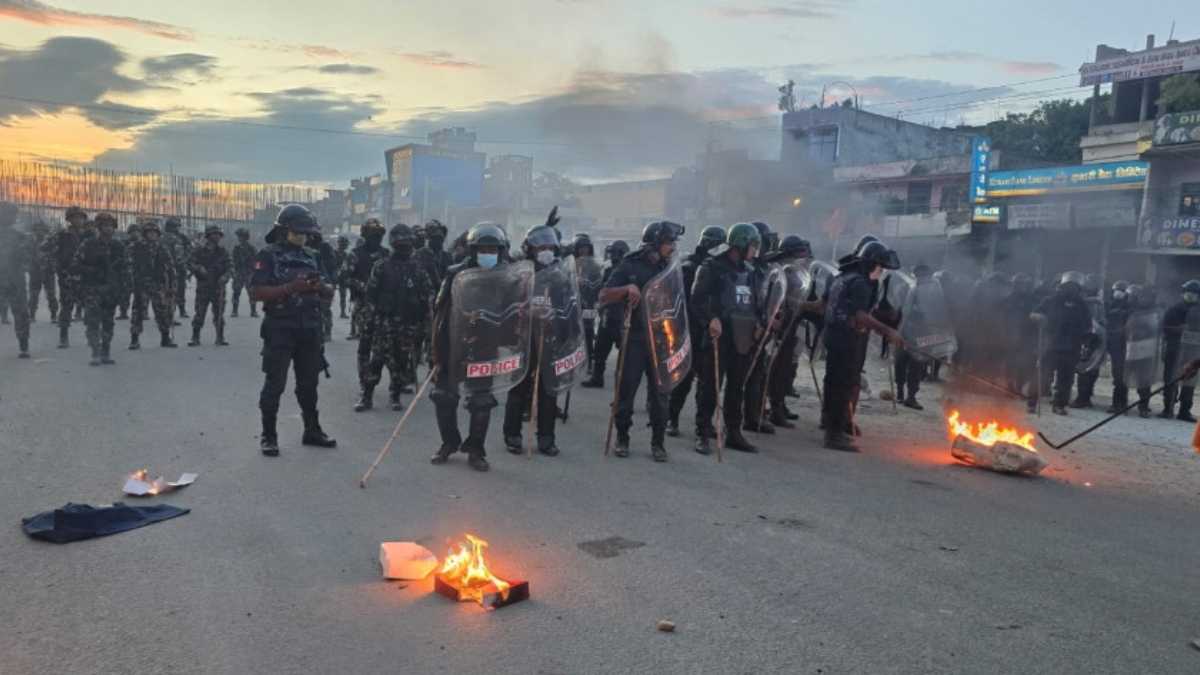
A dispute over loud music during a religious procession in Dewanganj, Sunsari, should have been settled by local elders over tea. Instead it has left three young men dead and spread curfews across four districts, exposing a governing class that appears to have confused authority with abdication.
The government’s response to communal violence has been a masterclass in how to make a bad situation worse. Prime Minister Balendra Shah waited four days to meet his security chiefs and five days to convene the National Security Council. His home minister, Sudan Gurung, took five days to show up in Sunsari. By then, the violence had jumped districts like a brushfire catching wind. That is a failure of imagination.
The situation is depressingly familiar. A local quarrel escalates. Police arrive with tear gas and batons. When these fail, they reach for live ammunition. Three people are shot dead. Curfews descend. Politicians in Kathmandu issue statements from a safe distance. The bodies stay in hospital morgues while families negotiate martyr status and compensation. Then everyone waits for the next time.
The government reached an agreement with the families of two victims on Thursday night, promising martyrdom declarations, one million rupees in compensation, jobs for family members and a memorial park. These are the tokens of a state that has run out of ideas. They address grief but not grievance, compensation but not cause. They reward the families who negotiate and leave everyone else to wonder whether the next funeral will bring a better deal.
Worse, they create perverse incentives. When the state pays for peace after violence, it subsidises violence. The next dispute will arrive with a price tag attached.
Security officials had reportedly warned three years ago about the potential for communal unrest in the area. The National Investigation Department, now housed in the Prime Minister’s Office, was supposed to connect dots. It appears to have been connecting nothing. Key police posts in Koshi Province and Sunsari were vacant or filled by acting officers when the trouble began. The district police chief was on leave. So was the provincial police chief. The Armed Police Force commander had been transferred two weeks earlier. This is a security apparatus that forgot to stand guard.
The government’s defenders will say the violence was unpredictable, the work of provocateurs, the product of social media misinformation. These explanations are convenient but unconvincing. Every government in South Asia faces communal tensions and bad actors. The ones that contain violence do so through political leadership and intelligence that informs action rather than files reports. This government did none of these things.
Rabi Lamichhane, chairman of the Rastriya Swatantra Party, convened an all-party meeting while the prime minister remained in Kathmandu. Opposition leaders toured affected areas. Local representatives pleaded for restraint. The government offered video messages and security meetings that produced more questions than answers. The prime minister addressed the nation on Thursday evening, pledging an impartial investigation. It was the right thing to say, six days too late.
The consequences will outlast the curfews. Trust in the state has eroded further in a region where it was already low. The Tarai’s communities, already anxious about their place in Nepal’s political order, have watched their government respond to their suffering with absent leadership and indiscriminate force. The federal structure, meant to bring government closer to the people, has proven hollow. Provincial administrations were sidelined. Local representatives were ignored. The centre treated the periphery as a problem to be contained rather than a population to be governed.
What should be done? The first task is to act now, not five days from now. The government should present a clear account of what happened in Sunsari and Siraha, identify who ordered the use of live ammunition and why, and punish those who violated standing rules on the use of force. The investigation committee formed by the home ministry should be given real independence, and not just the appearance of it. The government should convene consultations with community leaders across the Tarai, and not photo opportunities that substitute for dialogue.
But these are remedies for the immediate crisis. The uglier problem is a governing class that has mistaken security for governance. Curfews restore order but do not build legitimacy. Compensation buys peace but does not create justice. Video messages calm nerves but do not command respect. The state has become a fire brigade that arrives after the house has burned down and offers to rebuild the kitchen.
The larger truth is painful. Nepal’s political elite has grown comfortable with the idea that they govern a country they seldom visit. The Tarai’s grievances — from economic marginalisation and political exclusion ro the sense that Kathmandu’s priorities are not their own — have been left to fester. When they erupt, the response is force, rather than engagement. The state’s instinct is to suppress rather than resolve.
This is not sustainable. Nepal has seen this sort of violence before, in the Maoist insurgency, in the Madhesh movement, in every instance where the state’s default response to discontent has been to reach for the tear gas and the baton. Each time, the cost has been higher than the last.
The Sunsari violence will subside. Curfews will be lifted. The bodies will be buried or cremated, martyrs or victims depending on the deal. But the conditions that produced this week’s chaos remain. The government has demonstrated a talent for making bad situations worse and an unusual gift for absconding from leadership.
Nepal’s first major failure of this government is also its most revealing. The state is, rather than too weak to act, too weak to think. ■