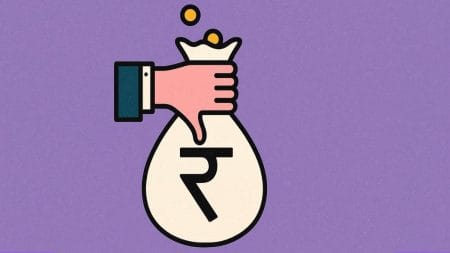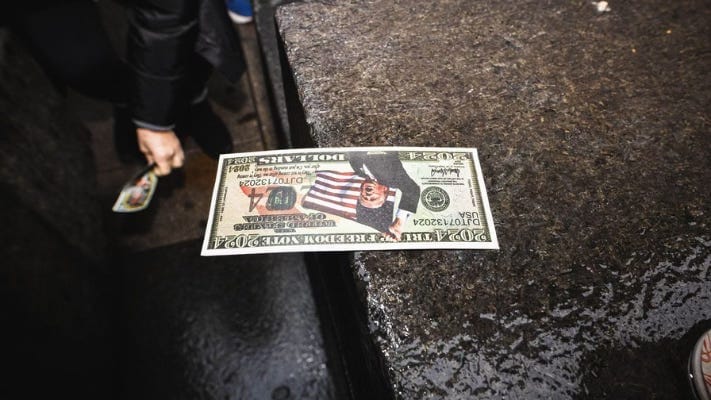
Currencies rarely earn headlines unless something has gone awry. The dollar’s 11% plunge in the first half of this year—the most brutal start to a year since the Nixon administration severed the final tie to the gold standard in 1973—signals more than routine market jitters. The world’s reserve currency faces a crisis of credibility rather than a simple adjustment in valuation.
The ICE U.S. Dollar Index, which measures the greenback against a basket of major currencies, charts the descent in stark relief. The euro has climbed 13%; the yen has steadied; sterling shows unusual firmness; and gold has resumed its ancient role as a refuge from monetary unease. The dollar, the anchor of global finance, now appears adrift, provoking investors to recalibrate their bets.
The prime mover behind that is Donald Trump. His return to the White House in January has seen a resurgence of tariffs and diplomatic friction as well as policy unpredictability. Long-standing alliances have frayed and global markets have responded with unease. The dollar’s value rests on confidence in American institutions, which is being undermined by Trump. Hence the jitters.
Supporters say tariffs are mere leverage rather than isolationism. Yet markets punish unpredictability, and investors increasingly demand compensation for exposure to American policy whiplash. Initial post-election enthusiasm for deregulation and investment has yielded to caution. Rather than the hoped-for Reaganesque revival, fears of the Nixon shock prevail: a combative administration; fiscal deterioration; and a weakening currency.
The consequences ripple widely. For American tourists, European vacations have become costlier. For global investors, dollar-denominated returns lose sheen once converted. The S&P 500’s rise this year translates to modest gains for euro-based investors. Meanwhile Europe’s Stoxx 600 benefits from currency translation, attracting fresh attention.
Fiscal profligacy pounds the problem. The administration’s proposed defence and infrastructure spending ignores record deficits, provoking bond markets to demand higher yields. If buyers balk, the Federal Reserve may be forced to step in, stoking inflation fears and further eroding confidence in the dollar.
The Fed tiptoes through a minefield. Inflation is still stubborn, fuelled partly by tariffs, but Trump presses for rate cuts. Markets anticipate five quarter-point cuts through 2026, pushing yields—and the dollar—down further. Investors chase returns elsewhere, from eurozone equities to emerging-market debt and gold. The dollar’s refuge status now comes with disclaimers.
Its global primacy confers immense benefits: lower borrowing costs, foreign capital inflows, strategic influence. Yet these rest on assumptions of stability and governance. Policy volatility and rising debt undermine these assumptions, threatening the dollar’s dominance. So does political brinkmanship.
Talk of “de-dollarisation” remains premature, however. The euro’s scale and cohesion are limited. The yuan is tightly controlled. And cryptocurrencies lack institutional credibility. Still, diversification is underway. Sovereign wealth funds, central banks, and pension funds are trimming their dollar holdings, hedging more aggressively and allocating to commodities. Central banks in Asia and the Middle East are hoarding gold at record rates.
American Treasuries face mounting strain. What used to be the (safe) haven, they now carry a risk premium reflecting dysfunction (rather than default). Foreign demand is waning. Should the trend persist Washington’s fiscal ambitions may collide with market realities, kicking borrowing costs higher.
A weaker dollar is not inherently catastrophic. It makes American exports more competitive and shrinks the trade deficit, goals lauded by the administration. Yet it also boosts import costs, fuelling inflation and squeezing consumers. For a nation reliant on imported goods and foreign capital, depreciation provides no panacea.
More profound is the reputational damage. “This is not about valuation,” observes Steve Englander of Standard Chartered. “It is about trust.” Rick Rieder of BlackRock warns although reserve status remains intact for now, debt surges and incoherent policies threaten confidence. Francesco Pesole of ING bluntly calls the dollar “the whipping boy of Trump 2.0’s erratic policies”.
Many expected the dollar to hold or strengthen, buoyed by higher American interest rates and growth. Rather the euro has surged, leaving Wall Street off-balance. With many investors betting against the greenback some warn the slide is overdone. Zurich Insurance’s Guy Miller suggests a snapback could follow. But currency rebounds do not restore confidence. They merely obscure underlying fractures.
America’s economic fundamentals remain robust. But currencies reflect more than macroeconomics. They measure belief in credibility and continuity. The dollar’s retreat is not yet a requiem for American financial hegemony, but it sounds a caution: faith, like fiat, is a finite resource. ■