Few countries with an annual per capita income below $1,400 have aspired to self-sufficiency in steel production. Nepal did.
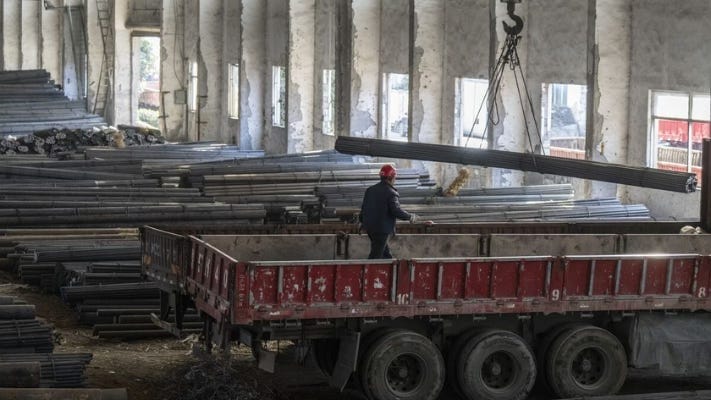
Between 2016 and 2020 as the nation gorged on cement and girders, production capacity in the steel industry doubled. Melting furnace plants, which convert scrap and sponge iron into billets and rods, multiplied from five to more than fifteen in under three years. The sector attracted some NPR 30bn ($220m) in private investment. Policymakers applauded. Investors poured in. Banks obliged. And now the country is locked in a steel trap: oversupplied and undercompeted and brutally exposed.
Much like China, which produces more steel than the rest of the world combined, Nepal now manufactures much more steel than it consumes. Unlike China, it lacks the market scale or geopolitical leverage to export its way out of trouble. The fallout is a chronic overcapacity that has forced firms into a vicious cycle of discounting and debt.
The steel industry in the country mirrors, in miniature, the wider global turbulence unleashed by China’s steel juggernaut. Beijing’s real estate slowdown and sluggish infrastructure investment as well as policy pivot toward green tech have flattened domestic steel demand. In response, Chinese producers have ramped up exports, dumping steel into international markets at prices well below production cost. From Chile to Germany and from India to America’s Rust Belt, the complaints are the same: predatory pricing, market distortions, political fallout. In this global game of steel whack-a-mole, Nepal has played a peculiar role: neither victim nor villain, but a self-sabotaging bystander.
In theory its steel push was sensible. Local production would slim down import dependency, create jobs and strengthen the industrial base, thereby boosting economic growth. The government sweetened the deal by waiving customs duties on key raw materials—sponge iron, pig iron scrap—and imposing token duties on imported finished billets. Domestic producers responded with vigour, installing melting furnaces and expanding capacity.
But the support was hastily dismantled. In what industry leaders now call a “regulatory betrayal”, the government reversed many of its original incentives. Duties on sponge iron and pig iron scrap were reinstated or hiked. The NPR 2.50/kg excise on imported billets was scrapped, making foreign products cheaper than locally manufactured alternatives. In effect, the playing field tilted against those who had invested in the industrial future.
The consequences are severe. A typical steel firm producing 80 million kilograms a year now faces losses of more than NPR 100m, by some estimates, owing to cost inflation and distorted price competition. Neupane and Agrawal, two prominent industry voices, have publicly lamented the government’s unpredictability, warning of a collapse in investor confidence. Many factories are operating well below capacity, some at barely 30%, producing below cost in a desperate attempt to maintain market share.
The financial contagion has already spread. Commercial banks, which extended generous credit lines to furnace firms and billet makers during the boom years, are staring down non-performing loans. Industrialists claim the sector is in a full-blown liquidity crisis: with unpaid government contractor bills of more than NPR 30bn adding to the pain. Electricity costs have soared. Input prices remain volatile. Export markets are limited. And in contrast to China’s global ambitions, Nepal’s steel sector has no Belt and Road on which to ride.
Whereas countries across the global south are reeling from China’s steel flood, Nepal is sinking under its own wave of overproduction. There is no foreign aggressor here. Only domestic miscalculation. The global steel market is saturated and Nepal’s competitive advantage is negligible. Unlike Chinese mills, Nepali producers cannot afford to run furnaces at a loss indefinitely. Nor can they recoup losses through overseas plants or captive infrastructure projects. Their battle is not with Beijing but with Birgunj and Bhairahawa.
What options remain? Industry insiders advocate a return to the original incentive regime: duty waivers on raw materials; protections against dumped imports; and policy consistency. Others propose stimulating domestic demand through public investment in roads and bridges and flyovers, among others. Capital expenditure, historically underwhelming, could revive both infrastructure and industry if deployed with urgency and transparency.
Export diversification is another pipe dream worth pursuing. Currently Nepali steel relies almost entirely on the Indian market, a dependency that makes it vulnerable to diplomatic spats and tariff shifts. But breaking into new markets requires quality assurance and logistical upgrades, none of which can be willed into existence overnight.
The government for its part has promised electricity discounts and export subsidies. Few have materialised. Above NPR 6bn in industrial subsidies remain unpaid across sectors. Meanwhile producers continue to haemorrhage cash, waiting for relief that may never arrive. With neither the political will nor fiscal space to underwrite another industrial rescue, the state seems content to let the sector bleed.
The steel debacle is a warning rather than an anomaly. Policymakers mistake industrial policy for industrial capacity. But incentives without consistency are akin to welding without flux: they may hold for a while, but eventually crack under pressure. In the absence of a coordinated strategy, steel has gone from symbol of national strength to symptom of structural malaise.
There is an old saying in metallurgy: overheat the furnace and even iron will crumble. Nepal’s steel industry, overbuilt and underprotected, is learning that lesson the hard way. ■