Nicky Loh/Bloomberg/Getty Images
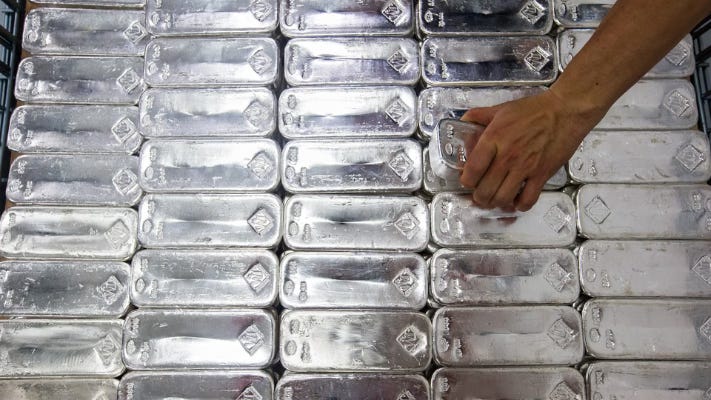
Gold commands reverence, silver merely suspicion. Yet in 2025 it is the humbler metal that is causing a stir. Prices have leapt 27% this year to over $36 a troy ounce, their highest in over a decade. Traffic at coin shops is up, small investors are piling into silver-backed exchange-traded funds (ETFs), and a new generation of “stackers” is hoarding bars and coins with the zeal of doomsday preppers.
Demand is rising from industrial users too, particularly solar-panel manufacturers. That makes silver a rare thing: a precious metal behaving like a growth stock.
The case for silver is, on its face, compelling. Like gold, it offers refuge from inflation and fiscal irresponsibility. Like copper, it is vital to the green-energy transition. That dual appeal has helped silver outshine even its flashier cousin: gold is up just 3.1% in June compared with silver’s 12%.
But silver is a volatile companion. In the past half-century its rallies have often ended in tears. History suggests the current silver surge is more froth than fundament.
To understand silver’s allure, one must grasp its schizophrenia. Roughly 80% of silver demand comes from industry, rather than investors. The metal is used in everything from electronics to medicine to solar panels, thanks to its conductivity and antimicrobial properties. In theory that industrial bent makes silver more cyclical than gold. In practice, however, the lines blur. Investment booms can inflate demand; speculative panics can overwhelm it.
Much of silver’s recent strength stems from solar panels. Demand has been bolstered by Chinese manufacturers racing to get ahead of looming trade restrictions and by America’s own climate spending. Yet this very vigour may be self-defeating.
Analysts at JPMorgan warn the solar sector may have “pulled forward” demand in anticipation of tariffs, raising the risk of a hangover later in the year. If prices jump too much, manufacturers might simply substitute cheaper metals, as they have before.
Meanwhile, retail enthusiasm is flirting with the irrational. In Chicago, coin dealers report customers regularly buying ounces at elevated prices “just in case”. Even state legislators are joining the fun: Florida has made certain silver and gold coins legal tender. The last time silver hit such levels—nearly $48 an ounce in 2011—it was propelled by similar retail fervour. Then, as now, that excitement proved fleeting.
This is not the first silver bubble, nor even the second. The most infamous came in 1980, when the Hunt brothers, two Texan oil heirs, attempted to corner the market. They borrowed money to buy vast quantities of silver, pushing prices up more than fourfold. It worked—for a while. Then margin calls came due, the market cracked, and silver collapsed. The brothers were banned from commodities trading and filed for personal bankruptcy. Adjusted for inflation, their $48 high would be over $200 today. Silver has never come close since.
Some investors believe “this time is different”, citing structural demand from the energy transition. But structurally strong stories are rarely immune to cyclical exaggeration. The solar boom, like most booms, may prove more burstable than backable. And silver’s poor liquidity, compared with gold, means small inflows can produce big moves—on the way up and the way down.
Still, silver’s dual identity makes it catnip for a nervous age. It is both a hedge against economic disorder and a bet on green growth. In that sense, it reflects investors’ broader schizophrenia: half fearful, half euphoric. But as with the metal itself, the line between the two is razor-thin.
So far silver has been the underdog that sparkles. But in markets, as in metallurgy, not all that glitters is destined to endure. ■