Foreign aid was never meant to last forever. Yet for more than seven decades, it did. From UN summits in New York to rural clinics in Uganda, aid became a fixture of global governance: one part benevolence, two parts bureaucracy. But as donor fatigue sets in and budgets tighten, the architecture of international development is crumbling. What should replace it?
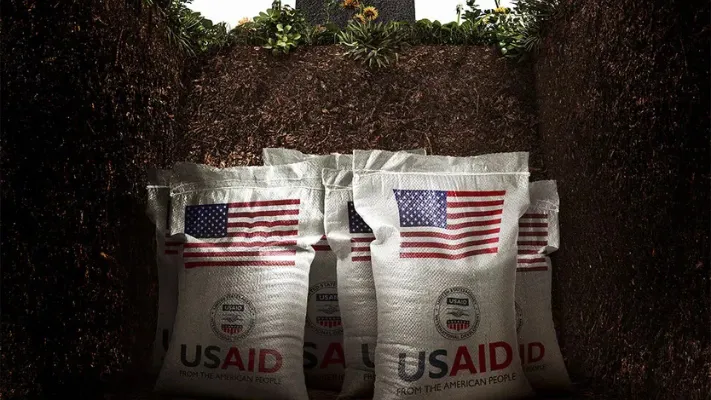
The disintegration is well underway. In 2024 eight of the top ten OECD donors trimmed their aid budgets. Germany, once a paragon of Entwicklungszusammenarbeit, slashed $5.3bn from its portfolio. Britain, also the global standard-bearer for aid, repurposed 40% of its allocation for domestic defence. Even America, the world’s biggest donor by volume, has retreated. The return of Donald Trump ushered in a near-total freeze at USAID, saying it is “run by a bunch of radical lunatics”. The agency still exists, technically. Operationally, it is in stasis.
This is no passing glitch. It reflects a fundamental reordering of priorities in rich countries. Ageing populations, climate shocks, migration pressures and military threats have redirected attention inward. Defence now competes with development; ballots with budgets. In America and Europe spending on Ukraine dwarfs aid to Africa. The solidarity once preached from podiums is harder to find in parliaments.
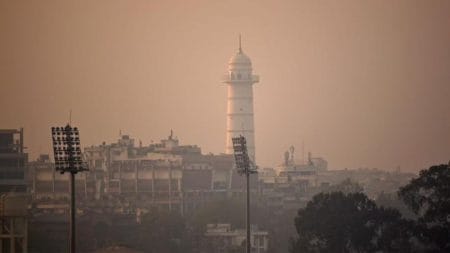
The effects are cascading. Development contractors—from giant NGOs like Chemonics to smaller outfits like FHI 360—have downsized or folded operations. UN agencies, many of which depend on U.S. funding for more than 40% of their budgets, are slashing staff and programmes. In Nepal, one of Asia’s poorest countries, aid accounted for roughly 15% of the national budget in this fiscal year—on paper. That funds crucial sectors: public health, disaster relief, rural infrastructure. But as actual aids dry up, projects have been frozen. Field teams recalled. Electrification schemes and municipal modernisation plans have been shelved.
The aid drought is not only painful. It is illuminating. For it exposes an ugly, older truth: that the aid model was never built for economic transformation. At its best, aid soothed suffering: syringes, schoolbooks, solar panels. At its worst, it subsidised consultants, encouraged dependency and complacency and entrenched policy inertia. In either case, it rarely built lasting prosperity.
The numbers bear this out. The world spent $230bn on official development assistance in 2023. Yet many recipient countries remain stuck in what Lant Pritchett, a former World Bank economist, calls “flailing states”: neither fragile enough to collapse nor strong enough to grow. The development machinery, bloated and self-referential, failed to do the one thing that matters: lift productivity.
This is not for lack of trying. Initiatives like the 2005 Paris Declaration and USAID’s “localisation” push under Samantha Power sought to hand the reins to recipient-country actors. But inertia proved stronger than intention. In 2020 only 9% of U.S. aid was channelled through local organisations. The rest was laundered through Beltway contractors and Western NGOs, who packaged development into logframes and deliverables. The fallout was a kind of economic nonsense: activity without accumulation.
Contrast that with countries that spurned aid and embraced industrialisation. South Korea, once a major aid recipient, invested in shipyards and steel mills. Vietnam built export zones. China laid highways and high-speed rail. Their formula was simple: attract capital, build infrastructure, export goods. Factories, not fellowships, drove the development miracle.
Nepal, by contrast, exemplifies the pitfalls. Its economy is dominated by subsistence agriculture and consumption financed by remittances. A quarter of GDP flows from migrant workers, mostly in the Gulf. Manufacturing is still anaemic. Foreign aid helped fund training centres and maternal health clinics, but did little to solve the chronic electricity shortages or crumbling transport links that deter investment. The aid industry gave Nepal textbooks, but not transformers.
To grow sustainably, countries like Nepal must shift from redistribution to production. That means roads that don’t collapse every monsoon; grids that power industry; and policies that don’t change with each minister. These are not glamorous. They do not lend themselves to pilot projects or photogenic ribbon-cuttings. But they are what development is made of.
What then replaces aid? Not necessarily charity. But capital. Multilateral lenders like the World Bank and the Asian Development Bank could reorient toward financing basic infrastructure. Their cheap, long-term loans remain vital. So too does private investment—if domestic governance can offer returns. Nepal’s recent foray into hydropower exports to India provides a glimpse of what might be possible: a future where value is generated, rather than granted.
But supply must be matched with discipline. Many developing countries lose more in illicit financial flows than they receive in aid. Africa’s annual losses—some $90bn—outstrip official assistance. Nepal too bleeds money through tax evasion and capital flight. Reclaiming these resources would do more for national development than any donor conference ever could.
None of this is to say aid has no place. Global public goods, from climate adaptation to pandemic preparedness, require collective action. Poor countries need help building resilience. But aid should be the spark rather than the fuel. It must stop compensating for structural dysfunctions, and start complementing strategic ambitions.
The age of aid is not ending with a revolt but a realisation. That poverty is not simply a gap in income, but in infrastructure and capacity. That development is not a matter of redistribution, but production. That the handout must give way to the handshake.
For countries like Nepal, this is not a tragedy. It is an opportunity. Aid was always supposed to be transitional. The mistake was treating it as permanent. Now with the props falling away, the edifice must stand on its own. Whether it does depends on decisions made in Kathmandu. Less aid, perhaps. But maybe, at last, more agency. ■