The resurgence is driven by necessity. Nepal’s post-pandemic labour market has split down the middle. On one side are globally-facing sectors—outsourcing firms, fintechs, consultancies—where international etiquette reigns. On the other is a vast informal economy, unbothered by tailoring or LinkedIn polish. Between these poles is a swelling professional class armed with degrees, ambition and, increasingly, well-pressed trousers.
For these strivers presentation has become a proxy. A neatly cinched tie may not reflect competence, but it signals intent; and that in a hypercompetitive environment may suffice. “Dress for the job you want,” intones the gospel of LinkedIn influencers and TikTok career coaches, many of whom broadcast from bedrooms in Dubai or Singapore. Nepali jobseekers, lacking similarly cosmopolitan offices, dress as if they were already there.
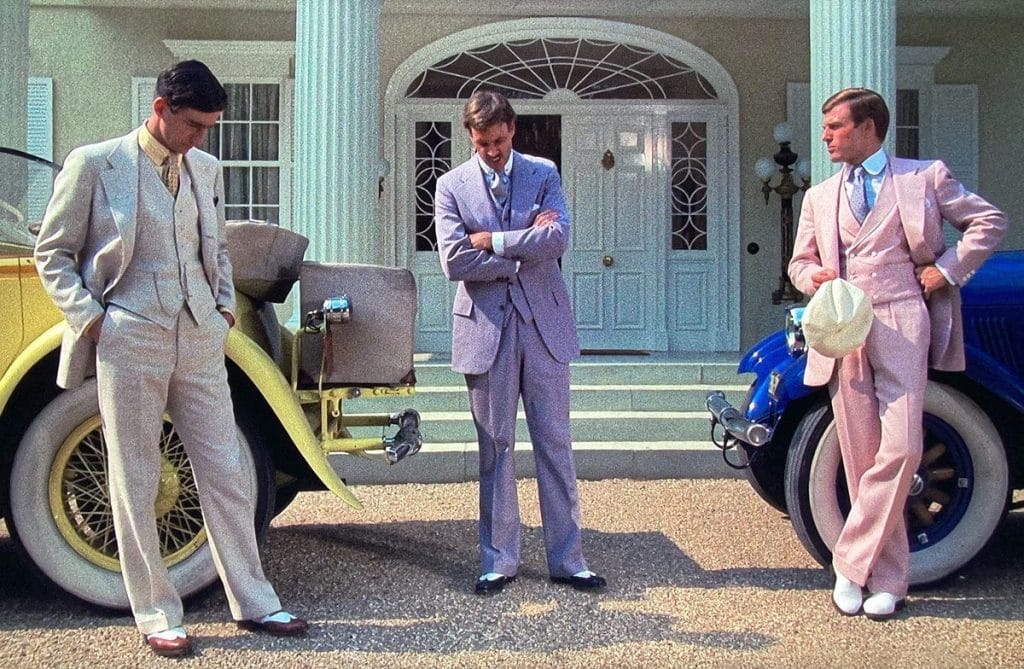
Tailors, used to the seasonal cycle of uniforms and wedding orders, have taken note. Orders for two-button jackets and crisp white shirts are up. Instagram feeds that once peddled hiking gear now spotlight lapels and loafers. Penny loafers, obscure to most Nepalis five years ago, now crop up in local boutique racks.
This is not merely mimicry. In a country where opportunity is refracted through caste, accent and postal code, clothing presents a rare degree of control. A black blazer on a young man from Jhapa, fresh off a bus to the capital, is less about fashion than insurance. If one cannot erase the village in one’s surname, perhaps one can obscure it in a pocket square.
Ironically, those least encumbered by social markers are most relaxed about dress codes. Children of the urban elite—armed with global degrees, fluent in the idioms of Davos and Durbar Marg—often dress down. They can afford to look like they just stepped off a yoga retreat. The rest, more so the upwardly mobile from hinterlands, take no such risks.
When it comes to dressing for professional settings, women face more ambiguous and demanding expectations than men. Their dress code remains an uneasy fusion of BBC restraint and Bollywood exuberance—with plenty of room for misstep. Too ethnic and one risks seeming parochial; too Western and accusations of inauthenticity are not far behind. Heels or flats? Kurta or skirt suit? The options multiply, but clarity does not.
Those anxieties are amplified in the digital realm. Virtual interviews, now common even for domestic roles, compress personality into a pixelated square. In such settings a sharply tailored jacket can do more than flatter: it can substitute for presence. Human resource managers may insist they hire for talent not tailoring. Few, however, are immune to the reassuring geometry of a lapel.
Not everyone is playing along. Nepali startup ecosystem, borrowing liberally from the American tech scene, is actively rebelling against formality. Oversized hoodies, chunky trainers and ironic T-shirts signal membership in a different tribe, where competence is measured in code, rather than creases. “I wore a suit once,” says a product manager at a Kathmandu-based payments firm. “It was for a visa interview.”
Yet even these sartorial rebels are not free from signalling. Their studied nonchalance—the minimalist jewellery, the monochrome layers—belies its own hierarchy. The message is that I have options. By contrast, those at the mercy of a single recruiter’s glance cannot afford ambiguity.
The suit, then, functions less as a fashion item than a socioeconomic tell. It smells aspiration, respectability, fluency in unspoken codes. In a meritocracy it might be redundant. In Nepal, it is often essential, most so in finance.
Will this change? Possibly. As remote work reshapes hiring norms and cultural boundaries blur, the tyranny of the interview outfit may weaken. But for now the well-dressed candidate is a familiar figure in Kathmandu: hopeful, anxious, immaculately pressed.
A suit will not land you the job but it might get you past the door. And in a city where those doors are narrow, one cannot afford to look like they do not belong. ■