Image: Suman Nepali
It is said that Nepal never wastes a crisis. Elections, it seems, are no exception. In the world’s youngest republic, electoral manipulation has matured into a competitive sport. Practised with enthusiasm, denounced with flair and tolerated with a shrug. When everyone accuses everyone else of cheating, one begins to suspect that everyone might be right.
Nepal’s democracy is still relatively fresh. The monarchy was abolished only in 2008, and the modern multiparty system—punctuated by civil war, a botched constitution-writing process, a carousel of unstable coalitions—has yet to reach institutional adulthood. But when it comes to bending the rules of the game, the country’s political class has demonstrated a precocity that would impress even its regional neighbours. In Kathmandu elections are rarely rigged in the vulgar, overt manner. Rather the trick is to tilt the playing field just enough to produce the desired result, without quite toppling the whole game.
Nepali politicians have refined this into a three-act play: first, manipulate the vote; second, manipulate the system; and last, manipulate the state itself.
Who’ll stop the rain
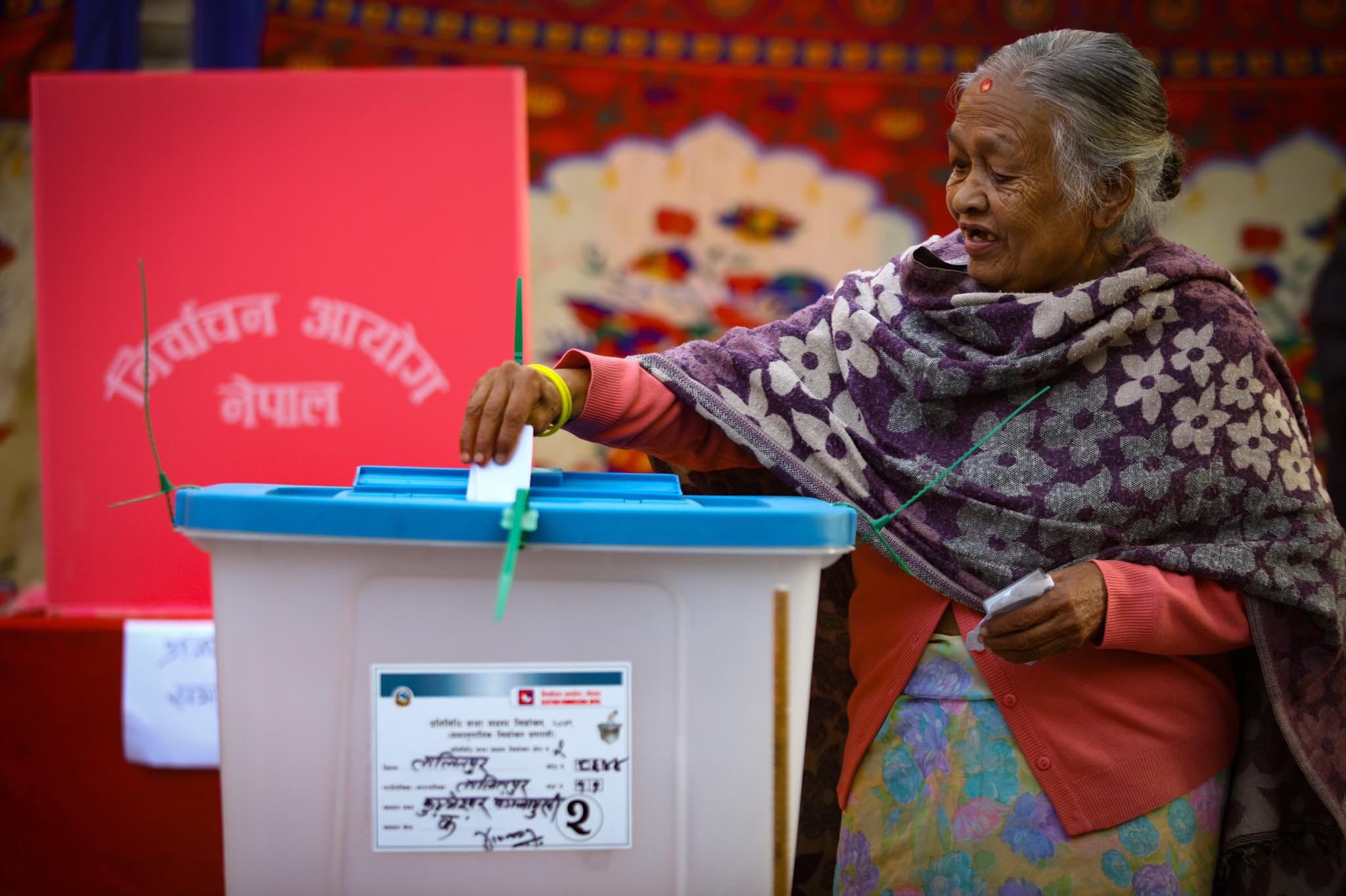
Vote-rigging in Nepal has evolved from the blunt to the baroque. In the 1990s booth capturing—where hired muscle seized polling stations—was a relatively common feature in the Tarai and parts of the mid-hills. Armed cadres voted on behalf of entire villages, local officials conveniently looking the other way. These days the process is clever. In the 2017 and 2022 elections, ballot boxes reportedly went missing en route to counting centres. In some districts seals were mysteriously broken. CCTV cameras, so helpful until they weren’t, failed just in time for “technical difficulties”.
Remote wards provide a particularly convenient canvas for such creativity. Ballot boxes in Humla or Kalikot must be hauled down treacherous footpaths by porters, usually accompanied by a lone policeman. A well-timed bribe or threat—administered at an altitude of 3,000 metres—can deliver a tidy return on investment.
Even so, outright fraud is harder than it once was. The Election Commission, though far from fearless, has shown occasional backbone. Election observers and the press—never more than a phone call away from a “leak”—add a measure of deterrence. Which may explain why most rigging now occurs not in the counting hall, but well before it.
Fortunate son
The 2015 Constitution introduced a hybrid electoral model: a combination of first-past-the-post (FPTP) and proportional representation (PR). Ostensibly designed to balance stability and inclusion, it has rather given parties a loophole-laden buffet of incentives. The real action happens in the PR lists.
Closed and centrally controlled, these lists are where party leaders reward the faithful, mollify rivals and insert unelectable—but generous—patrons. Gender and ethnic quotas add a veneer of diversity while affording ample space for tokenism and favour-trading. As one disenchanted candidate quipped, “It’s easier to make it to Parliament from Baluwatar than from your own village”.
Then there is the strategic sequencing of elections. In 2017 the UML pushed for federal and provincial elections in two phases, allowing momentum—and money—to build between rounds. The Maoists, ever the tactical survivors, formed electoral alliances that concealed their dwindling grassroots support while preserving their seat count. Local ward boundaries, meanwhile, were drawn with an eye to ethnic arithmetic and party fiefdoms, producing a curious map of convenience.
This, too, is rigging—of expectations, of access, of calculations. It rarely breaks the law, because the law is helpfully vague or conveniently interpreted. And it suits all major players equally.
Bad moon rising
The most elegant form of rigging requires no ballots at all. It requires the bureaucracy.
Appointments to the Election Commission are technically independent. In practice, they are negotiated among coalition partners: with loyalty prized over competence. When the ruling party violates the electoral code—by inaugurating a new highway weeks before the polls, say—the Commission often “investigates” without consequence. Meanwhile, opposition rallies find themselves mysteriously short of permits.
Public resources are deployed with bureaucratic finesse. Civil servants are transferred en masse before elections, often to districts where their sympathies align with ruling-party goals. Local contractors—particularly those with large infrastructure budgets—are encouraged to be “generous” with campaign donations. State-owned media, for all its democratic aspirations, retains an instinctive deference to those in power.
If all else fails, simply delay the election. Local government polls were postponed for nearly five years until 2022, as parties squabbled over federal restructuring. In the interim, municipalities were run by “officials in charge”—read: party-appointed administrators. Few citizens complained; fewer still were surprised.
Run through the jungle
That elections are manipulated in Nepal is no longer news. What is stunning is how little it matters to electoral outcomes—or to voters themselves. Despite the circus turnout remains robust. Nepalis are neither naive nor apathetic; they vote with clear-eyed cynicism. “Sabai milera khanchhan,” goes a popular refrain—they all steal, just in different ways. The ballot is both an act of protest and an act of resignation.
Democracy muddles on—for now. No single party dominates; coalitions shift; governments fall with exhausting regularity. The very fragility of the system, oddly enough, makes outright authoritarianism difficult. There is no Big Man in Kathmandu, only a rotating cast of middle-sized ones.
Still, the risk is in erosion rather than collapse. If every election is seen as rigged—not spectacularly, but structurally—the legitimacy of the system wears thin. Nepali democratic institutions are not yet brittle, but they are bendable. And the hands doing the bending are getting surer by the year.
In this mountain republic electoral manipulation may not decide every contest. But it does shape the rules of the game. And in Nepali politics, winning is less about playing fairly than about knowing exactly which rules are optional. ■