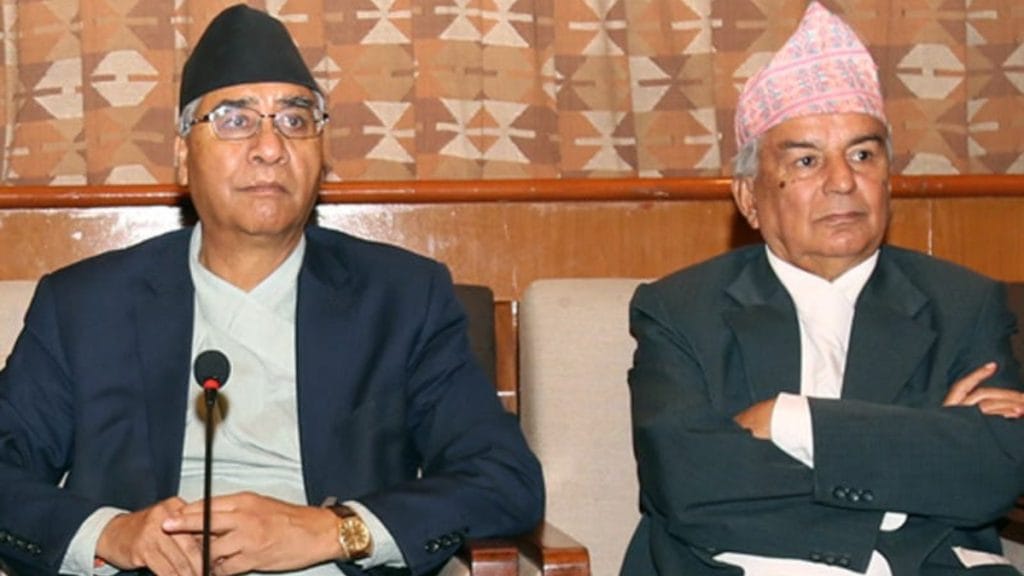
It is not coups or communists that now threaten the Nepali Congress (NC). It is comfort. The party that once toppled monarchs and outmanoeuvred Maoists is today undone by its own inertia. Sher Bahadur Deuba, its long-time leader and five-time prime minister, presides over what is less a party than a network of favours on autopilot. The NC is the largest political force in parliament. But that speaks more to the dysfunction of its rivals than its own vitality.
Founded in 1950 as a crusading coalition of exiles, socialists and anti-Rana revolutionaries, the NC has outlasted kings and coups alike. It birthed Nepal’s first elected government, guided the transition from absolute monarchy to multiparty democracy and helped end a decade-long civil war. It has won more elections than any other party in the nation’s chequered democratic history. Yet today despite its formidable legacy, it has no clear message, no reform agenda, no unifying idea—beyond the preservation of its gerontocracy.
The problem is not popularity. Its 2022 general election performance, in which it won 89 seats, confirmed its status as the largest party. It dominates local government, winning 329 of 753 units in the last municipal polls. It also boasts the country’s biggest membership base—with over 870,000 cardholders. But this numerical strength conceals an ideological vacuum. A once-bold party of democratic socialism has drifted towards a vague centrism indistinguishable from bureaucratic survivalism. Its slogan might as well be: keep calm and carry on convening.
At the root of the NC’s malaise is Deuba himself. At 78, he represents not continuity but cul-de-sac. His political longevity is impressive: he has outlasted kings, insurgents and more charismatic peers. But he has done so by mastering the art of intra-party compromise and coalition politics, not by providing any discernible policy vision. Under his leadership the party is paralysed by factionalism, stifled by seniority and allergic to internal democracy. Delegates to its general conventions vote not on ideas, but on which patron’s blessing to accept.
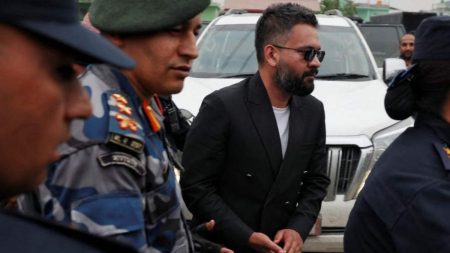
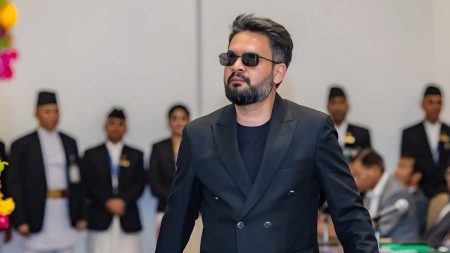
This sclerosis has ugly consequences. Younger leaders like Gagan Thapa and Bishwa Prakash Sharma—elected general secretaries in 2021—have energised the party’s urban base and online presence. But they are hemmed in by an ossified leadership. Their ascent has so far yielded little institutional change. The party’s internal elections still resemble family reunions. Its parliamentary selections reward loyalty, rather than merit. And its public messaging is a study in studied vagueness.
Voters have noticed. Although the NC continues to win pluralities, its dominance is paper-thin. In 2022 it won only 23 of the 165 directly elected seats. Many of its senior leaders were humiliated at the polls. Its strength increasingly relies on proportional representation and alliance-building—not popular enthusiasm. Meanwhile parties like the Rastriya Swatantra Party (RSP), led by media-savvy populists, are filling the void among young, disenchanted voters. For a generation facing double-digit unemployment and chronic underemployment, the Congress looks like a relic.
To arrest its decline the NC must first decide whether it wishes to be a vehicle of reform or merely a holding company for the old elite. If it chooses the former it must commit to genuine internal democracy. This would mean fixed term limits for senior posts; primaries for candidate selection; and a real transfer of power to its younger leaders. Gagan Thapa, a three-time MP and former health minister, is no saviour—but he is a symbol of what is possible. His brand of digitally savvy, policy-driven politics has struck a chord with urban voters. But his influence within the party depends less on likes and retweets than on whether he can dislodge entrenched patronage networks.
Second, the party must rediscover its ideological soul. In the 1950s it championed democratic socialism; in the 1990s it flirted with Third Way centrism. Today it says little more than bland platitudes about development and democracy. Meanwhile, economic troubles—from outmigration and youth unemployment to federal dysfunction and fiscal fragmentation—cry out for serious policy thinking. A party that once negotiated peace with Maoists must now propose how to make federalism work; how to rebuild a struggling education system; and how to generate jobs beyond the Gulf labour market.
Third, it must reimagine its role in a fragmented, federal polity. The NC is still haunted by its unitary past, clinging to centralised decision-making even as power shifts to provinces and municipalities. Yet it could thrive under federalism—if it invests in local leadership, decentralises authority and becomes the party that takes provincial governance seriously. Other national parties treat the provinces as political parking lots. The Congress could make them platforms for renewal.
None of this will be easy. A generational transition risks splitting the party. An ideological reboot may alienate its traditional base. And internal reform will provoke backlash from the barons who currently benefit from the status quo. But doing nothing is riskier. A party that refuses to adapt is not only irrelevant, it is dangerous. It cements cynicism, erodes public trust, creates space for demagogues.
Nepali history is rich in tragic ironies. The NC, once the engine of democratic change, now risks becoming the biggest obstacle to it. That it still leads the government, that it commands the most MPs and that it boasts the largest membership is cold comfort. So did the Congress Party in India—until it was routed. Or the Liberal Democrats in Japan—until they were not. Numbers, like legacies, do not protect against decay.
If the NC wants to remain more than a nostalgia brand, it must do more than win elections. It must decide what it is for. For now it is a question the party seems too comfortable to ask. But comfort, in politics, is the prelude to collapse. ■