America is preparing for a possible strike on Iran with senior officials reportedly assembling forces and munitions to deliver a devastating blow to Tehran’s nuclear programme, even as talks remain on the table.
Just days ago President Donald Trump appeared reluctant to join Israel in a military strike on Iran’s nuclear facilities, publicly calling for renewed diplomacy with Iran. Yet a change in tone has taken hold amid pressure from hawkish voices such as Senator Lindsey Graham, who argues Iran’s advancing nuclear capabilities pose an existential threat that must be eliminated “sooner rather than later”.
The rapid deployment of the USS Nimitz carrier strike group from the South China Sea to the Middle East—the first time it has diverted from the Indo-Pacific in months—is a signal of intent, preparing the ground for a possible weekend strike.
In recent weeks Israel has launched its boldest strikes in decades against Iranian nuclear infrastructure (which it says is an existential threat to it), including targeted assassinations of top generals and air raids on facilities in Natanz. But one site has remained unscathed: Fordo, a uranium enrichment plant buried deep in the Zagros mountains. Only America possesses the military hardware capable of reducing it to rubble. And only Donald Trump appears reckless enough to try.
President Trump, when asked whether he might authorise American strikes, shrugged: “Nobody knows what I’m going to do”. Iran’s supreme leader, Ayatollah Ali Khamenei, has warned America will face “irreparable damage” if Trump joins the conflict and approves strikes against his country.
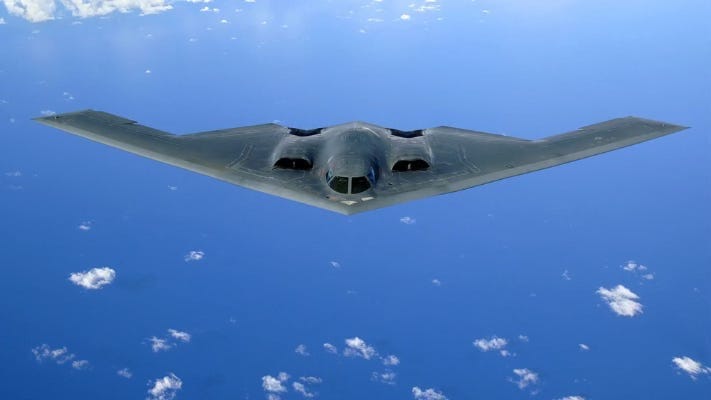
Hawks in Washington argue bombing Iran’s nuclear facilities is unimpeachable. Fordo is immune to Israeli firepower. Its destruction would delay Iran’s ability to enrich uranium for years, buying time for diplomacy—or regime collapse. The Israelis, having reached the limits of their own operational range, want America to deliver the decisive blow. That would mean deploying the Massive Ordnance Penetrator, a bunker-busting bomb (and the most powerful non-nuclear bomb) too heavy for Israeli jets and which Israel lacks, but well within the capabilities of American B-2 bombers loitering in Diego Garcia to carry.
But to strike is to invite a reply. As former American envoys and generals warn, Iran’s retaliation would likely unfold not through open confrontation but through the asymmetric playbook it has refined over decades. That means attacks on American bases in the Gulf, missile salvos via proxy militias and sabotage of oil infrastructure (petrol prices haunt American presidents). Blockading the Strait of Hormuz, through which a third of the world’s seaborne crude passes a day, could send global markets into turmoil.
Nor would Iranian restraint be guaranteed even if the strike were surgically limited. Iran’s military is reeling; its commanders are in hiding; and its arsenal is degraded. But desperation is volatile fuel. Rogue actors—bereft of orders but rich in grievances—may lash out independently. And should Khamenei’s grip falter, factions within the regime may jostle to prove their revolutionary credentials with acts of escalation.
The historical omens are hardly encouraging. America has bombed its way into many a Middle Eastern quagmire, but rarely out. Iraq, three times smaller than Iran, turned an eight-year American campaign into the birthplace of ISIS. Afghanistan, smaller still, absorbed two decades and billions of dollars before snapping back to Taliban rule. Iran, more populous, more entrenched and more ideologically cohesive, will not prove a simpler foe.
Nor does a Fordo strike guarantee strategic gain. Nuclear know-how, once acquired, cannot be unlearned. Iran’s scientists, unlike its centrifuges, are not so easily vaporised. As Ryan Crocker, a former U.S. ambassador to six war zones, observes: only a verifiable diplomatic agreement can permanently cap Iran’s nuclear ambitions. Air strikes may delay the programme. They will not delete it.
Yet diplomacy requires a destination. The Trump administration has spoken in maximalist tones—calling for “unconditional surrender”—but has failed to articulate what such surrender entails. Is the goal merely the rollback of enrichment? Or a wider dismantling of Iran’s missile arsenal? Or regime change? Without clarity, Iran has every incentive to assume the worst and dig in. As Dennis Ross, another former U.S. negotiator, notes, the more expansive the objectives, the more likely Iran is to respond with everything it has: starting with the oil fields of the Gulf and the Americans who guard them.
Even if a wider war is avoided, the repercussions will reverberate. Iran will likely retreat into its network of proxies and saboteurs, waging a slow, grinding conflict through third parties. American embassies, tourists and contractors will become soft targets.
To the doves, the lesson is simple: don’t bomb. But that too is a gamble. A failure to act may be read by Tehran as weakness, encouraging it to sprint toward a bomb. Already voices within the regime are advocating for withdrawal from the Nuclear Non-Proliferation Treaty (NPT), freeing Iran to test a weapon openly. If that happens, Israel may feel compelled to act unilaterally and with even less restraint.
Doing nothing risks emboldening Iran. Doing something risks setting the region ablaze. The only route through is credible diplomacy backed by a credible threat: something America has struggled to deliver since the 2015 nuclear deal was torched.
Bombing Fordo might look like a clean strike. But history suggests it could be the opening act of a longer, bloodier war—easier to start than to end. ■