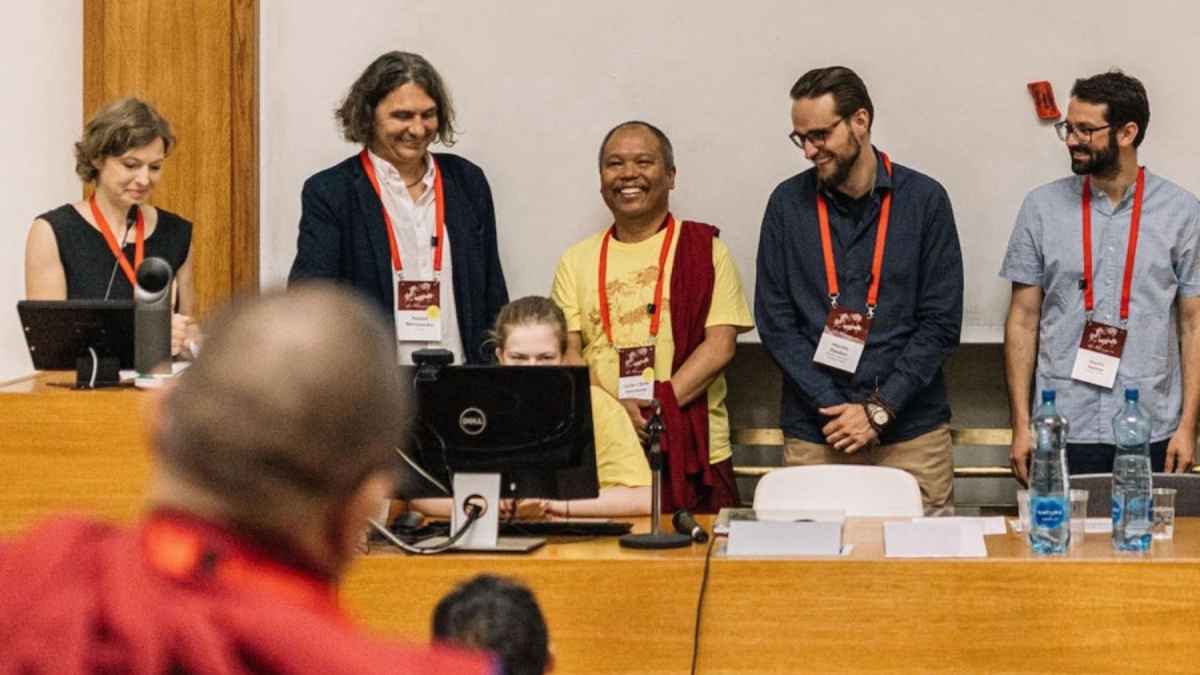
IMAGE: COURTESY OF THE INTERNATIONAL ASSOCIATION FOR TIBETAN STUDIES
NEPAL’S GOVERNMENT has cancelled the 17th Seminar of the International Association for Tibetan Studies, an internationally renowned academic conference that was scheduled to take place in Kathmandu from August 23rd to 29th.
The conference had been four years in the planning. Over 720 scholars from 39 countries were expected to present across seventy panel sessions covering Tibetan language, history, culture and Buddhist philosophy. The participant list included some 150 delegates from the United States and nearly 100 from mainland China, representing major academic and research institutions from both nations.
The conference was not an exile-Tibetan political rally, meaning it was an academic gathering of the kind that takes place in universities across the world every year, covering history, linguistics, Buddhist studies and Himalayan culture. China had registered a delegation of nearly 100 participants from state-affiliated institutions including the China Tibetology Research Center; observers noted this was an attempt to shape academic discourse on Tibet from within the conference rather than oppose it from outside.
What Beijing apparently could not tolerate was the possibility that some of the other 620 scholars, many of them distinguished academics from Western universities, might say things during their presentations that Beijing considered inconvenient. That possibility was sufficient to mobilise the full weight of Chinese diplomatic machinery against a seven-day conference at a Kathmandu hotel.
The reversal followed a sustained pressure campaign by Chinese diplomats that intensified once registration closed in June. On July 21st Ambassador Zhang Maoming met Nepal’s Foreign Secretary Amrit Bahadur Rai to discuss the conference; officials familiar with the meeting said Zhang stopped short of directly demanding cancellation but urged Rai to stay “vigilant” about participants who might make pro-Tibet statements. He urged vigilance; a word that, in the diplomatic vocabulary of an authoritarian state speaking to a smaller neighbour, means “we expect you to solve this problem without us having to ask again”.
As the lobbying continued, Venerable Master Yinshun, a member of the National Committee of the Chinese People’s Political Consultative Conference, former vice president of the Buddhist Association of China, and abbot of the Chinese Temple of Nepal, arrived in Kathmandu on July 29th. A senior security official said Yinshun discussed the seminar during his visit, which also took him to Lumbini. A CPPCC member travelling from China to discuss an academic conference with senior Nepali officials is coercion conducted through religious and cultural cover.
Following his visit and a separate meeting between Rai and the ambassador, half a dozen Tibetan experts from the Tibetan Policy Institute in India withdrew from the conference. The Dharamshala-based Central Tibetan Administration decided to withdraw its official five-member delegation to prevent diplomatic strain on Kathmandu, while allowing scholars to participate in an individual capacity.
However, Nepali officials ultimately requested that the entire event be halted. Even after the CTA sacrificed its own participation to reduce Beijing’s stated concern, Nepal’s government cancelled the conference outright.
The Kathmandu Post’s reporting, which broke this story, added a detail that has received insufficient attention. Nepal overruled its own security agencies to cancel the conference. The country’s security establishment had assessed the conference as manageable; they concluded that a seven-day academic gathering of scholars could be hosted without compromising Nepal’s One China commitments or its internal security. The political leadership overruled that assessment.
The decision to cancel was driven by a diplomatic preference not to displease Beijing, even when Nepal’s own intelligence and police services believed there was no actual threat to manage.
Tencho Gyatso, President of the International Campaign for Tibet, said: “The significance of this incident extends well beyond a single academic conference. Beijing is institutionalising a system in which diplomacy, repressive domestic legislation implemented outside China’s borders, and state-directed academic scholarship reinforce one another.”
The institutionalisation point is the one that should worry Nepali academics, university administrators and the government’s own supporters most. This was a demonstration that China’s diplomatic machinery can cancel an academic conference in a sovereign third country (without submitting a formal protest, without making a written demand, without providing any legal or diplomatic instrument that Nepal could point to as justification) simply by expressing concern and deploying a CPPCC member on a pastoral visit.
The Balendra Shah government, which came to power on a platform of sovereignty and breaking with the transactional politics of the old parties, cancelled this conference the same week its foreign minister was in Beijing “vowing closer ties”. The two things are related.
Nepal’s balanced diplomacy between India and China has always required managing Beijing’s sensitivities on Tibet; what has changed in recent years is the scope of what those sensitivities cover. They now apparently include the question of whether Kathmandu University can host international scholars studying Himalayan history.
Nepal gave all of that away to avoid a conversation that Zhang Maoming never formally requested it avoid. ■