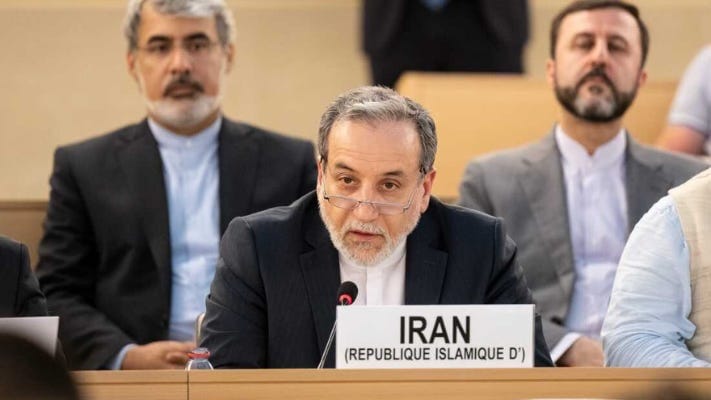
Abbas Araghchi has been here before. The Intercontinental Hotel in Geneva is a familiar place for the seasoned Iranian diplomat. In 2013 he helped negotiate an interim deal here that froze Iran’s nuclear activity and laid the groundwork for the Joint Comprehensive Plan of Action (JCPOA). That accord was meant to stave off two dangers: an Iranian bomb and an Israeli pre-emptive strike. A decade later it has failed to prevent either. When Mr Araghchi returned to the Intercontinental on June 20th, it was as a wartime emissary, representing a government reeling from drone strikes, air raids and assassinations.
Israel’s campaign against Iran has entered its second week. It is already the most intense military assault on the Islamic Republic since the Iran-Iraq war of the 1980s. The damage to Tehran, according to Iranian officials, surpasses what Saddam Hussein managed in eight years. Commanders have been killed in their homes; nuclear facilities bombed; and the capital’s skies completely surrendered to Israeli jets.
Iran has responded with defiance. Its forces have launched near-daily strikes into Israel, hitting oil infrastructure, religious sites and civilian areas. Yet the Iranian regime is on the back foot, struggling to contain internal insecurity and external firepower. Most revealing is the conduct of the supreme leader himself.
Ayatollah Ali Khamenei, 86, has retreated to an underground bunker and suspended electronic communications. Orders now pass via a single trusted aide. He has reshuffled military command to pre-empt further assassinations and in a rare move designated three clerics as possible successors should he be killed. He has also instructed the Assembly of Experts—the clerical body tasked with selecting the next supreme leader—to bypass lengthy deliberation in favour of an immediate appointment.
Such precautions reflect both strategic foresight and an extraordinary vulnerability. Iranian intelligence officials admit they were blindsided: some of the country’s top commanders were eliminated within an hour. Drones have struck deep within Iranian territory, suggesting an elaborate Israeli infiltration network. The Ministry of Intelligence has since ordered a halt to digital communication and imposed an internet blackout as well as called on citizens to report suspicious activity. The state is waging a war on two fronts: against an external aggressor and against the possibility that its own security apparatus has been compromised.
The social response has been unexpectedly cohesive. Iranians who routinely disagree—conservatives, reformists, even dissidents—have rallied under the banner of national defence. Hotels and wedding halls are housing the displaced. Bread is being rationed voluntarily. Therapists offer free sessions online. Nationalism has proved more binding for now than ideology.
But solidarity does not resolve the strategic dilemma. Iran wants a ceasefire: yet has little leverage. Mr Araghchi is once again talking to Britain, France, Germany and the EU. The Americans are not in the room but their presence is palpable. The day before the Geneva talks, David Lammy, Britain’s foreign secretary, met American officials in Washington, including Steve Witkoff, Donald Trump’s nuclear envoy. European leaders—thought to be the more conciliatory bloc—are increasingly parroting Washington’s line. Emmanuel Macron now backs a “zero enrichment” deal. German diplomats concur. Iran’s hopes of a divided West are fading.
America, for its part, is weighing options. Mr Trump is under pressure from Israel to join the war and bomb Fordow, a hardened nuclear facility buried under a mountain. Only America’s bunker-busting GBU-57 bomb might be able to reach it. But such a move is fraught. Polls suggest 60% of Americans oppose entering the war. The president’s own political base—especially isolationist elements within the MAGA coalition—is split. And Gulf allies are growing uneasy. The UAE fears retaliatory strikes and an exodus of expats. Regional business elites are already jittery. A nuclear confrontation is bad for tourism, worse for markets.
So the Geneva summit is a compromise. Iran refuses direct talks with America, which is refusing to settle for anything less than full nuclear capitulation. Backchannels are buzzing—via Cyprus, Oman, Qatar and the UAE—but diplomats report Iran and America are largely talking past one another. The sticking point remains uranium enrichment. Before the war Mr Araghchi and Mr Witkoff had met five times to explore a deal. At first the contours resembled the JCPOA: limited enrichment, restricted centrifuges and a one-year breakout time. But Iran has moved far beyond that. It now enriches uranium to 60%, possesses a more sophisticated centrifuge arsenal and is believed to have hidden stockpiles. The breakout time is no longer measured in months.
Hence America’s new red line: zero enrichment. Iran, by contrast, insists on its sovereign right to pursue civilian nuclear capabilities. In 2015 Barack Obama dropped his demand for zero enrichment after realising Tehran wouldn’t budge. But that strategy no longer works. Then, Iran had leverage. Now it has warplanes overhead and a crumbling security apparatus beneath its feet.
What happens next will depend on decisions made in Washington and Tehran—and on the pace of Israeli operations. If Iran concedes a deal might be struck and Israel told to stand down. If it doesn’t America may join the fight, intentionally or by accident. Either way, the outcome will redefine the nuclear order in the Middle East.
A decade ago, diplomacy in Geneva bought Iran time. This time, it may be running out. ■