Image: BYD Nepal
Electric vehicles are no longer a novelty in Nepal. They are the default. In the past year three-quarters of all four-wheeled passenger vehicles imported into the country were electric. That places the country among the world’s most electrified road economies, trailing only the likes of Norway and Singapore. In 2019 electric vehicles were a rounding error in the transport ledger. Today they dominate car showrooms and rattle old assumptions about what an emerging market can accomplish.
Producing that transformation is a policy experiment in sharp relief. In 2021 the government slashed combined customs and excise duties on electric vehicles to 40% while keeping a punitive 180% levy on petrol and diesel cars. The effect was immediate and stunning. A mid-range electric SUV now sells for less than its fossil-fuel equivalent, a rarity even in rich economies. Dealers who had once doubted the market now queue up for Chinese inventory. Consumers meanwhile are discovering a full charge costs less than a cup of tea, and that the quiet hum of electric motors is easier on the ears than Kathmandu’s usual sonic assault.
The economics are compelling. Electricity is cheap, clean and abundant, at least on paper. With more than 90% of its generation coming from hydropower, the country has energy to spare, particularly during the wet season. Years of investment in generation and transmission have nearly eliminated load-shedding, an achievement few South Asian neighbours can claim. The state-run Nepal Electricity Authority has capitalised on this by installing more than 60 public charging stations in the capital and along key highways, with private firms adding more than 1,000 in addition. Tariffs for EV charging are subsidised, making electric transport much cheaper to fuel than petrol-powered alternatives.
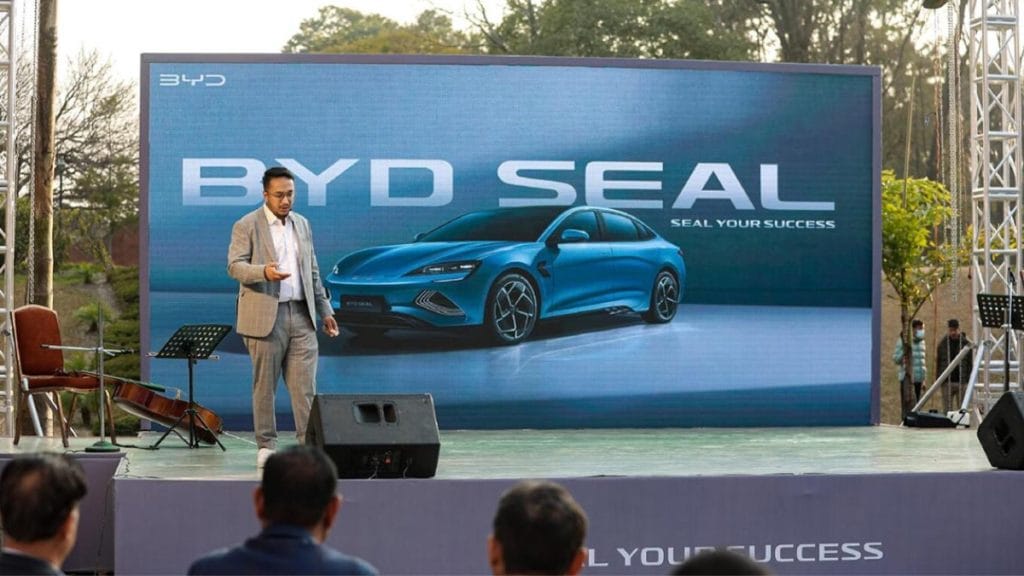
China plays an outsize role in this story. Of the more than 16,500 electric vehicles imported in the last fiscal year, some 82% were Chinese-made. BYD, the world’s biggest EV manufacturer, has flooded the Nepali market with models such as the Atto 3 and Dolphin. The company expects to sell 4,000 vehicles this year through its 18 dealerships. India, the regional hegemon, is a distant second in the import race. Though Tata Motors has gained some traction, it struggles to compete with Chinese pricing and battery range. Smaller Chinese brands have also entered the market—some with questionable quality—causing headaches about safety standards and the need for independent certification.
Government ambition has matched market enthusiasm. Its long-term strategy calls for 90% of private vehicle sales and 60% of public four-wheelers to be electric by 2030. Yet there is a paradox at the heart of the ambition: even as electric imports rocket, Nepal continues to invest in fossil fuel infrastructure. Petroleum and LPG pipelines are being extended. Imports of petrol and diesel have increased in volume, if not value. The state appears to be planning for two contradictory futures.
Policy incoherence extends to the financing front. The Nepal Rastra Bank, the central bank, recently cut the maximum loan-to-value ratio for EVs from 80% to 60% while simultaneously lifting the cap for petrol vehicles. The move, ostensibly aimed at curbing risk in household credit, has made EVs harder to afford for the very buyers that drove the market’s ascent: urban retirees, salaried professionals and small business owners. Dealers fear it will blunt momentum and slow the transition just as scale effects were beginning to be seen.
Public transport remains a blind spot. Most Nepalese still travel by bus or motorbike. The state-owned Sajha Yatayat has added 41 electric buses, with another 100 promised by China, but electrifying mass transit has proved harder than selling SUVs to Kathmandu’s middle class. Fare caps and high upfront costs deter private operators. Narrow roads and the cultural preference for two-wheelers complicate planning. Electric motorbikes, notwithstanding government subsidies, have yet to rival their petrol counterparts in popularity.
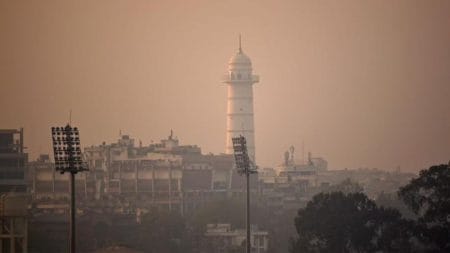
The environmental argument for EVs is strong. Kathmandu suffers from some of the worst air quality in Asia. Vehicles account for a big share of fine particulate pollution. Unlike imported fossil fuels, which drain foreign reserves, electricity is domestically generated and strengthens energy security. An expanding EV ecosystem creates jobs in charging infrastructure, software integration as well as vehicle servicing: precisely the kind of upstream linkages policymakers fantasise about.
Yet the transition is not without its risks. Battery disposal remains an unsolved problem. There is no national recycling plan. Charging infrastructure outside urban areas is patchy. Market confidence could be undermined by inconsistent policy, poor-quality imports or a loss of consumer trust. And without wider reforms in urban planning and public transport, EVs may simply replace one form of congestion with another: cleaner but no faster.
Still the country’s EV experiment presents a rare case of public policy delivering tangible results at speed. Nepal has seized a geopolitical opening—free trade with China, unused hydropower and stagnant fossil vehicle sales—and turned it into a structural pivot. That the shift happened amidst economic headwinds and political churn only adds to the intrigue.If it can maintain its course the story of its electric vehicles may not be a one-off success. It could be a preview of how low-income economies, unburdened by legacy industries, leapfrog into a cleaner transport future. The Himalayan roads are narrow. The ambition behind them is not. ■