IMAGE VIA BUSINESS 360
When Nepal’s High-Level Economic Reform Suggestions Commission delivered its blueprint this year, the prescription was blunt. The economy, it concluded, is stuck in a cycle of weak productivity, faltering investment, moribund consumption and policy drift. Newly-installed Finance Minister Rameshwor Prasad Khanal has vowed to implement its recommendations—a promise that, if honoured, would mark the country’s most ambitious reform attempt since the liberalisation drive of the early 1990s. The question is: can Nepal turn a technocratic plan into political reality?
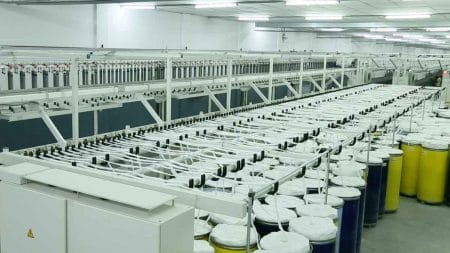
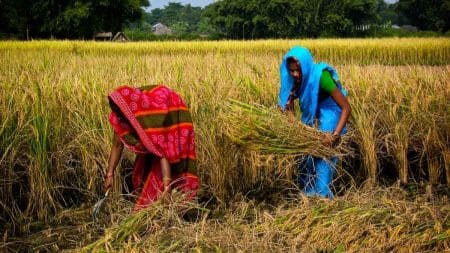
The report begins from an uncomfortable fact: Nepal’s growth is fuelled by imports rather than production. Factories are underutilised; agriculture is stagnant; and the private sector, ostensibly the engine of development, operates in an atmosphere of policy uncertainty and regulatory overreach. Consumption, propped up for decades by remittances, is weakening as credit fails to take off and construction slows. The country has become a consumer economy without the productive base to sustain it.
At the centre of the Commission’s agenda is governance. Budgets are to be written on the basis of cost-benefit analysis, with politically motivated projects cut from the pipeline. Digital tracking systems are to monitor spending. This is not radical but it is necessary. Other emerging economies show what happens when governance is tightened. Bangladesh’s garment success came from steady improvements in bureaucracy and infrastructure. Ethiopia’s industrial parks, too, were built not because corruption disappeared, but because enough rules were enforced to reassure investors. Nepal has yet to reach even that basic threshold.
Private enterprise is the second pillar. The Commission proposes to treat the private sector as the development engine in its own right. Flexible labour laws and formalisation of small firms, as well as incentives for technology adoption, all feature. In Vietnam, foreign capital was welcomed under rules that gave firms clarity and workers flexibility, transforming it into a hub for electronics exports. Nepal has attracted neither foreign manufacturers nor sustained domestic investment. Its small and medium-sized enterprises account for most employment but are largely informal. Formalisation, if it comes, would mark the first serious step toward scale.
The labour market receives unusually direct attention. The report calls for lessening dependence on foreign employment by boosting women and youth participation at home. This ambition collides with structural reality: remittances account for a quarter of GDP, and the economy has come to rely on exporting workers as a safety valve. Countries that successfully absorbed labour into industry—China in the 1990s or Bangladesh more recently—did so because factories expanded faster than populations. Nepal has no equivalent sector. Linking education to employment and certifying skills digitally may help, but without a surge in investment, opportunities for young workers will be scarce.
The financial sector, too, requires stabilisation. Cooperatives, whose collapse has trapped depositors’ savings, are to be brought under regulation. Credit scoring is to become mandatory. A Business Credit Recovery Act would strengthen banks’ ability to collect loans. The plan to release up to 10 billion rupees to return deposits under 500,000 rupees is a reminder of how acute the cooperative crisis has become. Unless lending shifts from speculation in land and housing to production, Nepal could repeat the experience of Kenya, where credit booms tied to real estate repeatedly ended in busts.
Public enterprises face a harsher remedy. The Commission advises shutting down five loss-making corporations, merging state cement firms, and restructuring Nepal Airlines with foreign partners. Political resistance is inevitable: state firms are patronage machines. Yet keeping them afloat through borrowing to pay salaries only deepens fiscal stress. India’s decision to privatise ailing state firms in the early 2000s met opposition but eventually freed capital for more productive use. Without similar resolve, Nepal will keep draining scarce fiscal resources into black holes.
Federalism adds another complexity. The report urges better revenue-sharing and clearer division of service delivery on top of stronger capacity at provincial and local levels. Yet subnational governments complain of insufficient transfers while the centre accuses them of inefficiency. Unless fiscal equity is built into the system, federalism risks entrenching economic imbalance rather than reducing it. Nigeria’s federal system, dominated by oil-rich states, is a warning of how fiscal decentralisation without discipline can magnify rather than moderate inequality.
Internationally, the agenda is stunning for its pragmatism. It proposes a review of the Indian rupee exchange rate peg, though only through study, not immediate change. It calls for the development of a bond market within a year, an ambitious target given the underdeveloped state of domestic capital markets. These steps reflect a recognition that Nepal must insulate itself against volatility without isolating itself from global flows. Vietnam built credibility by stabilising its currency before opening up its bond markets. Nepal is attempting to do both at once.
Scepticism is warranted. Nepal has published reform roadmaps before only to shelve them when political coalitions shifted or vested interests balked. The Commission’s timeline of six months to three years is optimistic because large infrastructure projects routinely miss deadlines by a decade. Yet the diagnosis is hard to dispute. Productivity, governance and investment are preconditions for growth.
If even half the recommendations are implemented—such as scrapping unviable state firms and digitising expenditure—the effect would be big. But Nepal’s economic history suggests another possibility: that the plan will join the archive of well-written reports that changed little. Reform is not about drafting the right document, it is about confronting the interests that block it. The test, as ever, lies in execution. ■