IMAGE: BLOOMBERG
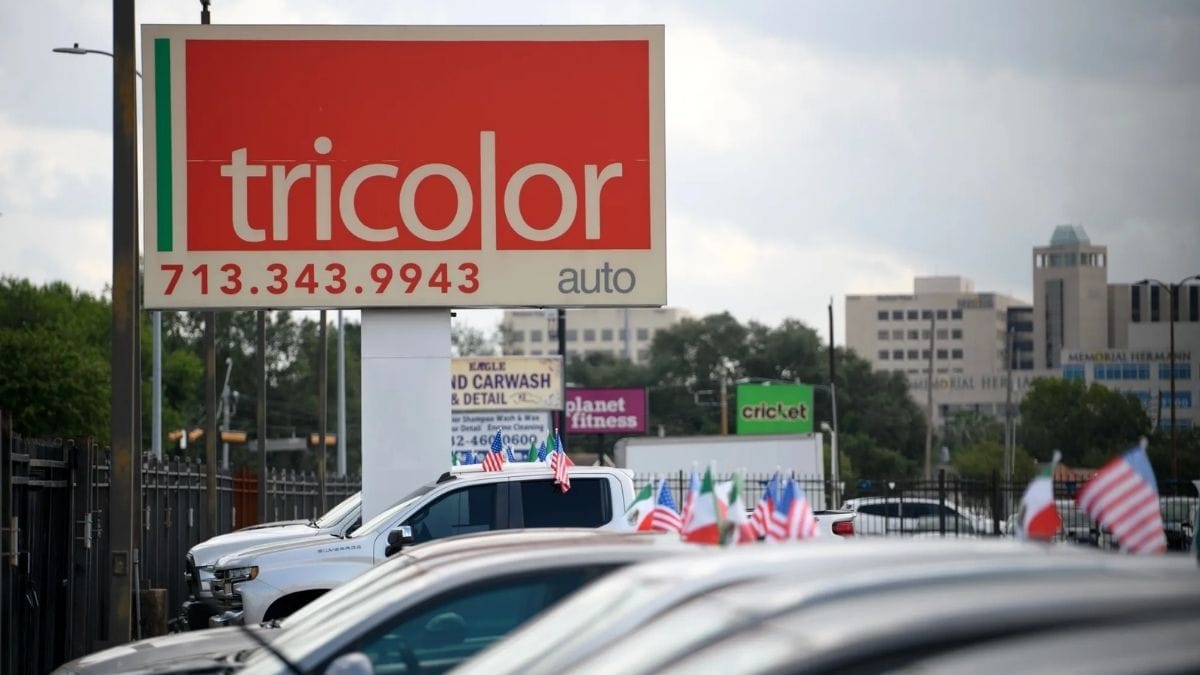
In early June, Tricolor Holdings was rated triple-A. By mid-September it had defaulted on $2bn of debt backed by subprime auto loans. Its lenders were attempting to repossess thousands of vehicles. A few weeks earlier First Brands Group, a sprawling car-parts supplier, was marketing $6bn in new loans. Now it is scrambling to avoid bankruptcy, with at least $10bn in disclosed liabilities and billions more lurking in obscure, invoice-backed financing vehicles.
Individually each collapse might have seemed unfortunate. Taken together they are shaking confidence in one of finance’s fastest-growing corners: asset-backed private credit. Marketed as a safer, more tailored alternative to public lending, it now looks anything but. Investors once promised stability and structure are discovering a mess of leverage, opacity and surprise.
Private credit was not always this systemically significant. But after the global financial crisis, regulators pushed risk away from banks and into less supervised institutions. Private funds, free from deposit insurance and capital rules, seemed an ideal outlet. They matched long-term capital with complex borrowers. Big asset managers like Apollo and KKR built empires on the idea that private loans could offer equity-like returns with bond-like safety.
By 2025 America’s private credit market had swollen to over $1.7trn. Asset-backed finance—loans secured against cars, invoices or even solar panels—was a staple product. Investors, weary of low yields and public-market whiplash, piled in. Funds, flush with cash, grew aggressive.
Tricolor found a willing audience. It lent to low-income, often undocumented borrowers buying used cars, and packaged the loans into securities rated investment-grade. Its pitch combined financial inclusion with robust returns. First Brands pursued a different tactic, using receivables factoring and reverse factoring—borrowing against future payments due from customers and owed to suppliers. The outcome was a shadow funding machine, largely invisible to senior lenders, that may have surpassed $10bn.
Both strategies thrived on opacity. Unlike public markets, where debt terms and counterparties are transparent, private credit deals are bespoke, and tend to be bilateral. That works at small scale. But as deal sizes ballooned, more lenders crowded in, usually unaware of each other’s terms. In First Brands’ case, some banks were reportedly blindsided by the size of its hidden obligations.
The illusion of safety rested on a simple misreading: that private markets come with low volatility. In truth they offer low visibility of volatility. Loans are not marked to market. Problems emerge silently—until they don’t. When stress surfaces, it comes not gradually but all at once.
The Tricolor debacle is revealing. Lenders had assumed that subprime auto debt was secured. But the collateral—second-hand cars sold on credit to marginal borrowers—proved slippery. Vehicles depreciate fast. Recovery rates are poor. One financier noted that some loans were “secured against assets that don’t want to be found”.
First Brands’ downfall is less about consumer risk and more about financial engineering. Demand for car parts remains solid; public peers like AutoZone are doing well. But First Brands layered standard debt atop complex, off-balance-sheet financing. It hid leverage, flattered cash flow and bypassed traditional scrutiny. When growth slowed and trust frayed, its structure turned brittle.
Too bespoke to fail
Such stories are meant to be outliers. Proponents insist the wider market is sound. “Securitisation is not the problem,” says Dylan Ross of TCW, a big asset manager. Indeed most private asset-backed loans have not defaulted. But markets are not defined by averages. They are shaped by outliers—by the stress points where assumptions break.
More troubling is who got caught. JPMorgan underwrote Tricolor’s debt. Jefferies, a punchy investment bank, was marketing First Brands’ loans weeks before the crisis. Their presence lent credibility to structures that, in hindsight, relied on weak financial foundations and paper-thin disclosure.
The core irony is hard to miss. The very features that made private credit attractive—customisation, high yields, limited oversight—are now liabilities. Fund managers, desperate to deploy capital, accepted looser covenants and minimal diligence. Investors, sold on the promise of “steady alpha”, assumed they were avoiding the chaos of public markets. They weren’t.
And private crises don’t stay private for long. Banks, pension funds and insurers are now among the largest buyers of private credit products. Tricolor’s collapse has already stung JPMorgan and Fifth Third Bank. First Brands’ failure is rippling through hedge funds and institutional portfolios. So far, the damage looks containable. But cracks are appearing.
This is not a rerun of 2008. The market is less leveraged, and the products less globally entwined. But the logic of financial instability remains the same. When too much money chases too few credible borrowers, underwriting slips. When transparency fades, risk hides. And when stress arrives, it is sudden and hard to contain.
The boom in private credit was built on the assumption that bespoke deals confer better alignment and stronger protections. But discipline, not design, keeps markets stable. If lenders stop asking hard questions, no structure is safe.
Tricolor and First Brands are not the end of the story. Dozens of firms now raise money through similarly engineered credit vehicles. As defaults rise, more lenders will discover that their “assets” are less tangible than they believed. If a deal offers steady returns at implausibly high yields, the risk is likely hiding in plain sight.
The first real test of private credit is under way. What it reveals is not the weakness of the model, but of those who sold safety in a market built on speed, leverage and trust. That trust, once lost, is hard to repackage. ■