IMAGE: REUTERS
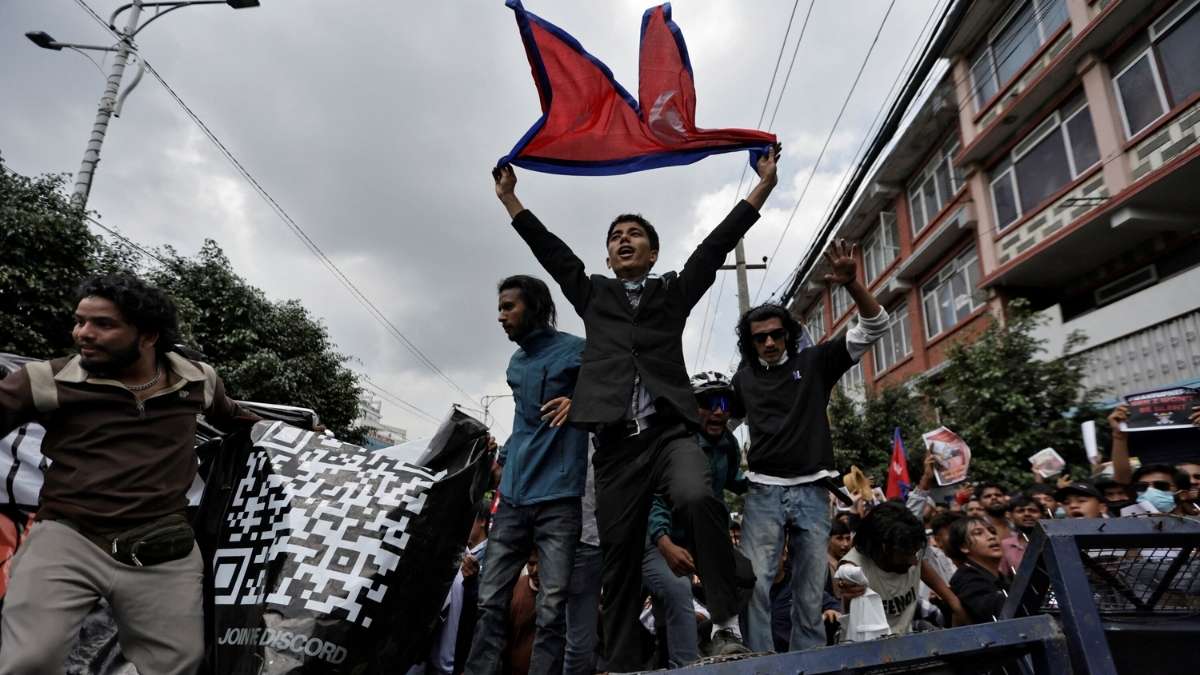
On September 8th a new generation of Nepalis took to the streets of Kathmandu, chanting slogans against corruption and demanding that the country scrap its parliamentary model. Their rallying cry was for a directly elected executive—“a leader chosen by the people, not by the parties”. To many young voters, weary of unstable coalitions and self-dealing elites, a single strong leader sounds like the cure. History suggests otherwise.
Nepal’s current arrangement was forged in compromise. During the constitution-drafting of the 2000s, Maoist insurgents pressed for a presidential system, arguing that only a leader with a direct mandate could stabilise a fractured state. The centrist Nepali Congress preferred a parliamentary model, fearing the spectre of authoritarianism. The UML, the other big party, initially flirted with direct elections before retreating. The eventual settlement left the executive dependent on parliamentary numbers.
The case for change rests on frustration. Since 2015 Nepal has cycled through more than 10 governments. Coalition bargaining—known locally as bhagbanda, or the carving up of state offices—has paralysed policymaking. For protesters, a president with a fixed term and popular legitimacy would short-circuit backroom deals, delivering continuity and development. Yet evidence from abroad gives little comfort.
A comparison of corruption and growth across regimes is sobering. Countries with directly elected executives range from the well-functioning (France, America) to the woefully corrupt (Philippines, Sri Lanka). Transparency International’s corruption perceptions index places the Philippines at 33, Sri Lanka at 32 and Russia at 22, all worse than parliamentary India (38) or Britain (71). On economic performance, too, parliamentary Canada, Germany and Denmark outperform most presidential peers. Stability does not guarantee a clean or competent government.
More troubling is the authoritarian temptation. Leaders who claim a direct mandate tend to treat parliaments and courts as obstacles rather than checks. Vladimir Putin in Russia and Recep Tayyip Erdoğan in Turkey began as popularly elected executives. Both used their authority to neuter rivals and extend their rule. Even in America, with its robust institutions, Donald Trump has tested constitutional guardrails. In weaker democracies the risk is bigger still.
Advocates of presidentialism dismiss such warnings by pointing to Nepal’s chronic instability. Yet coalition governments are not inherently dysfunctional. Germany has thrived on grand coalitions; Canada and India have endured long periods of minority or coalition rule with steady policymaking. The real difference comes from political culture, not the constitution. When parties operate transparently, agree on a programme and respect institutions, coalitions can be durable. When they do not, even a directly elected leader cannot deliver.
Nepal’s malaise stems from the latter. Political parties remain feudal and opaque, dominated by gerontocrats who distribute state rents to followers. Election campaigns are expensive, encouraging corruption from the outset. Parties rarely enforce spending caps or internal democracy. Cabinet portfolios are traded like commodities. Replacing parliament’s choice of prime minister with a directly elected president would not alter those incentives. It might simply concentrate them in one office.
Reform is therefore better directed at the plumbing. Lowering the cost of elections, banning candidates with criminal cases, tightening campaign-finance rules and permitting experts from outside parliament to serve as ministers would all improve governance. So would enforcing internal democracy within parties. A watchdog with teeth—an ethics commissioner in parliament, for instance—could strengthen accountability. Without such foundations, a presidential system would rest on sand.
Nepal is hardly unique in wrestling with institutional design. Across Asia, democracies from Sri Lanka to Indonesia have oscillated between presidential and parliamentary models, often in search of elusive stability. The lesson is that neither format is a panacea. What matters is whether rules are enforced and leaders restrained. More important, voters should be willing to punish failure.
The dream of a directly elected executive appeals to Nepal’s disillusioned youth because it sounds simpler than reforming a rotten political culture. But simplicity can be deceiving. Concentrating power in a fragile democracy may bring not stability but a faster descent into authoritarianism.
In the Himalayas, where coalition politics may be messy and mountain roads unreliable, shortcuts are tempting. Yet what matters is rewriting the habits of those who wield the map of power rather than redrawing it. ■