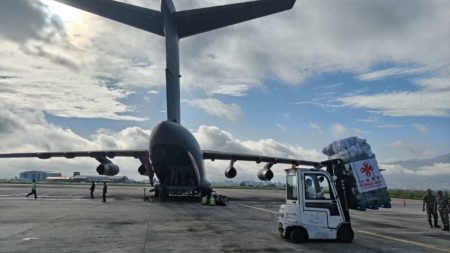
Two years after Hamas’s assault on Israel on October 7th 2023, diplomats in Sharm el-Sheikh are preparing to announce the first breakthrough in a sprawling, American-led plan to end the war in Gaza. On October 8th President Donald Trump declared on social media that “ALL of the Hostages will be released very soon”, alongside a partial Israeli withdrawal and a surge of aid into the shattered strip. Hamas, Israel and Qatar confirmed the deal.
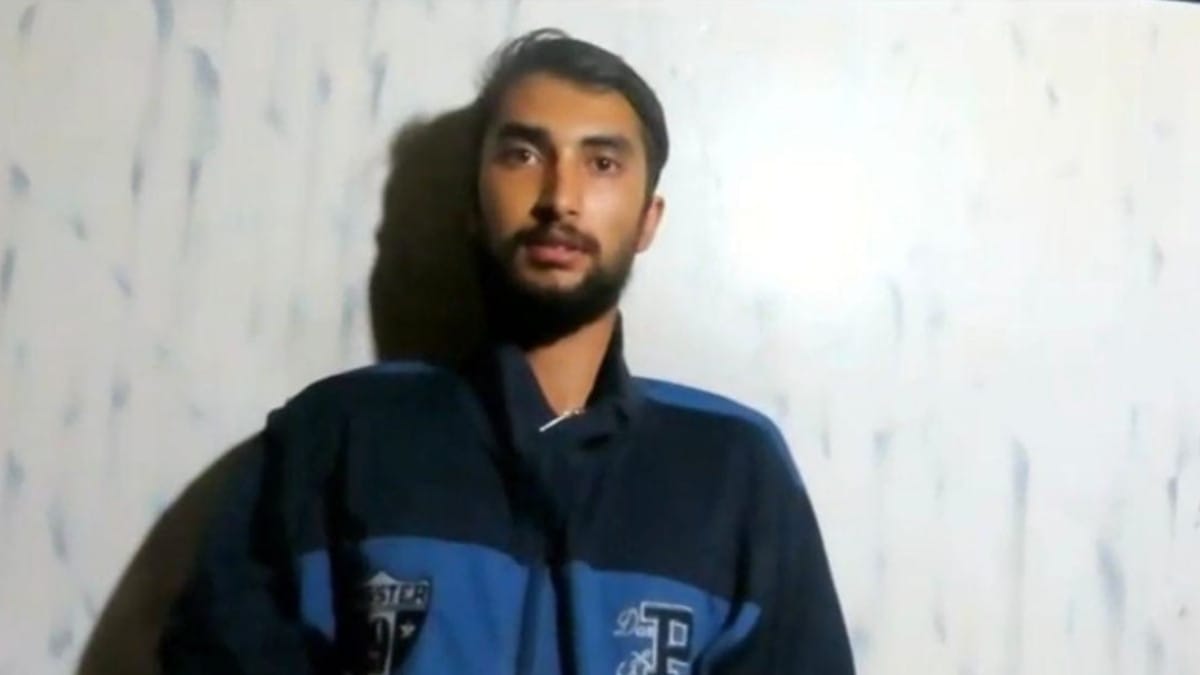
Among the 48 hostages (20 believed alive) listed in the agreement is a 24-year-old Nepali agriculture student named Bipin Joshi. He had arrived in Israel just weeks before the war, one of thousands of Nepalis working on Israeli farms under a bilateral labour programme. He was taken from Kibbutz Alumim on the morning of the attack. For nearly two years there was no confirmed sign of life—until Israeli forces recovered a short video, believed to have been filmed in November 2023, showing Mr Joshi speaking briefly to camera.
Representatives from Israel and Hamas, confined to different floors of a hotel in the Egyptian resort town, were pressured by envoys from America, Egypt, Qatar and Turkey into signing off on the deal. It took three days to agree on the initial steps. Hostages will be exchanged for Palestinian prisoners—2,000 are expected to be released—and Israeli forces will pull back to what Mr Trump called “an agreed upon line”. The video of Mr Joshi, released by his family this week, may have helped tip his case back into the spotlight.
The second phase of Mr Trump’s peace plan, however, is both more ambitious and less credible. It proposes disarming Hamas and handing governance in Gaza to a technocratic Palestinian committee under international supervision, as well as deploying a stabilisation force to maintain order. The force’s composition is unclear. Oversight would fall to an international board chaired by Mr Trump and Tony Blair, former prime minister of the UK.
None of these steps are near implementation. Even this first stage required months of shuttle diplomacy and indirect talks. Hamas has not agreed to disarm, nor has it accepted the removal of its officials from Gaza’s administration. Within Israel, far-right ministers have denounced any deal that concedes ground or emboldens Hamas. The Israeli army remains in control of Gaza’s main roads, choke points and border crossings. And Mr Netanyahu’s government is still intact, for now.
The bigger aim, in Mr Trump’s words, is a “Strong, Durable, and Everlasting Peace”. As ever in the Middle East, the language is loftier than the facts. Yet a narrow opening has emerged. Public attention to the conflict is higher than at any point since the Oslo accords in the 1990s. American pressure on Israel has grown. Iran and its regional proxies have been weakened. Gulf Arab states have signalled a readiness to underwrite reconstruction and possibly contribute to a stabilisation force.
Still, diplomatic alignment has not translated into public trust. Among Israelis support for a two-state solution has fallen. Among Palestinians, support for armed resistance has surged. A poll in May found that 50% approved of the October 7th attacks, and 87% denied that Hamas committed atrocities.
If the current deal holds, the focus will shift to building a new governing arrangement in Gaza. Hamas may be forced to relinquish formal power—though its fighters and influence will not disappear overnight. Israel, which must hold elections within a year, could soon be led by someone other than Mr Netanyahu.
But peace, if it is to last, needs more than new faces. As Mr Joshi’s case shows, the war has swept up lives far from its original target—foreign workers, aid convoys and regional governments alike. The incentives that led a Nepali student to Israel remain unchanged. So do those that keep Hamas armed, and Israel encamped.
Should Mr Joshi be released in the coming days, he will return to a country that had little say in his fate, and to a world in which his story may quickly be forgotten. But his unlikely role in the first phase of this sprawling plan—neither combatant nor citizen—offers a fitting emblem for the war: a conflict that touches everyone and answers to no one. ■