The old guard in Nepal is wobbling but not yet falling. A month after a youth uprising jolted the country’s complacent political class, the two parties that have governed it since democracy’s return are now tearing themselves apart. Both the Nepali Congress (NC) and the Communist Party of Nepal–Unified Marxist Leninist (CPN-UML) face open mutiny. Having survived coalition crises, veteran leaders may finally be undone by their own protégés.
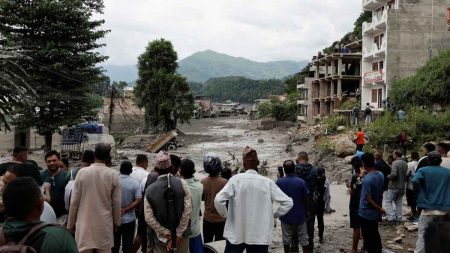
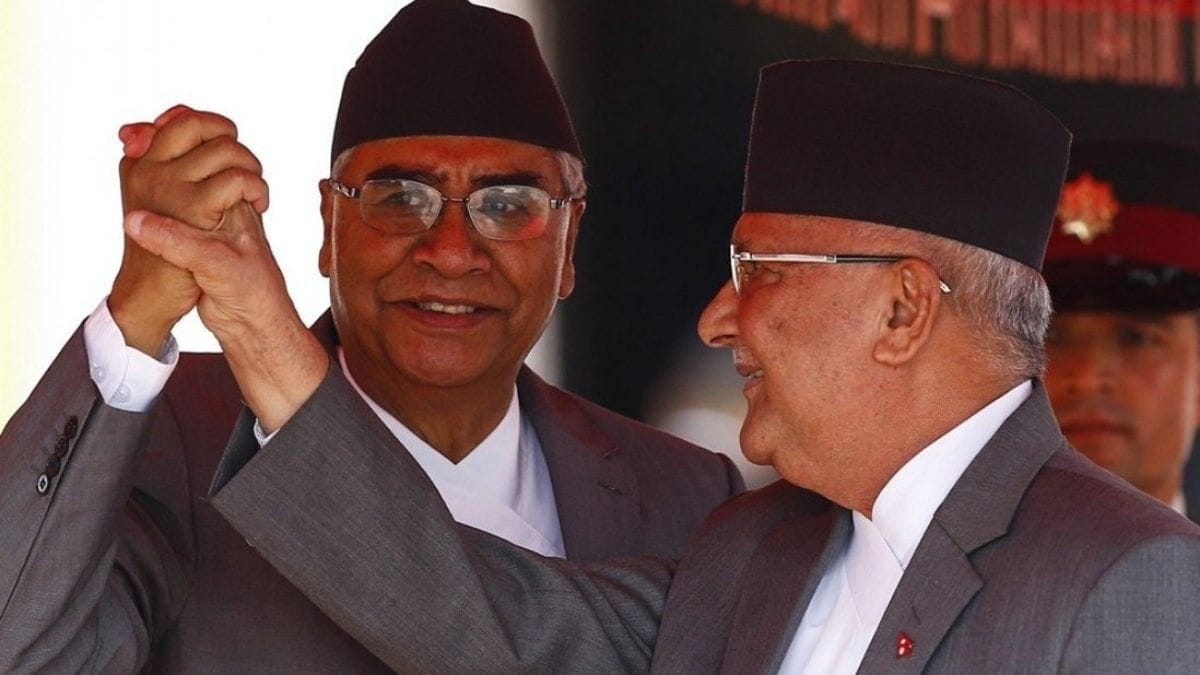
The spark was the “Gen Z movement”, a two-day youth revolt in early September that furiously spread from Kathmandu to provincial capitals. What started as a protest against corruption and political stagnation became an eruption of generational fury. Demonstrators denounced leaders they have known all their lives: Sher Bahadur Deuba of the NC, 79, and KP Sharma Oli of the UML, 73. Both have served as prime minister multiple times; both preside over parties that increasingly look like family firms.
Also read: Will anyone show up to Nepal’s March election?
The government’s violent reaction only deepened public anger. Over 70 young protesters were killed as well as hundreds more were injured; Deuba himself was hurt when demonstrators clashed with police outside his residence. When the tear gas cleared, the political fallout was just beginning.
Inside the UML’s headquarters, a party known for discipline and hierarchy is now airing its grievances in public. The Secretariat, the 17-member inner circle that Oli has ruled with imperious confidence, turned on him recently. Only four members spoke in his defence; most demanded accountability for the chaos that followed the protests. Bishnu Paudel, his long-time deputy and finance minister in one of Oli’s many cabinets, reportedly told colleagues bluntly that the party could not move forward under its current leadership.
Such candour is rare. For many years, Oli had cowed dissenters by controlling nominations and appointments. This time he entered the meeting without an agenda, an omission some saw as weakness, others as exhaustion. “Normally, he dominates every minute,” said one member. “Now everyone wanted to speak.”
Across town the Nepali Congress is enduring its own slow-motion insurrection. Deuba, the five-time prime minister who has led the party for nearly two decades, faces a rebellion led by two of his youngest lieutenants, General Secretaries Gagan Thapa and Bishwa Prakash Sharma. Emboldened by the Gen Z revolt, they argue that Deuba must step down “to honour the spirit of reform”.
Their demand is not merely rhetorical. More than half of the party’s delegates have signed a petition demanding a Special General Convention, well above the 40% threshold required to trigger one. In some districts, the reformist share flies above 80%. That would normally force a leadership contest. Instead Deuba’s loyalists have gone to work undoing the math such as by pressuring signatories to withdraw and threatening to postpone the central committee meeting (expected on October 14th).
It is an old trick. Delay and outlast. Yet this time the timing is against Deuba. His four-year term expires by the end of this year. Reformists want a formal transition; his allies prefer a managed one. One proposal circulating in party circles would see Vice-President Purna Bahadur Khadka installed as acting president, a caretaker to preserve Deuba’s grip without his presence. “That would be continuity disguised as change,” said one reformist.
Deuba, still recovering from his injuries, has not appeared in public since the protests. His silence has only deepened suspicion. Shekhar Koirala, another senior figure with prime-ministerial ambitions, remains noncommittal, fuelling talk of a three-way contest.
For all their ideological differences, the two dominant parties are now trapped in the same predicament: ageing leaders who refuse to let go, and younger ones unsure how to prise their fingers from the wheel. The Gen Z movement has revealed how much of politics remains personal. It also forced introspection that years of elections and coalitions never did.
Still, the country’s gerontocrats are nothing if not resilient. Oli continues to invoke procedure; Deuba invokes unity. Both are playing for time, in a political culture that has long rewarded patience over performance. The risk is that their parties, and perhaps the democracy they claim to defend, run out of both.
The revolt of a generation may have begun on the streets. Its real battle will be fought in committee rooms—where revolutions in Nepal, as elsewhere, go to die. ■
This article has been amended to reflect new updates