Image: Getty Images
IT IS NOT every day that America’s Treasury decides to buy pesos. Yet this month Scott Bessent, Treasury secretary in Donald Trump’s second administration, began doing just that. In a series of unorthodox manoeuvres, Washington has been trading dollars for Argentina’s ailing currency and extending credit to a government that has historically struggled to manage its own. The goal is to stabilise the peso before Argentina’s midterm elections on October 26th and, by extension, to keep its libertarian president, Javier Milei, politically afloat.
The arrangement is as curious as it is risky. Mr Milei, a self-styled “anarcho-capitalist” who took office in 2023 promising to slash the state, dollarise the economy, shut the central bank and end decades of fiscal profligacy, is now reliant on Washington’s dollars to keep his own afloat. Mr Trump has found in Buenos Aires an ideological ally whose success—or failure—will say much about whether radical free-market reform can survive in Latin America’s most perennially unstable economy.
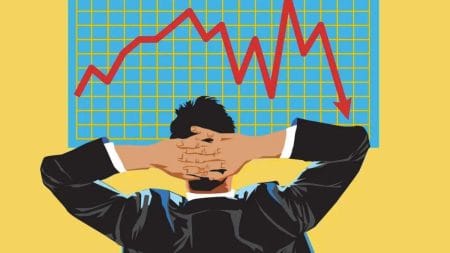
Argentina’s predicament is depressingly familiar. Inflation, once above 200%, has been tamed to roughly 2% a month. Public spending has been hacked back and the patronage networks of old weakened. But after a sharp local-election loss last month in Buenos Aires province, home to nearly 40% of Argentines, confidence in Mr Milei’s reforms began to wane. Investors feared he would soon be forced to abandon the exchange-rate band that keeps the peso artificially strong. As depositors rushed to convert savings into dollars, the government burned through its scarce reserves defending the currency. The peso sank to a record low of 1,489 per dollar on October 21st, perilously close to the band’s floor.
Washington decided to help. The Treasury has bought an estimated $400 million in pesos since early October, according to Argentine economists. More strikingly, it has signed a $20 billion “exchange-rate stabilisation” agreement with Argentina’s central bank. That deal will draw on America’s Exchange Stabilization Fund, an emergency mechanism usually reserved for managing crises in the dollar itself. Mr Bessent is also trying to assemble another $20 billion package from private banks and sovereign funds to help Buenos Aires service its debts, though no deal has been reached. The stated aim is to prevent a full-blown financial collapse in the southern hemisphere.
There is, of course, a political logic to this largesse. Mr Trump regards Mr Milei as a kindred spirit battling Latin America’s left. For Washington, too, there are strategic considerations: a stable, pro-market Argentina helps contain the region’s drift towards China. “We do not want another failed state in Latin America, and a strong, stable Argentina as a good neighbor is explicitly in the strategic interest of the United States,” Mr Bessent declared this week, invoking the language once used to justify Cold War interventions.
So far, the results have been mixed. Bond yields have eased as investors price in a reduced risk of default. Yet the peso remains under pressure, and ordinary Argentines continue to dollarise their savings. Confidence is fragile because the American support looks temporary and politically conditional. Mr Trump has hinted that generosity would evaporate if Mr Milei were to lose the midterms, a reminder that this is as much a partisan alliance as a policy one.
The dangers are manifold. Should Mr Milei’s party perform poorly, a devaluation may be unavoidable, forcing the peso far below its official band and sapping whatever credibility remains. Even a decent showing may not save the peg: reserves are dwindling, interest rates are crippling, and growth has stalled. For the United States, the risks are real. Any devaluation would inflict losses on its peso holdings, and critics at home are already questioning why taxpayers’ money is being deployed to bail out a foreign government. The operation also blurs the boundary between economic policy and political favouritism.
Behind the scenes, the wager is simple. Stabilise the peso long enough for Mr Milei to win, and Argentina might complete its transformation into a disciplined, market-driven economy friendly to Washington. Let the currency collapse, and years of reform could unravel, returning Argentina to its habitual cycle of populism and default. Yet currencies cannot be defended indefinitely by ideology or diplomacy. Without credible fiscal and monetary anchors, even friendly dollars will not stop the tide.
The likeliest outcome, economists say, is that Argentina will have to abandon the currency band after the election, letting the peso find its own level while tightening monetary policy to restrain inflation. American support could then shift to smoothing that adjustment rather than financing denial. If done well, it could restore competitiveness and rebuild reserves. If mishandled, it would merely postpone the inevitable reckoning.
In an era when markets and geopolitics increasingly overlap, the Treasury has become a tool of foreign policy as much as finance. Washington’s intervention may steady Argentina for now. But history suggests that the country’s economic salvation will not come from foreign friends, however powerful, but from convincing its own citizens to trust their money again. ■