Image: Nepal News
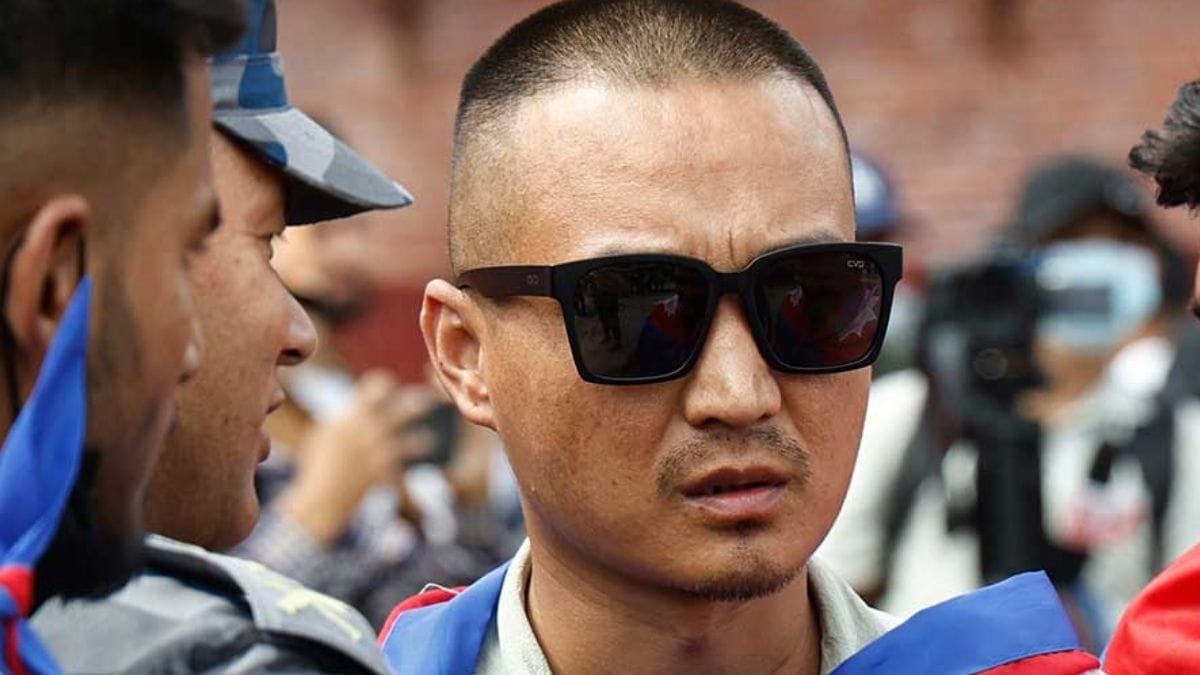
THE MAIN BUILDING of Singha Durbar, Nepal’s grand government secretariat, is scarred with soot. For the country’s political establishment, the scorched damage is a worrying symbol of public fury. For Sudan Gurung, a leader of the “Gen Z” protests that have shaken the Himalayan republic, it is a distraction. “You can rebuild a burned building,” he told a crowd of young Nepalis at Kathmandu’s Maitighar Mandala recently. “You cannot bring back the lives of the young people who were killed.” His point was sharp: the true fire is not outside the seat of power, but within it.
Nepal’s youth-led uprising poses the most serious test to the country’s political establishment in years. It has been sparked by a range of grievances, from corruption and misgovernance to a lack of economic opportunity, which have driven many young Nepalis to seek work abroad. The protests turned deadly on September 8th, when several demonstrators were killed, at the hands of security forces. But the movement is notable not only for its energy but also for its strategy. It is attempting to channel popular anger into a sustained, organised campaign for change.
Mr Gurung’s speech, delivered with the cadence of a preacher and the urgency of a revolutionary, offers a window into the protesters’ thinking. He presents Nepal’s predicament as a choice between construction and destruction. The time for the latter, he argues, is over. After Tihar he plans to launch a nationwide civic campaign. The aim is to form local teams to identify problems such as corruption and mismanagement, and to bring these to the attention of the central government. He believes that within six months, a united citizenry could achieve visible progress.
Mr Gurung lambasts the much-discredited political class for its venality and shortsightedness. The real problem, he suggests, is not just the leaders who have “corrupted, sold and broken” the country, but the citizens who have repeatedly voted for them. Change must therefore begin with a change in public mindset.
The ruling elite has resorted to a well-worn strategy: sowing division. Mr Gurung says that he has been variously labelled a CIA agent, an Indian agent and even a Thai or Bhutanese operative. Such rumours are designed to sow doubt and discredit the movement. The strategy, he argues, is to splinter the protesters and push them back towards old party loyalties. His request is to resist these manipulations and remain united as citizens, not as partisans.
There are risks to that approach. Leaderless movements can be difficult to sustain and may struggle to translate passion into policy. The sheer diversity of grievances under the protest banner—from demands for electoral reform to calls for better public services—could make it hard to maintain cohesion. And the established parties, however unpopular, retain big resources and patronage networks.
Yet the protesters have achieved something remarkable. For the first time in decades, Nepal’s rulers seem to be afraid of their citizens. Mr Gurung says with satisfaction that civil servants are scared and ministers are being questioned by ordinary people in the streets. This awakening of civic confidence is, he declares, the movement’s biggest achievement. The challenge now is to harness that energy into a force for reconstruction, not just rebellion.
The road ahead is long. Mr Gurung admits that 80 decades of decay cannot be undone quickly. Yet he believes the movement has already shifted Nepal’s course. Its test will be whether this generation can rebuild the country from the neighbourhoods up. If they succeed, the scorched building in Singha Durbar may come to mark not destruction but the start of renewal. ■