Image: Google
WHEN THE LIGHTS go out in a poor country, it is usually a sign of failure—of crumbling infrastructure, of a state too weak to keep the generators humming. But when the lights were deliberately switched off across Nepal’s industrial heartland recently, it was a different kind of failure on display.
The state-owned Nepal Electricity Authority (NEA), in a fit of belated assertiveness, began cutting power to dozens of the country’s largest factories over billions of rupees in disputed bills. This was an act of self-sabotage. The immediate crisis—idled production lines, threatened jobs, panicked investors—is bad enough. The underlying malady is worse: a system where the state is both a clumsy operator and a capricious regulator, and where the rule of law tends to be supplanted by the rule of the feud.
Also read: A dispute over historic electricity bills is paralysing Nepali industry
The standoff is a perfect specimen of a dysfunctional economic relationship. For years the NEA provided premium “dedicated” power lines to big manufacturers, allowing them to operate during the rolling blackouts that once plagued the country. Now it demands back-payment for this service, presenting bills that have ballooned with interest and penalties. The industrialists, in turn, cry foul. They argue, with some justification, that the NEA’s record-keeping is a shambles and that it cannot prove it delivered the premium service for which it now charges a king’s ransom. They have run to the courts, which have issued a flurry of contradictory injunctions. The government, caught in the middle, wrings its hands. And the economy grinds to a halt.
The high cost of being right
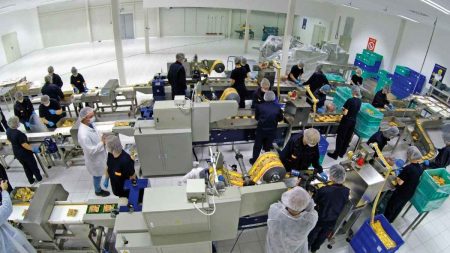
At its heart, this is a simple contract dispute. Yet it could not be more Byzantine in its execution. The NEA, newly emboldened by a politically ambitious energy minister, is playing a dangerous game of chicken. It insists it is merely collecting what it is owed, a principle essential for any utility’s survival. But its heavy-handed tactics—cutting power first and asking questions later—risk killing the goose that lays the golden eggs. The affected factories in the Butwal-Bhairahawa corridor are not fly-by-night operations; they are the backbone of Nepal’s tiny industrial base, producing the cement, steel and textiles for a nation that desperately needs to build. Forcing them into bankruptcy to prove a point is like burning down a house to fix a leaky tap.
The factory owners are no angels either. Their sudden plea for due process reeks of opportunism. Many were likely content to let the bills slide for years, betting correctly that a lethargic state would lack the will to collect. Their claims of flawed meters may be true, but they are a convenient shield for what looks like a collective reluctance to pay. They have now formed a “Federation of Victimised and Harassed Industries”, a title that would be comical if the stakes were not so high. Their threat to symbolically hand over their factory keys to the government is the sort of empty gesture that thrives in a climate of perpetual grievance.
The real victim is the economy. The direct cost is already clear: over 15,000 jobs at immediate risk, supply chains in critical sectors severed and a chilling message sent to any investor considering Nepal. Why would a foreign firm commit capital to a country where the state can, on a whim, pull the plug on a multi-million-dollar enterprise over a contested bill? This episode confirms the worst fears about doing business in Nepal—that agreements are not honoured, that the state is an unreliable partner and that legal recourse is a slow and uncertain path. It is a luxury a country with rampant youth unemployment and a fragile post-pandemic recovery can ill afford.
The roots of this crisis run deeper than a billing error. They lie in a governance model where the state is a monopoly provider of essential services and also their chief regulator. This creates a conflict of interest that would be obvious anywhere but seems to be a blind spot in Kathmandu. The NEA does not behave like a commercial utility seeking to serve its customers, but like a branch of government seeking to enforce its will. It is a pattern seen across South Asia, where state-owned behemoths, bloated with political appointees and crippled by inefficiency, view their largest customers not as assets to be nurtured, but as delinquents to be disciplined.
There is a path out of this mess, but it needs a maturity that all sides currently lack. The first step is an immediate truce: restore power to all factories pending a transparent, independent audit of the disputed bills. A joint commission, with technical experts agreed upon by both sides, should be tasked with determining a fair and final amount owed, based on verifiable data. The NEA must accept that its sloppy administration comes at a cost, and the industrialists must accept that they cannot enjoy services for free. The second, longer-term step is to break the NEA’s monopoly and introduce genuine competition and independent regulation into the power sector. This would depoliticise energy and force utilities to compete on service and price.
Nepal stands at a fork in the road. One path leads to a perpetual cycle of confrontation, where the state and private sector remain locked in a mutually destructive embrace. This is the path to ruin, where every contract is up for renegotiation, every bill is a potential lawsuit and the economy remains stunted by distrust. The other path is harder. It requires the state to be a fair umpire, not a player seeking to score points. It demands that businesses pay their way, but also that they are treated with consistency and respect. It is the only route to a future where the lights stay on not by fiat, but by the mutual interest of a functioning market. For a country with so much potential, the choice should be obvious. ■