Image: Nepal News
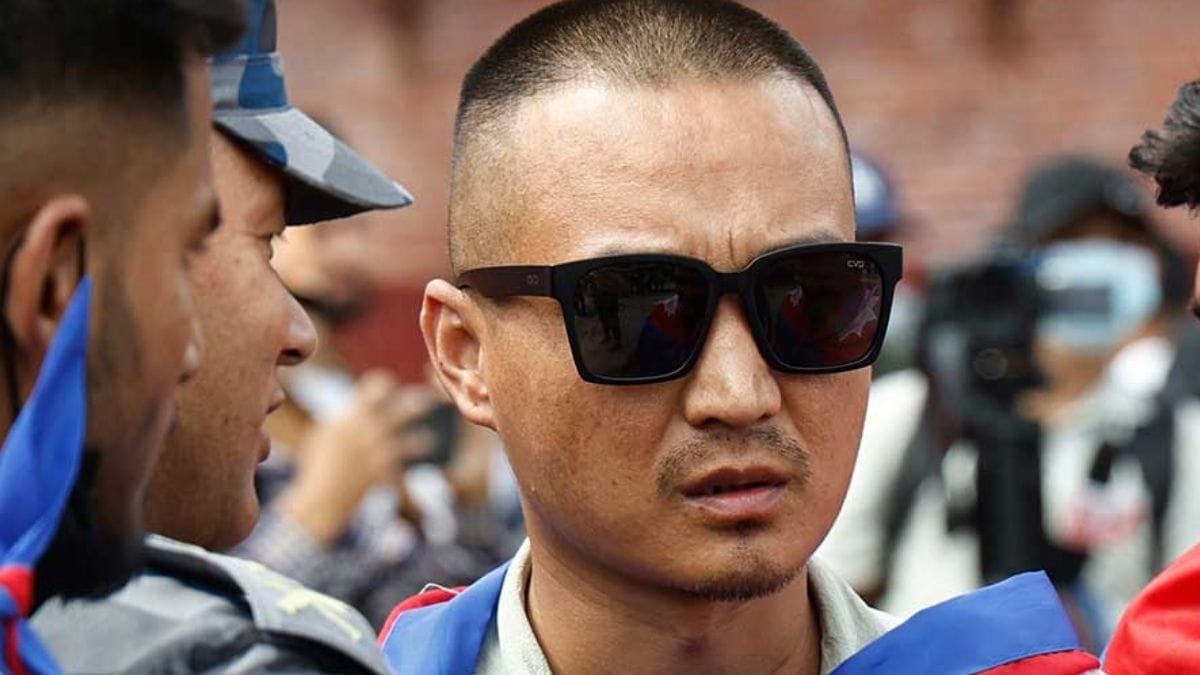
POLITICS IS a business of promises. In Nepal it is also a business of patience. That patience appears to be exhausted. In a blistering social-media post, Sudan Gurung, the 36-year-old leader of a youth organisation called Hami Nepal, has issued a public ultimatum to the country’s Home Minister, Om Prakash Aryal. He accuses the minister of a profound failure: clinging to office while doing nothing to address public demands to “Punish the killers” and “Punish the corrupt”. The language is not that of a political negotiator but of a moralist who feels betrayed. He recalls the minister’s own pledge to resign if he could not deliver. “That time has come,” Mr Gurung declares.
This is a direct challenge to the fragile authority of Nepal’s caretaker government. That administration has one primary task: to oversee a national election scheduled for March. This vote is the source of its legitimacy and its raison d’être. Mr Gurung now contests this very premise. He scorns the notion that the election is what matters most, warning the minister not to “let the election be a farce”. His threat is explicit: if calls for justice are not heeded, “this election will not be allowed to proceed”. This young man gives the minister two days to respond before a press conference that will “decide your future”. The final, capitalised shout—“DO YOUR DAMN JOB”—is a raw expression of a wider fury.
The confrontation leaves the government in a perilous position. Its strategy has been to blend legal process with political dialogue, hoping to lower the temperature just enough to proceed with the ballot. An official investigation into the killings of more than 70 young protesters on September 8th is one part of this plan; talks are another. Mr Gurung’s message is a rejection of this incremental approach. He argues that a vote held before any corrupt official or killer has faced justice is illegitimate, a hollow exercise that merely perpetuates a broken system. The government sees the election as the solution; he sees it as part of the problem. The crisis thus distils into a simple, brutal question: will the election proceed or will the state’s authority be defied in the streets?
At its heart the clash is about the nature of political legitimacy. The caretaker government derives its mandate from a constitutional process aimed at delivering a new poll. Mr Gurung and his supporters derive theirs from a perceived moral imperative for immediate accountability. One is procedural, the other substantive. The government fears that postponing the vote would create a dangerous political vacuum. The protesters believe that holding it without first addressing fundamental grievances would make a mockery of democracy itself. There is no easy middle ground.
The demographic dimension is also critical. Mr Gurung’s closing words—“The people are awake. The youth are awake”—are a telling signal. His movement represents a younger, more impatient generation that is weary of the old political class and its compromises. For them, the slow gears of established politics are not a sign of stability but of complicity. The government’s hope that legal and political mechanisms will eventually placate this anger may be misplaced. The demand is for visible, swift action, not promises and procedures.
The stand-off carries big risks for both sides. If the government capitulates to the ultimatum, it could set a precedent where street pressure and social-media campaigns dictate ministerial tenures, destabilising governance. If it ignores the threat and the protesters make good on their promise to disrupt the election, the nation could be plunged into prolonged instability. The credibility of the state is on the line. For now, the two sides are locked in a stalemate, one that pits the ballot box against the demands of the street, with the future of Nepal’s fragile democracy in the balance. ■