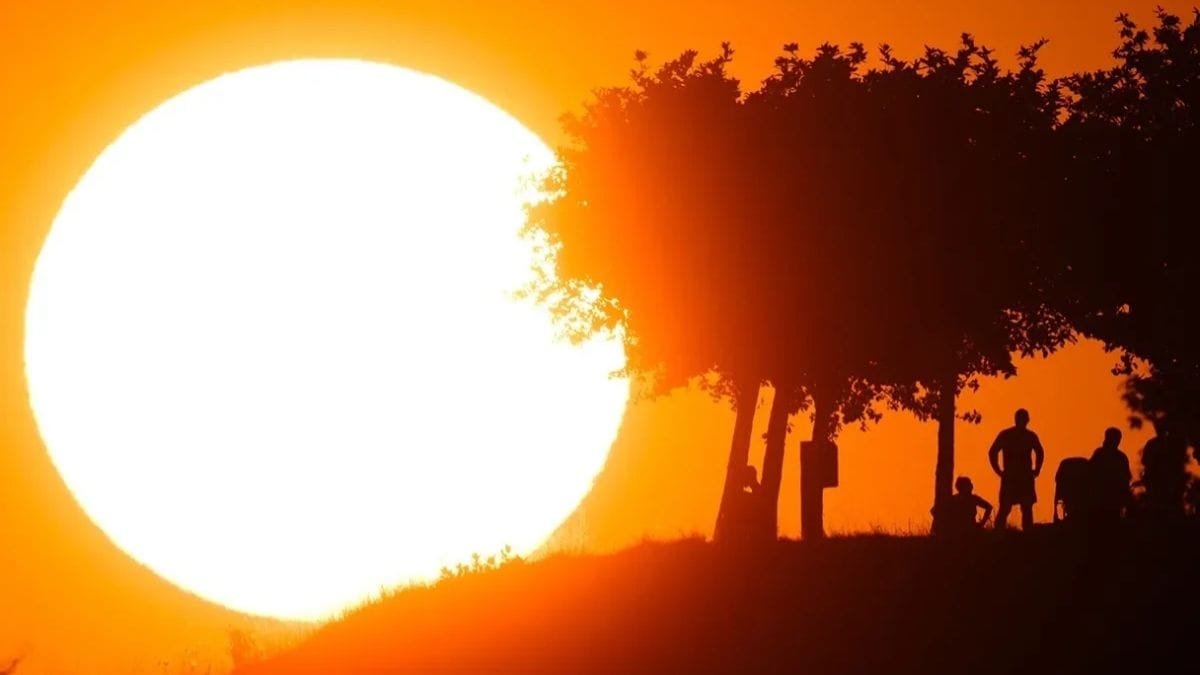
It is a dry heat, they say in Phoenix, Arizona. In America’s sunniest large city, summer now stretches deep into autumn. Last year Phoenix endured 113 consecutive days of temperatures above 38°C. Its four hottest summers on record have all occurred since 2020. The citizens of this desert metropolis are learning, the hard way, what it means to adapt to a warming world.
Phoenix is not alone. From the seawalls of Venice to the cooling centres of Buenos Aires, and the flood defences of New York to the redesigned sewers of Copenhagen, the planet is scrambling to adjust to the violent new reality of climate change. This process of adaptation and resilience—the art of preventing, withstanding and recovering from climatic ravages—is climbing the global agenda. It must. For the world has dawdled over cutting greenhouse-gas emissions for so long that it is now condemned to a hotter future. The question is how much hotter and how well prepared everyone will be.
The evidence of a shifting climate is not a forecast anymore: it is a lived experience. Scientists estimate the world has already warmed by 1.3°C since pre-industrial times. The lower threshold of the Paris agreement, 1.5°C, could be breached within a decade. Existing government pledges put the planet on course for a rise of up to 2.8°C. The economic toll is mounting. Combined climate-linked losses across 25 markets topped $1.4trn last year, according to BloombergNEF. After a severe weather event in America, about 40% of small businesses in the affected area do not reopen.
The rich world is now feeling effects long predicted for poorer countries. Wildfires have charred Los Angeles, floods have inundated Texas and Valencia, and extreme heat has shuttered European businesses. There are slow-motion threats, too: desertification, coastal erosion plus water stress. One economist notes that the impacts are “coming through faster, more severely and at lower temperature increases than we anticipated”.
The response is a patchwork of local initiatives, often more advanced than national plans. Phoenix is planting thousands of trees for shade and cooling, applying reflective sealant to roads and rewriting building codes to require more shade. Copenhagen is spending €1.5bn to turn parks into temporary rainwater reservoirs. Lisbon is digging stormwater tunnels. These are sensible steps. But they are not yet part of a coherent, global strategy.
This scattershot approach carries risks. The Intergovernmental Panel on Climate Change warns of “maladaptation”, that is, well-intentioned measures that backfire. A seawall in Fiji, built to guard against rising seas, worsened flooding for some by blocking stormwater drainage. Urban trees planted for cooling may die if unsuited to the local climate, wasting scarce funds. There is also a danger that adaptation deepens the divide between rich and poor, as the wealthy climate-proof their lives and the impoverished are left exposed.
The greatest obstacle, however, is financing. The Climate Policy Initiative estimates that just $69bn was spent on adaptation the world over in 2021-22. The United Nations Environment Programme reckons developing countries will need between $310bn and $365bn a year by 2035. Yet international public finance for adaptation fell to $26bn in 2023. The upfront costs are big, but the long-term benefits are compelling. A study by the World Resources Institute found that every $1 invested in adaptation generated more than $10 in benefits over a decade.
For politicians and business leaders, however, preparing for a hypothetical future catastrophe is a hard sell. It is difficult to calculate the return on investment for a flood defence that may not be tested for years. Yet countries that proactively address climate risks are likely to attract more business investment as companies seek safer locations. Some governments spy an industrial opportunity. Italy views its expertise in engineering, exemplified by the Mose flood-barrier system in Venice, as an exportable commodity. New financial products are emerging, such as Tokyo’s planned climate-resilience bonds.
The danger is that a focus on adaptation diverts attention and money from the essential task of cutting emissions. Friederike Otto of Imperial College London warns that adaptation will eventually become ineffective without a rapid pivot away from fossil fuels. There are limits to how much people can adapt. Yet with the impacts of climate change accelerating, the world can no longer afford to treat adaptation as a secondary concern. It is not an admission of defeat. It is the first half of survival. ■