
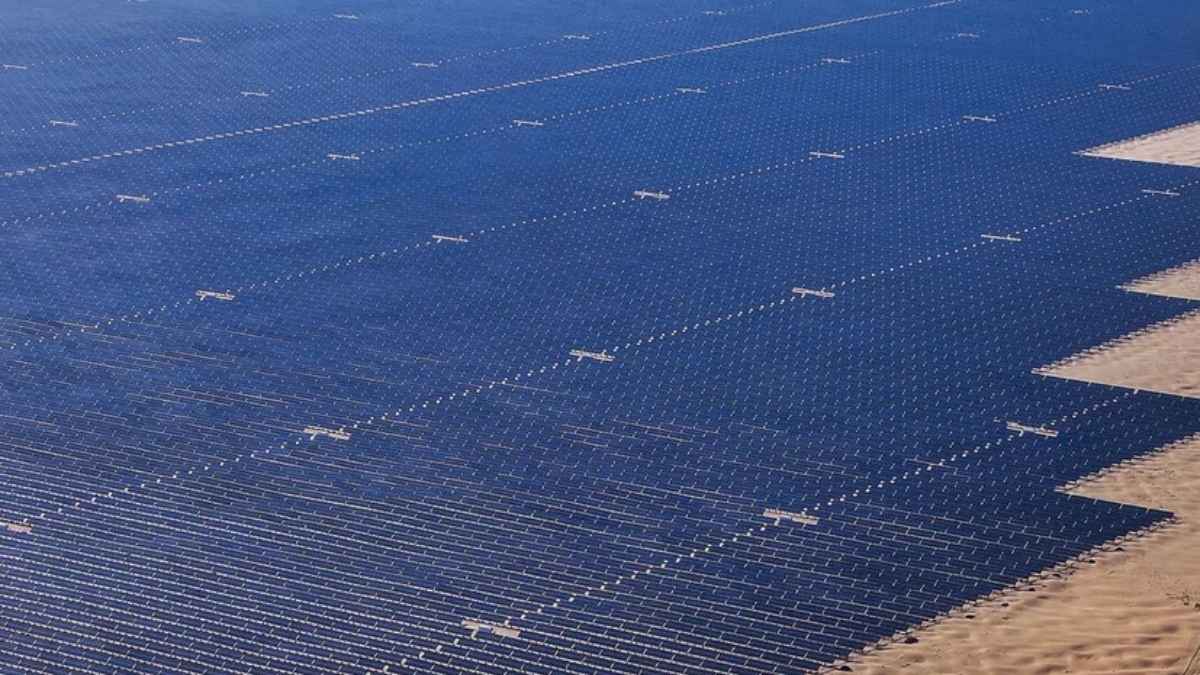
Image: Lian Zhen/Xinhua/Eyevine
In the time it takes to read this article, China will have installed enough new solar panels to cover several football pitches.
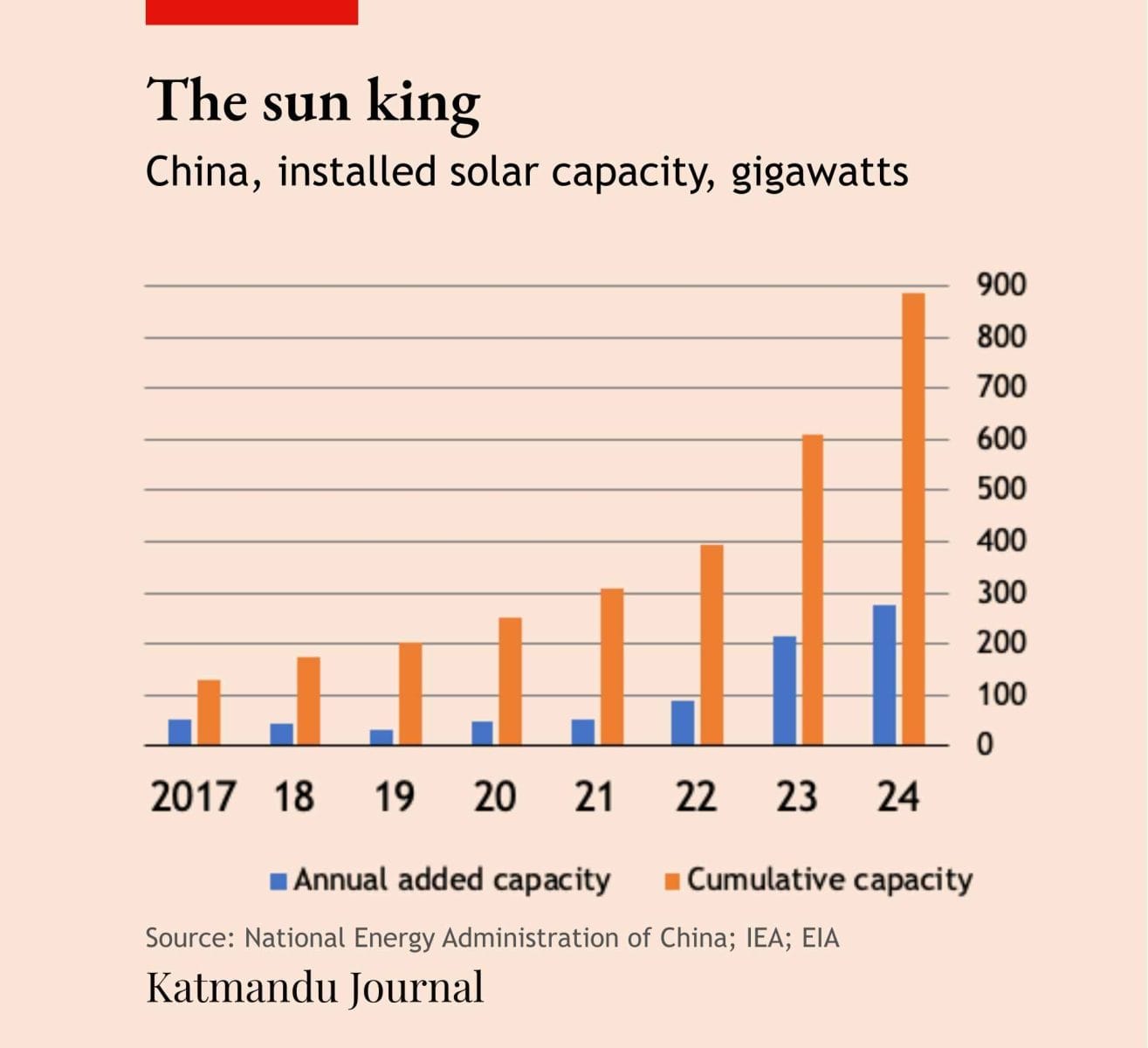
In 2023 China installed more solar-power capacity than America had built in its entire history. The figure, over 200 gigawatts, is almost double the total installed capacity of Germany, a solar pioneer. This single-year addition is the strongest evidence of a change that has been unfolding for two decades. China now makes more than 80% of the world’s solar panels and controls up to 97% of the production of key components. It installs more solar power at home than all other countries combined, as well. How it achieved this comes down to, among others, industrial planning and subsidies far beyond what Western governments would ever accept.
China’s solar dominance started with a purposeful move by the government. In the mid-2000s, as Europe and America offered small subsidies for rooftop panels, Beijing bet on factories. The government provided vast sums—direct grants, cheap loans from state-owned banks and land sold at a fraction of its value—to build manufacturing plants on an unprecedented scale. The goal was to control every step of the supply chain. Today China produces between 85% and 97% of the world’s polysilicon, wafers, cells and modules. It also makes nearly all the equipment needed to build solar factories. This vertical integration is total.
This manufacturing dominance was built on cost advantages that Western firms could not match. China’s industrial electricity is often 30-50% cheaper than in Europe or America, a critical factor for energy-intensive polysilicon production. Its engineers learned to build solar-manufacturing equipment themselves, slashing the cost of constructing a new factory to less than half that in America. Wages are lower and the ecosystem of component suppliers such as silver paste and solar glass is almost entirely within China, eliminating shipping delays. The result is that producing a solar panel in China costs as little as $0.16 per watt of capacity, compared with some $0.28 in America.
A torrent of government support tilted the global market. Official subsidies to Chinese solar firms have run to hundreds of billions of dollars since 2008. This does not include indirect aid: loss-making companies were propped up with debt-forgiveness schemes and loans at below-market rates. The effect was breakneck expansion and chronic overcapacity. Global solar-panel prices fell by over 95% between 2009 and 2023. European and American manufacturers, unable to compete, were largely wiped out. Dozens of European solar firms went bankrupt between 2011 and 2014; America’s solar-manufacturing industry shrank by 90% by the mid-2010s.
China’s big domestic market provided the demand to match this supply. Annual installations grew from a mere five gigawatts in 2013 to over 200 gigawatts last year. This vast home market allows Chinese manufacturers to run their factories full-tilt, amortising costs and innovating through sheer volume. It also stabilises demand, insulating firms from global-trade squalls. Vast solar farms now carpet deserts in Xinjiang and Inner Mongolia, projects so big they are measured in tens of gigawatts and thousands of square kilometres.
Control over the supply chain extends to the raw materials, too. China dominates the processing of the critical minerals essential for solar panels and batteries, including over 90% of the world’s graphite and rare-earth elements. It also leads in the production of synthetic diamonds, needed to slice silicon into the ultra-thin wafers from which panels are made. Without access to these materials, processed almost exclusively in China, no other country can scale its own solar-manufacturing base at the speed or volume required.
Western countries now face a brutal dilemma. Buying Chinese panels makes meeting climate targets far cheaper and easier; shunning them could raise costs two- or three-fold, jeopardising those very goals. Europe’s experience helps explain what happens next. Its subsidies for solar installation created a boom, but the panels were almost all imported from China, crushing what remained of its own manufacturers. America’s Inflation Reduction Act under the Biden administration is a belated attempt to rebuild a domestic industry, but it is years behind and relies on a supply chain that China controls.
China’s lead is not static. Its universities and corporate labs now produce more highly cited clean-energy research than America or Europe. A powerful feedback loop has been established: research leads to new products, which are mass-produced, in turn driving down costs and generating demand, which in turn funds more research. The country’s solar dominance is the product of a multi-decade strategy combining policy, scale, subsidies and engineering might. For the West, the question is not how to compete with China in making solar panels. It is how to secure the clean energy it needs in a world where the sun’s supply lines all lead to Beijing. ■





