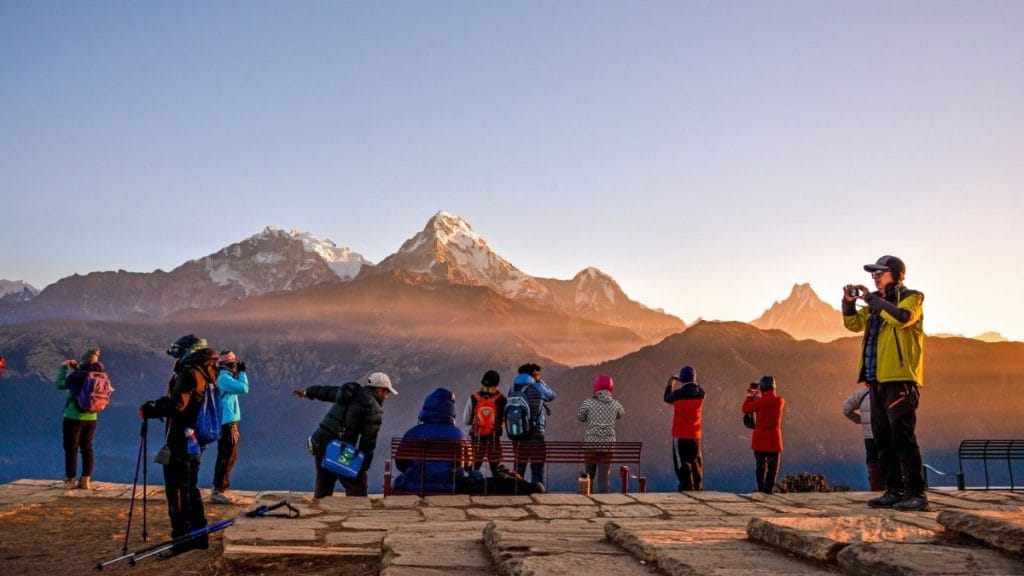
Image via Google
A RECORD 1.2m foreign visitors will likely have ascended into Nepal by the end of this year. For a Himalayan country of 30m people, that is a big number. It surpasses the previous peak of 1.19m in 2019. More stunning than the figure is the trajectory. Tourist arrivals have increased 2.4 times since 2008. They collapsed by 90% during the pandemic. They have now roared back, demonstrating a cycle of violent shocks followed by vigorous recoveries.
Nepal’s experience, moreover, shows how a country builds its economy with the resources it has, rather than the ones it hopes for. The country lacks the ports for export manufacturing and the domestic market for a tech boom. Its per-person GDP languishes around $1,447. Yet it possesses stunning landscapes and a unique cultural heritage.
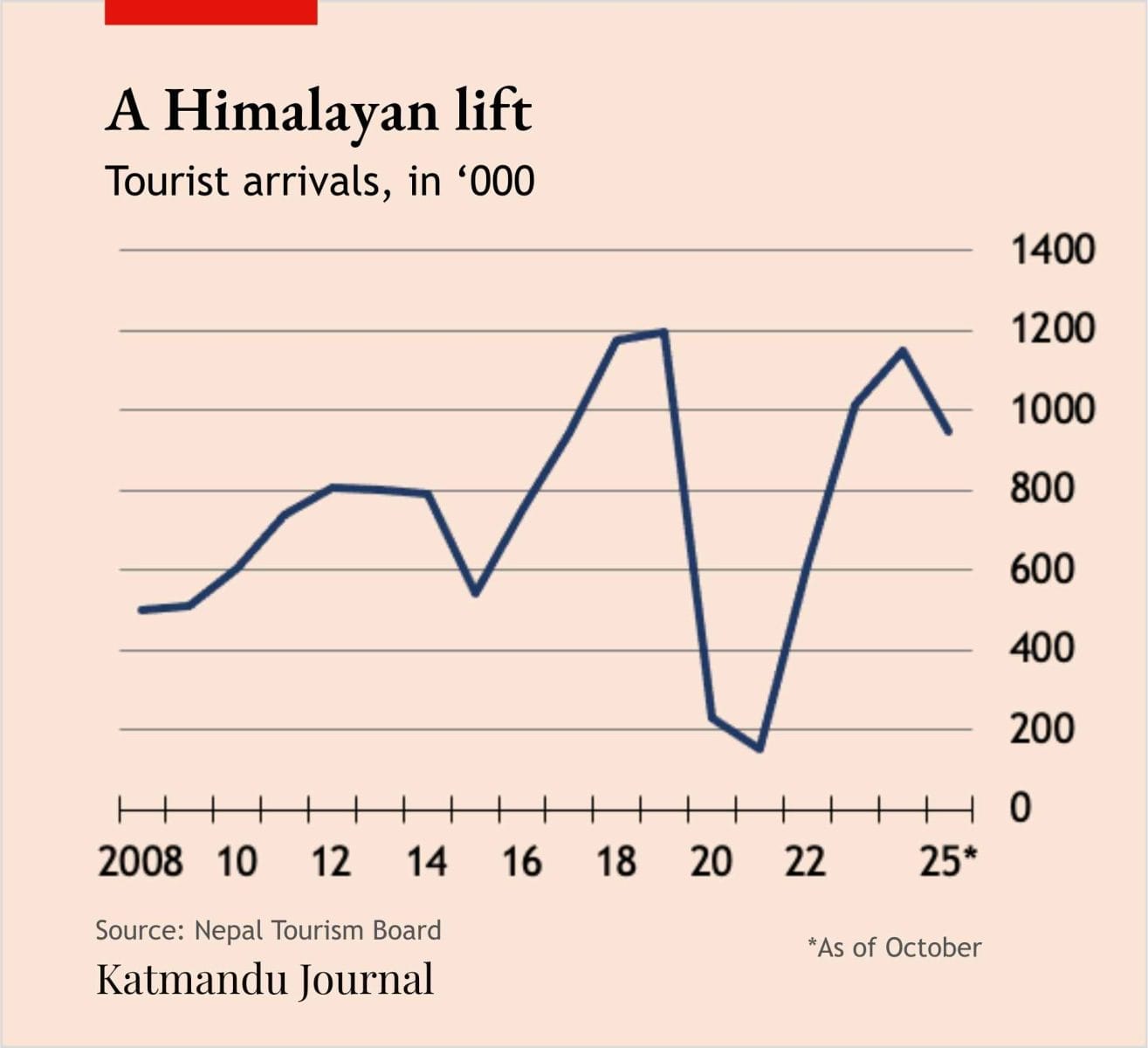
Arrivals climbed continuously from 500,000 in 2008, punctuated by a sharp dip after the devastating 2015 earthquake. The recovery from that disaster was fast, indicating strong global demand. The pandemic then brought the industry to a standstill: in April 2020 a mere 14 foreign tourists arrived. The rebound since borders reopened has been extraordinary. By 2023 numbers had nearly returned to pre-pandemic levels. This year they will set a new record.
This resilience is down to several changes. The first is market diversification. India has become the dominant source, accounting for over 30% of visitors. Proximity and cultural ties, as well as better air links, drive that traffic. China is the critical swing factor, its outbound travellers fuelling the latest growth phase. Alongside those regional giants exists a stable base of higher-spending visitors from Europe and America, drawn by trekking and mountaineering.
The second change is in infrastructure. For decades Tribhuvan International Airport in Kathmandu was a notorious bottleneck. The recent opening of international airports in Pokhara and Bhairahawa seeks to disperse arrivals and stimulate regional tourism. On the ground, trails and tea houses have been upgraded, and hotel capacity has expanded in cities. These upgrades allow the country to absorb more visitors without a total degradation of experience.
The third shift is product diversification. Nepal’s brand was once synonymous with hardcore trekking and Everest expeditions. These are still the crown jewels. But a wider menu now attracts visitors during the once-quiet monsoon and winter months. Jungle safaris in Chitwan, paragliding in Pokhara, spiritual tourism to Lumbini (the Buddha’s birthplace) and cultural tours of Kathmandu’s restored heritage sites help to smooth the severe seasonal peaks and troughs.
Perhaps the most significant, yet understated, driver is the Nepali diaspora. Hundreds of thousands work abroad, particularly in the Gulf and Malaysia. Their trips home, usually with foreign friends or family, provide a steady stream of visitors less deterred by monsoon rains or political headlines. This built-in demand confers a buffer during lean periods.
The economic logic is compelling, meanwhile. Unlike remittances, which flow directly to households, tourist spending circulates. A dollar paid to a guide is spent in a lodge, which then buys supplies from a farmer, who in turn hires a porter. This multiplier effect creates jobs in hospitality, transport, crafts and so on. It provides a direct incentive to preserve the environment and culture that tourists pay to see.
Yet the model is fraught with risk. The sector’s susceptibility to external shocks (say, an earthquake or a pandemic) makes it a precarious primary industry. Over-reliance on any single market is dangerous. If Chinese or Indian demand wavers due to geopolitical spats (as it recently did in Japan), the consequences are immediate. Furthermore, the pursuit of volume can undermine the very appeal visitors seek. Traffic jams on Everest and litter on the Annapurna circuit are warning signs.
The path forward then means managing success and not only chasing it. The goal should be higher yield, too, rather than a higher number of visitors. Encouraging longer stays and attracting visitors who spend more on local services would increase revenue without overburdening infrastructure. This means you need better roads and stringent environmental rules, among others. Moreover, political stability and efficient bureaucracy are non-negotiable foundations: a tourist’s visa-on-arrival experience is their first impression of the state’s competence.
Nepal’s tourism owes its success to practical adjustments. It has not tried to invent an artificial comparative advantage. It has rather identified its natural and cultural gifts and improved access to them. Although this approach lacks the grandiosity of a semiconductor strategy or a green hydrogen moonshot, it provides reliable jobs and distributed income. For Nepal with few easy options, that is a sensible trade. The mountains have always been there. The achievement has been to build a reliable economy around them. ■