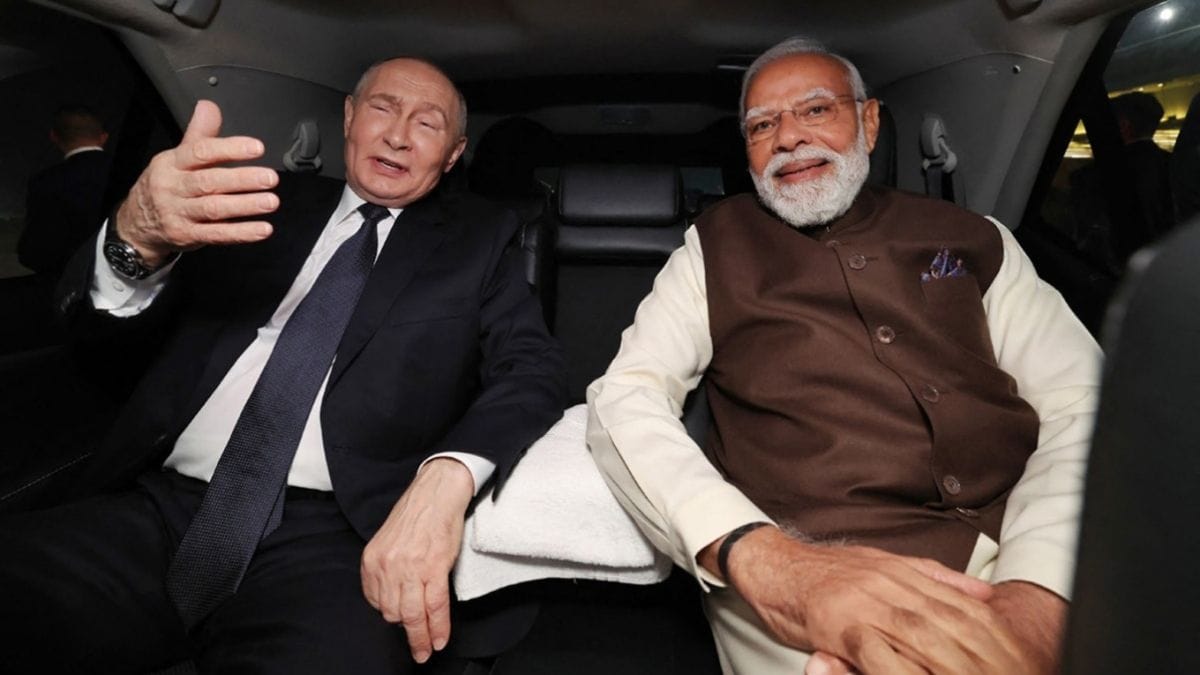
Image: PIB/AFP
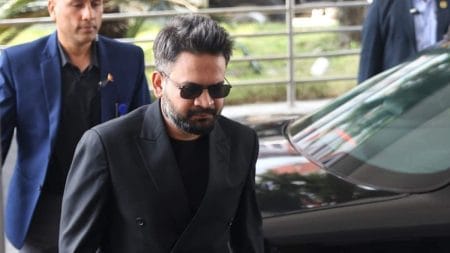
A red-carpet welcome in Delhi rather than a legal reckoning in The Hague. For his first trip to a major democracy since the invasion of Ukraine, Russia’s president, Vladimir Putin, was received with full state honours on December 4th. He was embraced on the tarmac by Prime Minister Narendra Modi, laid a wreath at Mahatma Gandhi’s memorial and attended a state banquet. The posters lining Delhi’s streets advertised the Russian leader’s visage. In the West, Mr Putin is a pariah. In India he is a prized partner. This display of friendship says much about the changing geometry of global power and one large democracy’s strong commitment to putting its own interests first.
India’s warmth expresses its pursuit of strategic autonomy and carries no endorsement of Russian aggression. Since the Cold War, India has refused to align permanently with any great-power bloc. Mr Modi’s government has elevated this doctrine of “multi-alignment” into an art form. Hosting Mr Putin so lavishly, just as America ratchets up economic pressure, sends a deliberate signal: India will not be bullied into taking sides. It has options and that it will exercise them.
Also read: India: the superpower that refuses to pick a side
American pressure is certainly palpable. The Trump administration has doubled tariffs on Indian exports to 50%, owing to India’s purchases of Russian oil. It has threatened secondary sanctions on Indian firms and pushed for more arms deals. India’s response has been to temporarily halt some Russian oil imports while publicly tightening its embrace of Moscow. The message to Washington is that coercion could push India away, instead of bringing it closer. For Mr Modi, showing independence strengthens his negotiating hand in any future trade talks with America.
The visit serves Mr Putin’s purposes, too. It provides visuals that counter the narrative of total isolation. Beyond symbolism Russia has practical needs. It needs stable revenue from arms sales, alternative markets for its goods and, intriguingly, new sources of labour. A proposed mobility pact could see Indian workers help fill gaps left by wartime mobilisation and a fall in migrants from Central Asia. India is a prestige partner and an economic lifeline, for the Kremlin.
The most consequential dealings, however, are over oil and arms. For three years after the invasion, India became an big buyer of heavily discounted Russian crude. Its share of India’s oil imports soared from 2% to 36%, saving the country an estimated $13bn. Recent American and European sanctions targeting shipping and insurance have forced Indian refiners to halt most purchases. Russian officials speak of “new technologies” to circumvent these barriers. But Indian firms, heavily integrated into Western financial systems, are wary. A resumption of large-scale trade may await either a broader America-India understanding or a change in the war in Ukraine.
Defence ties are more enduring. Some 60% of India’s military hardware is of Russian origin (from fighter jets to tanks). New deals for S-400 air-defence systems and talks on co-producing more advanced S-500 units are on the table, alongside discussions about stealth fighters and nuclear submarines. Western capitals may fret but India cannot disentangle itself instantly. Its forces rely on Russian spare parts and maintenance. A full transition could take a decade. The relationship is a dependency as well as a lever: by keeping Russia close, India ensures its northern neighbour does not become a mere satellite of China, India’s primary strategic rival.
India fears a world where an isolated Russia falls completely into China’s orbit, tightening Beijing’s grip across Eurasia. By maintaining a direct line to Moscow, Delhi retains diplomatic influence and makes sure Russia has a stake in a multipolar Asia rather than a Sinocentric one. Mr Putin’s pilgrimage to Gandhi’s memorial, an icon of non-violence, may strike some as grotesque. For Indian diplomacy it is a display for Indian and Russian audiences, showing that the partnership continues notwithstanding current tensions.
The bottom line is that this is not a pro-Russia tilt. In fact It is a pro-India one. Mr Modi’s government wants American markets and technology, Russian military kit and cheap energy and European investment, all while avoiding entrapment in any camp. The embrace on the Delhi tarmac suggests that in an increasingly fragmented world, middle powers with clear interests and deft statecraft can still dance to their own tune. The music, however, grows more complex by the day. ■