
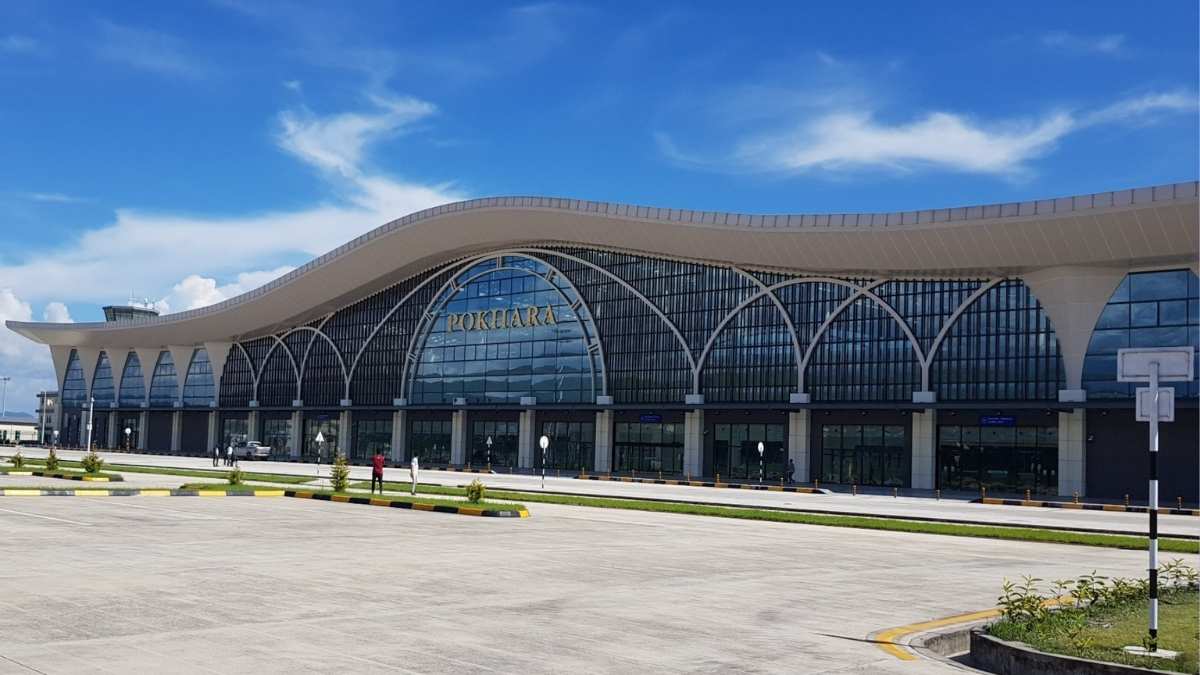
Image via Google
A sum of Rs8.36bn, nearly $74m, is a huge fortune. It is also, according to Nepal’s anti-corruption agency, the amount fraudulently extracted from the public purse during the construction of Pokhara International Airport. In what it calls the biggest graft case in the country’s history, the Commission for the Investigation of Abuse of Authority has charged 55 individuals and one company. The list contains five former ministers, ten former bureaucrats and numerous aviation officials. Their alleged crime is a textbook example of how giant infrastructure projects can be plundered through collusion.
The scheme, as outlined in filings at Kathmandu’s Special Court, was brazen in its simplicity. Pokhara, Nepal’s second city, needed an international airport. The government estimated the cost at about $170m, later revised to $145m. China CAMC Engineering, a state-owned contractor, submitted a bid of over $305m. This was 85% above the official estimate. Yet senior officials pushed to accept it. A final contract was signed for $216m, with the total payable amount rocketing to $244m. The anti-corruption commission claims this inflation had no technical justification. It was rather the product of deliberate coordination between ministers, bureaucrats and the contractor.
Public procurement rules are created to prevent such manoeuvres. They stipulate realistic costing and prohibit accepting abnormally high bids. Here they were circumvented. Three engineering professors from Tribhuvan University provided a review that recommended yanking up the cost estimate and accepting the Chinese bid. This report, the commission says, was technically groundless. It served as a fig leaf, allowing officials to approve a contract that violated the law. The contractor then allegedly set about billing for work that was never done.
The most ugly allegation concerns “phantom” earthworks. To raise the runway, the contract needed CAMC to bring in soil and gravel from five kilometres away. The commission claims the company used earth from the site itself, incurring no transport costs yet charged millions as if it had imported the material. It reportedly could provide no proof that any external soil was delivered. Some $5.5m was paid for these undelivered supplies. A further $4.43m was paid for soil compaction that was either not performed or done inadequately, leading to worries about the runway’s structural soundness.
Nepali officials enabled this, the commission alleges. Former finance minister Ram Sharan Mahat approved the increase in the project’s cost. Former tourism minister Post Bahadur Bogati approved the decision to allow CAMC to continue despite its high bid. Civil-aviation officials approved progress payments and certified substandard work as complete. Variation orders, or charges for extra work, surpassed contractual limits by $5.2m; many lacked necessity, the commission says. A fuel-storage tank was paid for but not built. A ventilation system was billed for twice. Consultancy fees that should have been paid by the contractor were instead covered by the state.
“There was joint collusion to inflate the cost,” says a spokesman for the anti-corruption body. The commission is demanding the recovery of the full Rs8.36bn. The case is notable not only for its scale and the seniority of those charged, but for its international dimension as well. The contractor is Chinese. The project was funded by a loan from China’s Exim Bank. This raises bigger questions about the oversight of such concessional lending and the behaviour of some Chinese contractors abroad. For Nepal it shows an ugly institutional failure in procurement governance.
Pokhara’s airport opened in 2023. It is largely idle, a white elephant in the foothills of the Annapurna range. Its tarmac may bear the weight of aircraft, but its foundations are weighed down by allegations. The case will test Nepal’s judiciary and its political resolve to tackle graft. The outcome will signal whether the country’s systems can curb the plunder of public projects, or whether they stay, as this saga suggests, all too open to abuse. ■




