Illustration: Alberto Miranda
Nepal’s geography dictated its fate for centuries. Cradled by the Himalayas, it depended entirely on India for access to the sea and the world. Today the map is being redrawn: not by cartographers but by cash and concrete. The agent of change is China, whose ascent to economic superpower status has rippled into the mountain kingdom, recasting it from a land-locked state into what its officials now proudly call a “land-linked” one. The relationship, built on four pillars of investment, infrastructure, trade and soft power, confers Nepal tantalising prospects, and new dependencies.
The most visible sign of that change is money. For the past decade or so China has reliably been the biggest source of pledged foreign direct investment in Nepal, often accounting for almost half of the total. In the last fiscal year Chinese firms promised investments worth $472m, dominating sectors like hydropower and cement, among others. The Hongshi-Shivam Cement plant, a joint venture, slashed domestic cement prices and curbed imports. Such capital is transformative for an economy starved of it. “The scale of commitment alters possibilities,” says a finance-ministry official.
Also read: Trump’s America forces Nepal to pick a side
Infrastructure follows finance. China’s Belt and Road Initiative has provided projects Nepal could scarcely afford alone. The Pokhara Regional International Airport, inaugurated in 2023, was built with a $216m soft loan from China’s export-import bank. Chinese contractors expanded Kathmandu’s ring road into an eight-lane expressway. The most ambitious vision is a Trans-Himalayan Multi-Dimensional Connectivity Network, which imagines railways and roads knitting the countries together. A proposed rail link from Kerung to Kathmandu is in feasibility studies; but its promise redefines domestic logistical future, providing an alternative to Indian ports.
Trade ties, though lopsided, are being rewired. Nepal runs a big trade deficit with China, importing machinery, electronics and more. Yet Beijing has granted zero-tariff access for 98% of Nepali goods, targeted at helping tea, herbs and handicrafts find a market of 1.4bn consumers. More fundamentally, a 2016 transit agreement gave Nepal access to four Chinese seaports and three land ports, breaking India’s monopoly on third-country trade. Cheaper Chinese imports also fuel Nepal’s own digital and construction booms.
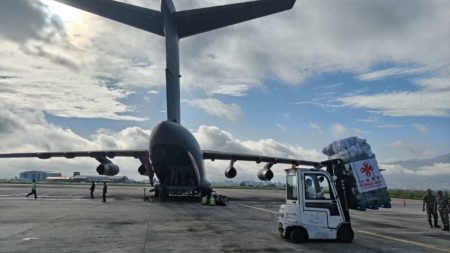
The human links are deepening, too. China is Nepal’s second-largest source of tourists (after India). And 2025 has been designated “Visit Nepal Year” in China to spur visits. After the pandemic, Chinese arrivals rebounded sharply, hitting 101,879 last year (though 4.1% below 2019 levels). In times of crisis, China has positioned itself as a reliable first responder. It pledged $483m after the 2015 earthquake, funding the restoration of historic sites and schools. During the pandemic, it supplied millions of vaccine doses when other sources dried up. Silently it also cultivates influence: above 6,400 Nepali students study in China, many on government scholarships. In the meantime Confucius Institutes in Kathmandu teach Mandarin to future guides and businesspeople.
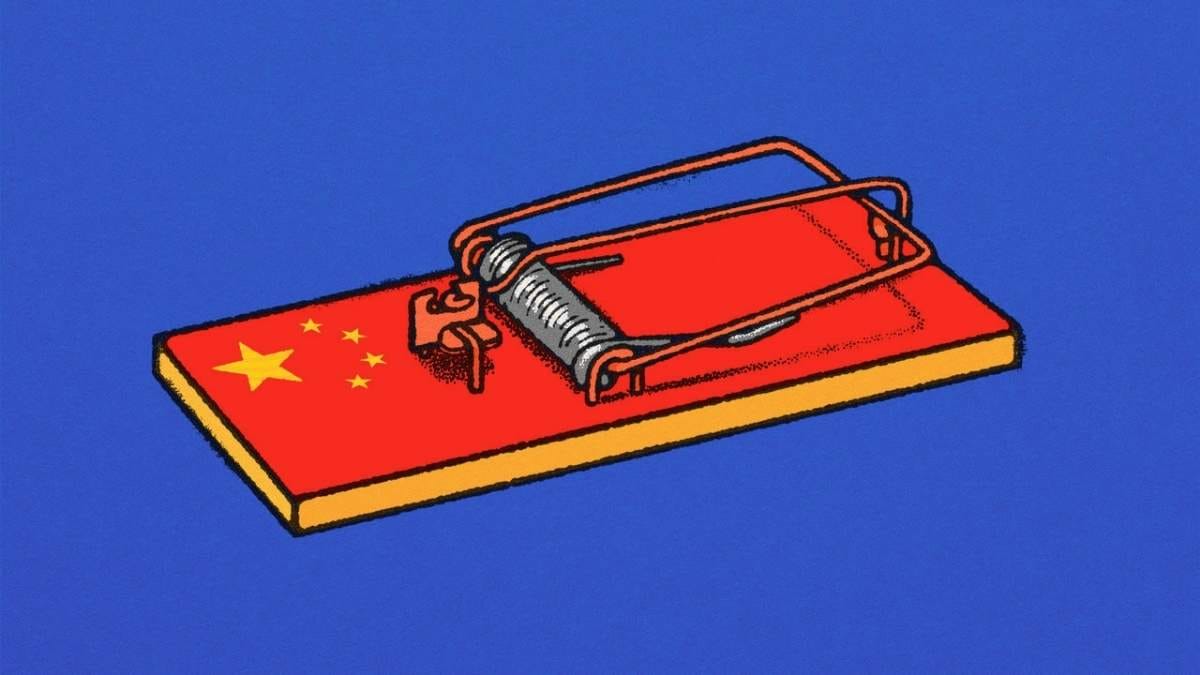
For Nepal the benefits are investment and options, as well as attention. Yet influence purchased is influence owed. The loans for glittering projects add to a debt burden that must be serviced. The infrastructure, though modern, may not always meet local needs. Pokhara’s airport has trouble attracting international flights. And as Nepal balances between two giants, its newfound agency rests on a fragile equilibrium. China’s rise has given it a second act on the world stage. Yet every gift from a great power comes with expectations. In the high Himalayas the view is expanding but the footing is precarious. ■