Image: Online Khabar
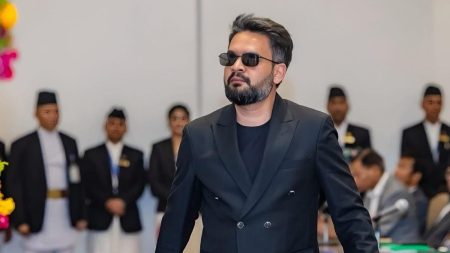
“If I fail to build the nation properly in five years,” Harka Sampang recently told a rapt audience in Kathmandu, “I myself will become a refugee.” For a man who attained power by breaking rules, the prospect of simply walking away from them seemed to come a little too easily. Mr Sampang, the mayor of Dharan and now a national political aspirant, was offering a characteristically bold pledge. Yet the line also betrayed a transactional view of authority: leadership as a temporary bet, with a personal exit plan already in mind.
His climb began as a classic tale of civic rebellion. Dharan, a city in Nepal’s east, had grown weary of Kathmandu’s rituals and inefficiencies. Drinking water was scarce, bureaucrats were sluggish. And political parties offered only banners and blame. Mr Sampang presented himself as the untainted outsider, a man with no political machinery who would cut through the rot. He made water his crusade. Voters, accustomed to disappointment, decided to try disruption.
Once in office, he treated the municipal charter as a set of suggestions. When he travelled to Britain and needed an acting mayor, the law was blunt: the deputy mayor must take charge. Mr Sampang appointed his uncle-in-law instead. The deputy mayor went to court and won. The mayor fired back on Facebook, declaring he had not been elected by any court and warning judges not to provoke him into foul language. In other words, he seemed to say legal limits are for other people.
This rebelness defined his marquee project, the Shram Sanskriti Park, intended to celebrate civic labour. It became a lesson in improvised construction. The project bypassed the municipal executive and ignored procurement rules. What’s more, it took shape on protected forest land. Gravel was hauled illegally from a river. Supporters called it noble volunteerism; the Auditor General later found over eleven million rupees of unreported public spending. A flood damaged the site. The surprise was not the flood, but that no one had paused to ask why building a park on a watershed might be risky.
The Sardu River basin, Dharan’s main water source, is under Supreme Court protection. In 2023 the court banned construction there. Mr Sampang treated the order as background noise. Bulldozers kept clearing slopes. When criticised, he dismissed the ruling as an urban fantasy drafted by people who had never carried a pipe. His online monologues recast environmental safeguards as plots by “anti-development” forces.
Water made him mayor yet his approach to it has been deeply corrosive. Long before taking office, he vandalised a site linked to an Asian Development Bank water project, convinced it was a scam. He was arrested and fined. As mayor he declared himself chair of the town’s water board without procedure. Volunteer groups close to him launched their own water schemes, collecting donations outside municipal accounts and treating expense reporting as optional. Some projects spent generously on food and wages while advertising themselves as unpaid labour. Pipes were laid along forest floors, exposed to fires that later melted them. Engineers who suggested cheaper, sturdier alternatives were waved aside.
The financial trail is murky. Millions of rupees were raised for water schemes and a grand ethnic statue Mr Sampang promoted. Donations flowed not into municipal accounts but into a private NGO and a personal bank account, according to news reports. Approvals, receipts and donor logs were skipped. A deputy mayoral candidate allied to him began advertising nearby land plots; their value rose as bulldozers cleared ground for the statue. Residents did not need a detective to connect the dots.
None of this is entirely new. In the mid-2000s Mr Sampang was exposed as part of a gang posing as Maoists and extorting money from locals. The party’s youth wing humiliated him publicly before he left for Afghanistan. He later reappeared in Dharan as an anti-corruption crusader. Reinvention is common in Nepali politics, but the habits that carry a person through one phase often linger.
A recognisable governance model has emerged. It sidelines formal institutions for personal networks. It treats legal procedures as friction. It mobilises loyalists as political muscle. It uses identity politics when convenient and contempt when challenged. It prefers private fundraising over public transparency. It describes criticism not as democratic scrutiny but as sabotage by jealous insiders.
Scaled to the national level, these instincts would produce a leader who dominates institutions rather than works through them. Nepal’s courts, already stretched, would face a prime minister who has openly mocked their authority. The bureaucracy, demoralised by years of interference, would confront a chief executive who treats compliance as optional. Local activists loyal to him would find fresh purpose in policing dissent. Parliament, fractured and distracted, would struggle to contain a leader who relishes unilateral action.
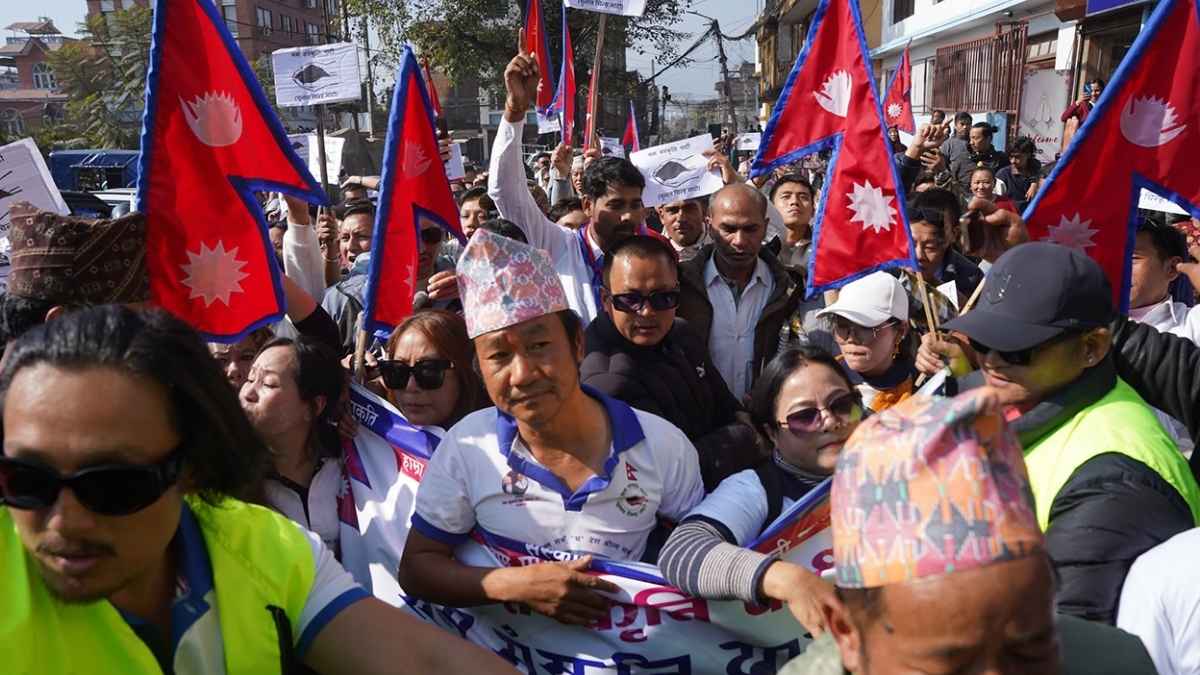
Yet he resonates with many Nepalis. The mainstream parties have offered little renewal and less humility. Corruption investigations sputter, as well as public services falter and economic prospects are fragile. In such an environment a man who climbs hillsides with pipes and speaks in raw, moralistic terms can appear more authentic than any polished operator in Kathmandu. When people are thirsty, the symbolism of effort matters almost as much as the water.
His supporters see urgency in a sleepy political culture. They hear an unfiltered man rejecting the hedged language of elites. They see action where others see recklessness. For them his harsh edges are evidence of seriousness rather than menace. Many believe only someone unfettered by party machinery can rescue the country from stagnation.
The danger is that impatience, when scaled up, seeks shortcuts. A leader who cannot abide municipal regulations is unlikely to find national ones more tolerable. A politician who collects donations in private accounts will not suddenly embrace transparency with billion-rupee budgets. A mayor who rallies loyalists to intimidate critics may rely on similar tactics when the stakes are national.
Nepal has endured enough cycles of hope and disappointment to recognise the early signs of illiberal drift. Charisma is no substitute for institutions, and institutions cannot survive long when treated as stage props. Whether Mr Sampang rises further will depend as much on the failures of the mainstream parties as on his own skill. But the country should not pretend it has not already glimpsed his governing instincts. They are on full display in Dharan. A system built on personal force can run for a while. It rarely ends well. ■