
Image: Online Khabar
In a small park in Dharan, a city in Nepal’s eastern hills, there is a lesson in what passes for a political miracle these days. The space is neat, dotted with exhibits on local history. Its origin is what gives it significance. It was built by the hands of Harka Sampang and volunteers before he was anyone of political consequence. When he ran for mayor, his symbol was a walking stick. For his current bid for national office, the symbol of his new party is a handful of soil. The shift carries weight: from a tool offering support, to the very foundation from which things must grow.
Today as Nepal stumbles towards national election, that handful of earth is being thrown in the face of the country’s entire political class. Mr Sampang’s pitch, a blend of puritanical anti-corruption crusade and mystical nationalism, is resonating with those weary of decades of failure.
Since a civil war ended in 2006, Nepal has cycled through fragile coalition governments led by the same rotating cast of parties—the Nepali Congress, the Maoists and the Marxists. Their primary achievement has been to perfect a system of patronage, siphoning off billions of dollars in foreign aid and remittances from Nepalis working abroad. The capital, Kathmandu, buzzes with conspiracy and deal-making while basic services elsewhere are threadbare. For the young, the path often leads straight to an airport departure lounge.
Mr Sampang, who spent six years as a migrant worker himself, channels this bitterness into a philosophy he calls shram sanskriti, or labour culture. His speeches are moral exhortations rather than policy manifestos. He vows that if Nepal is not “built” within five years, should he win the premiership, he will become a refugee himself—a startling gambit of personal accountability. He refers to ministers as “political thugs”. His solution is a revolution of the callus. Nation-building, he preaches, comes from the collective sweat of citizens working their own land, rather than from foreign loans or bureaucratic plans. Every Nepali must become a shramdata, a labourer-contributor. Leadership is invalid without physical toil.
This is a direct assault on the economy of dependency. He rails against what he calls a “donation-based” model, criticising foreign-funded projects like the American Millennium Challenge Corporation grant as threats to sovereignty. True development, he argues, springs from using Nepal’s own soil and resources, guided by its own culture. Modernity is not about importing Western habits but about fusing technology with tradition. It is a vision of self-reliance that is as much spiritual as it is economic, appealing to a deep-seated pride.
His Shram Sanskriti Party, for now, is still a small vessel for this big idea. The practical challenges are immense. A modern state cannot run on volunteerism alone: it needs complex institutions and large-scale investment, as well as international engagement. His suspicion of all things foreign could veer into costly isolationism. The sheer logistical difficulty of applying a DIY ethos to a country of 30m people, with its rugged geography and ethnic complexities, is daunting.
Yet his power comes from the way he eats into the old guard’s legitimacy, rather than from any quick electoral mathematics mathematics. He has already proven, as mayor, that a candidate with no machine, but a record of tangible local work and uncompromising rhetoric, can defeat established party favourites. Now, with his handful of soil, he reinterprets the national question from “Which coalition will you choose?” to “What have you actually built, and upon what foundation?” It is a question that leaves most of his rivals silently empty-handed.
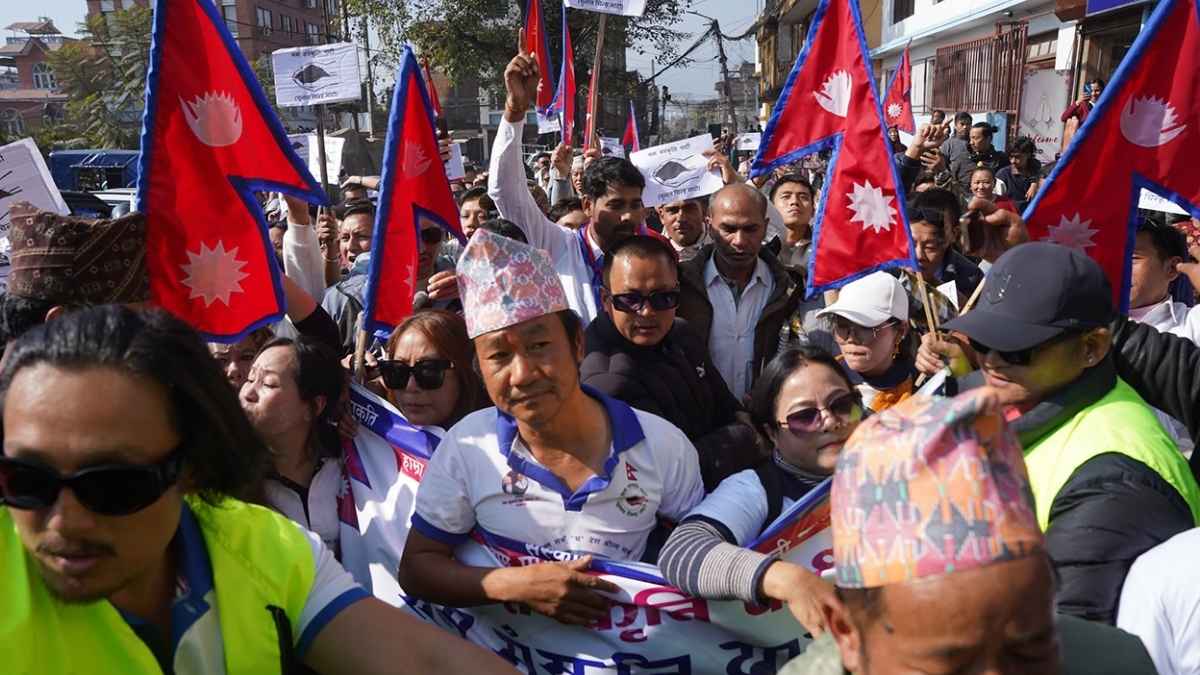
The established parties hope his appeal will not travel beyond provincial protests. They may be underestimating the hunger for a politics that feels morally clean and nationally proud. Mr Sampang offers a politics of redemption through labour, rooted in the earth. It is a potent, if improbable, gospel. Amid a people tired of being let down, the man offering a handful of soil is at least speaking of a different kind of ground. ■




