
Burning contracts not cash
Imagine a bridge that takes 14 years to build and yet remains half-finished. Take the Kankai bridge in Jhapa district, overseen by the boss of the national builders’ lobby. Or a six-kilometre stretch of road that, after four years, is only a quarter done. In Nepal such tragedies are not shocking; in fact they are the norm. The country has hundreds of stalled infrastructure projects, collectively worth an estimated Rs32-35bn ($240m-$260m), that have languished for years or even decades. You might assume the problem is a lack of funds or blueprints. Not so fast. It stems from a culture of institutionalised delay, in which contracts are treated as licences to collect advances and then dither, protected by political patrons.
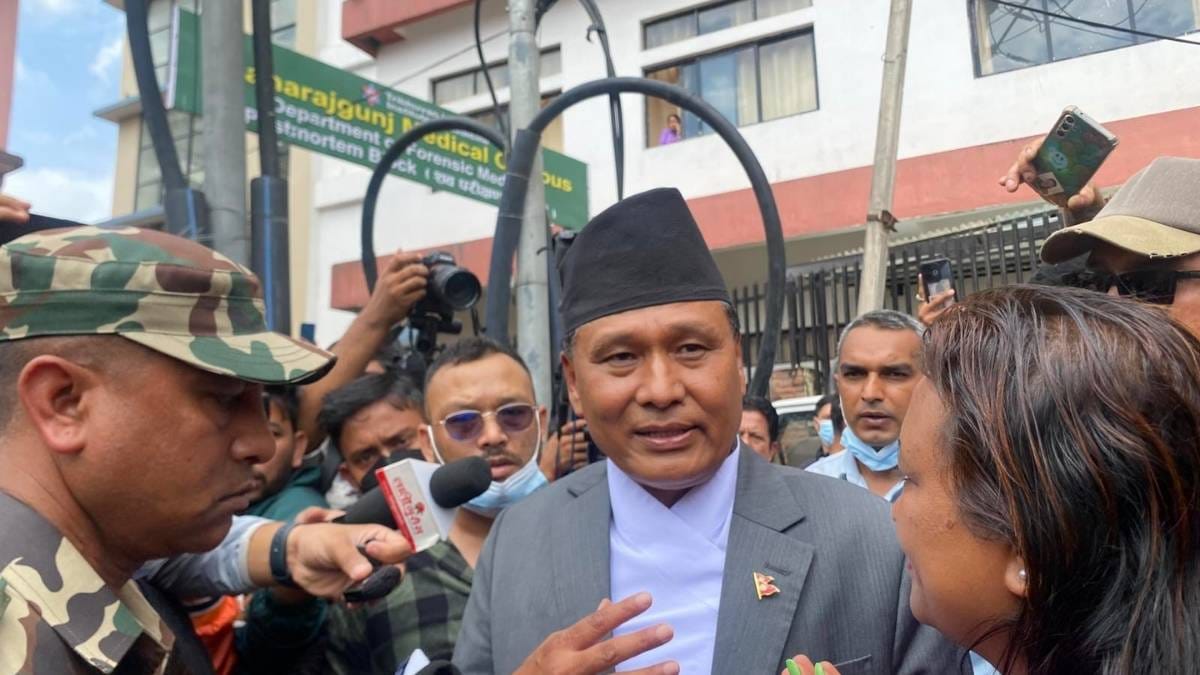
Now one (politically ambitious) minister, and the founder of the Ujjyalo Nepal Party, Kulman Ghising, is wielding a sledgehammer against this entrenched system. His fight reveals why poor countries stay poor, and what it takes to change.
Nepal’s infrastructure farce would be laughable if it were not so tragic. Official figures list over 300 chronically stalled projects. An anti-corruption commission once found more than 1,800 frozen contracts. The script follows a well-worn path: a well-connected firm wins a tender, pockets the mobilisation cash, then uses political cover to avoid ever completing the job. Bureaucrats, fearing reprisals, grant endless extensions. The cost is not measured only in wasted rupees. It is also seen in stunted growth, as well as lost harvests and the daily misery of citizens navigating impossible roads. It is a vast, legalised racket that operates in plain sight.
Enter Mr Ghising, a bureaucrat turned minister who heads three big development portfolios. He has done this before. As head of the national power utility, he famously ended the country’s chronic electricity blackouts. Now he is taking on a trickier task: making the state actually function. He is terminating the contracts of the most egregious laggards (so far his ministries have terminated 38 contracts worth about Rs2bn). A bridge that sat untouched for years? Gone. A massive irrigation project that managed only 10% progress in three years notwithstanding swallowing billions? Cancelled. He is not passing new laws: he is just enforcing the existing rules, which is in itself a revolutionary act.
Unsurprisingly the construction mafia is squealing. The Federation of Contractors’ Associations of Nepal (FCAN) cries foul, alleging bias and selective punishment. It claims terminations could trigger a catastrophic chain reaction, jeopardising up to Rs100bn in bank guarantees and destroying supply chains. Mr Ghising calmly dismantles their hype. The actual sums at risk are a fraction of what they claim, he points out. Forfeiting a performance bond does not cause an economic catastrophe. Rather it is the recovery of public money from those who failed to deliver. The outrage speaks for itself: it is the sound of a privileged class that has grown accustomed to taking money without ever having to finish the job.
But sacking lazy contractors is the easy part. The real disease runs rotten. Mr Ghising identifies two other cancers: arbitrary budget freezes and politically motivated, idiotic projects. The finance ministry under the interim government of Sushila Karki, he says, has frozen over Rs100bn (roughly $750m) of development funds so far in a ham-fisted austerity drive, paralysing even sensible, approved work. Meanwhile billions more are earmarked for local pet projects—multi-storey car parks in villages with no cars as well as roads through protected forests where approvals would take a decade. This is the random spraying of cash to buy political favour. Until this stops any clean-up will be temporary.
Here is the painful contradiction. Nepal is not short of money, he notes. It swims in remittances, roughly $11bn a year. It has a pool of domestic savings earning paltry returns in banks. What it lacks are functioning channels to turn that capital into working infrastructure. Mr Ghising talks of harnessing just 10% of remittance flows to fund power plants and roads. He has three big hydropower projects, ready to go after years of delay, that could be funded this way. The blueprint is set out. The blockage is political and institutional.
That’s why Mr Ghising’s lonely crusade matters so much. He is targeting a system in which delay is not a failure but a feature. Unfinished projects are convenient political tools: they create endless opportunities to distribute contracts, as well as renegotiate terms and extract rents. Finishing something closes those taps. The minister’s bet is that the cost of confronting this system is lower than the cost of letting it rot the state further. But he cannot win by himself. He needs to force accountability onto the bureaucrats who delay payments and clearances, and onto the politicians who treat the treasury as a pork barrel.
So what is to be done? Other countries facing similar plagues have lessons to teach. Publish ruthless, real-time data on every project’s status and responsible officials. Link future contract awards to a firm’s past performance—a simple idea that remains rare. Protect technical civil servants from political retaliation. And most crucially create a political constituency for completion. Citizens should know exactly which bridge their MP has left to rust.
Mr Ghising has shown that one determined man can start to clear the rubble. But a one-man bulldozer is not a sustainable solution. For Nepal to truly rebuild it needs systems that outlast any single minister. It needs to reward those who deliver and not those who delay. The alternative is to continue as a country of perpetual beginnings, where the scene is littered with testaments to good intentions and terrible execution. The bridge to nowhere is a metaphor for a state that has forgotten its purpose. Building a road to somewhere would be a start. ■




