
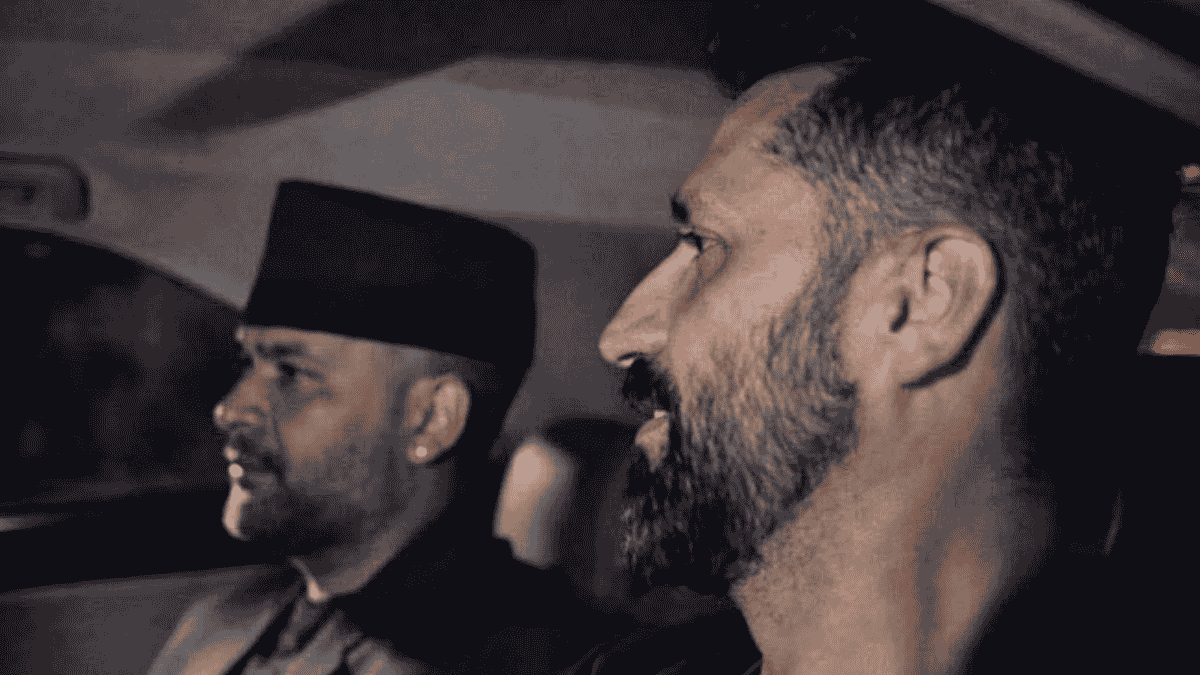
Image via Facebook
The winter air in Kathmandu is usually thick with dust and the smell of exhaust, but lately a different kind of haze has settled over the city’s political corridors. It is the fog of a movement that is trying to remember what it stands for. The drama of Nepali politics for years has been a dreary cycle of ageing revolutionaries and careerist bureaucrats trading seats in a game of musical chairs that never seems to end. The public, particularly a younger generation with little memory of the civil war and even less patience for its veterans, has grown weary. Into this exhaustion stormed Rabi Lamichhane and Balen Shah, two men who promised to burn the old scripts. But as a recent six-hour meeting between them suggests, starting a fire is much easier than building a house.
Mr Lamichhane, a former television host who once broke a world record for the longest talk show, is the face of the Rastriya Swatantra Party (RSP). His rise was meteoric, fueled by a populist rage against the “syndicate” of traditional parties. Yet his trajectory hit a big bump in the form of a jail cell. Mr Lamichhane found himself entangled in a sprawling scandal involving cooperative fraud—the alleged misuse of savings belonging to some of the country’s poorest citizens. His release on bail of Rs27.48m (roughly $193,000) last week was not exactly an acquittal, but he has treated it like a victory parade.
Upon his release, Mr Lamichhane did not adopt the hushed tones of a man under legal scrutiny. Rather he returned to the stage with a defiant roar, reframing his detention as a badge of honour. In his telling, the entrenched elites are not prosecuting him for financial impropriety, but for the sin of being effective. It is a classic populist pivot: the legal system is portrayed as a shield for a corrupt establishment rather than as an arbiter of truth. To his base, he remains a martyr. To his critics, he is becoming the very thing he once denounced: a politician who views the law as a mere suggestion.
That contradiction between his anti-corruption image and his own legal troubles is what made his marathon meeting with Balen Shah so talked-about. Mr Shah, the structural engineer turned rapper turned Mayor of Kathmandu, represents a different flavour of the “alternative” movement. Whereas Mr Lamichhane is a man of the microphone, Mr Shah is a man of the bulldozer. He has gained a cult following by clearing the city’s clogged pavements and taking a combative and unilateral approach to municipal governance. If Mr Lamichhane has the party machinery and the gift of the gab, Mr Shah has the technocratic credibility and, crucially, a reputation that is still relatively clean.
The six-hour conversation was ostensibly an “ice-breaker”, conducted in private and away from the cameras that both men usually crave. It was a recognition of a cold mathematical reality: if the alternative forces remain fragmented, they will be picked off one by one by the old guard. In the 2022 elections, the RSP shocked the establishment, but it did so as a protest vote. To govern or even to survive the next electoral cycle (a general election is set for March 5th), these outsiders need a unified front, particularly with new parties such as Kulman Ghising’s Ujyalo Party and Harka Sampang’s Shram Sanskriti Party emerging across the country.
The internal logic of the meeting suggests a potential trade. Some within the RSP have floated the idea of Mr Shah becoming the prime ministerial face of a grand coalition while Mr Lamichhane remains the political mobiliser-in-chief. It is a tempting arrangement. Mr Shah provides the moral distance from the cooperative scandals, while Mr Lamichhane provides the grassroots muscle. Yet such a partnership would need a level of personal ego-suppression that is rare in any capital, let alone one as volatile as Kathmandu.
There is a bigger contradiction at play here. The more these “alternative” figures behave like traditional politicians—forming alliances, negotiating seat-sharing as well as managing legal crises—the more they risk diluting the very brand that made them popular. The voters who flocked to the RSP and Mr Shah were not looking for a slightly more efficient version of the old parties: they were looking for a rejection of the system itself. By seeking to institutionalise their movement, the outsiders are stepping into a trap. They must build a structure to win, but the act of building it makes them look like the builders they intended to replace.
Time is not on their side. The established parties, though discredited, are remarkably resilient and possess deep patronage networks that can survive a few seasons of populist discontent. They are watching the legal troubles of Mr Lamichhane and the municipal struggles of Mr Shah with a quiet, cynical satisfaction. They know that in Nepal, the mountains are permanent, but the political weather changes fast.
The six-hour meeting was a stress test for a new kind of politics. It tested whether personal trust can exist between two men who have built their careers on being lone wolves. It also tested whether a movement built on grievance can transition into a movement built on governance. If Mr Lamichhane and Mr Shah can find a way to merge their brands without losing their souls, they might actually change the country. If they cannot, their meeting will be remembered as nothing more than a long afternoon spent talking about what might have been. The old guard would be well advised to keep their bulldozers ready; the outsiders are still trying to figure out where to dig. ■




