Image: Li Lin/China News Service/VCG via Getty Images
AT THE EASTERN edge of the Tibetan plateau, the Yarlung Tsangpo does something rivers are not meant to do. It hurtles east, then suddenly doubles back on itself, carving a gorge so deep and abrupt that the land seems to fold. Over 200 kilometres the river drops some 2,000 metres, plunging through a canyon three times deeper than America’s Grand Canyon before escaping the Himalayas and flowing on, rebadged, as the Brahmaputra. For centuries it has been a geographical curiosity. China now wants to turn it into the most powerful power station ever built.
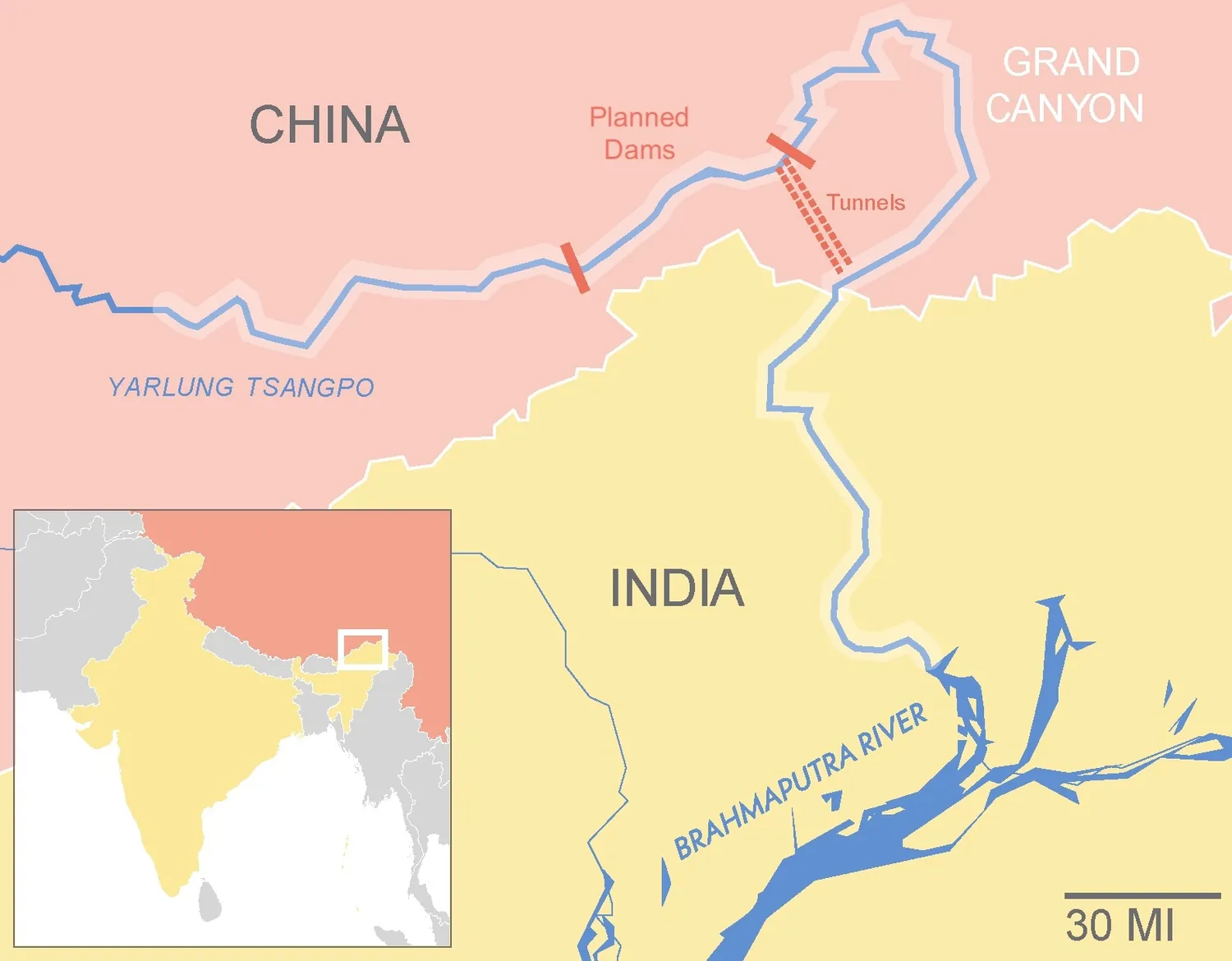
The project, formally launched in July 2025, carries a price tag of roughly $167bn. If completed as planned, it would generate around 60 gigawatts of electricity, three times the output of the Three Gorges Dam (currently the world’s largest) and more than Britain consumes in a year. That scale alone explains the attention. What has made the scheme controversial is where it sits, how it will work and what it implies about China’s view of risk, power and neighbours.
Despite the name, there will be no single heroic slab of concrete. Engineers close to the project describe a far more invasive act: the river itself is to be taken apart and reassembled. Its flow would be checked by an upstream dam, seized again at the edge of the gorge, then hurled through tunnels bored deep into the mountains. Turbines would turn far below ground, sealed in rock, before the water is returned downstream, altered but unseen. China has attempted similar feats at the Jinping hydropower complex. It has never done so this high, in terrain this unstable, or on a scale this large.
The setting pushes engineering to its limits. The Great Bend sits where six tectonic plates grind against one another. In 1950 the area was struck by a magnitude-8.6 earthquake, among the largest ever recorded. The mountains are still heaving upwards. Landslides are common. Winters are brutal. Oxygen is scarce. Machines break more easily at altitude, and concrete behaves differently in freezing air. Even without a dramatic collapse, critics worry about slower damage: chemicals leaching into rock, water seeping where it should not, slopes weakening over decades rather than days.
That China is attempting this now says as much about its economy as its engineering. At four to five times the cost of Three Gorges, the dam arrives during a period of weak domestic demand and industrial overcapacity. Construction-heavy sectors have few better customers than the state. Cement, steel and tunnelling equipment will be consumed in heroic quantities. Markets noticed: shares in state-linked builders and materials firms jumped after the announcement. The instinct is that when growth falters, China builds.
Beijing wraps the project in green language. Officials say it could cut up to 300m tonnes of carbon emissions a year by displacing coal-fired power. It would supply electricity to data centres, electric-vehicle plants as well as the servers that train artificial-intelligence models, all hungry consumers in an economy that is digitising faster than it is decarbonising. If it works, the dam would become a showpiece for renewable power at extreme scale, strengthening China’s claim to climate leadership at a moment when others are retreating.
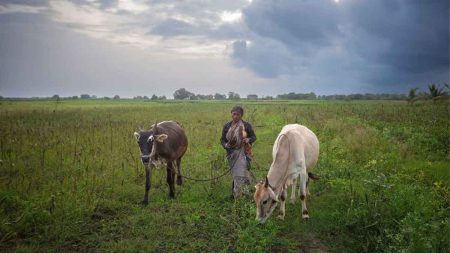
The trouble is that the river does not end at China’s border. Once it leaves Tibet, the Yarlung Tsangpo becomes the Brahmaputra, sustaining farms, fisheries and floodplains in India and Bangladesh. Around 40% of the river’s fertile sediment is thought to originate in the Great Bend. That silt replenishes fields, props up riverbanks and helps keep deltas from sinking into the sea. Alter its flow or timing and the effects travel far. New Delhi and Dhaka have asked for detailed designs, flow data and guarantees. What they have received so far is reassurance instead of transparency.
Chinese officials say that the absence of a giant reservoir means there is little scope to hold back water deliberately. The same volume, they say, will flow downstream. On paper that is true. In reality control of upstream infrastructure confers leverage even when it is not exercised. Data-sharing with neighbours has been poor. The border with India remains disputed. Suspicion fills the gaps. India has responded by reviving plans for its own large dam downstream, a move that risks a cascade of concrete through one of Asia’s most fragile river systems.
History provides reasons for unease. On the Mekong, China’s 12 upstream dams have reduced seasonal flood peaks by up to a fifth, even thousands of kilometres away. Dry-season flows have been reversed, producing sudden surges that confuse farmers and damage fisheries. China has been reluctant to share real-time operating data, leaving downstream communities guessing. The Brahmaputra basin is larger, steeper and more volatile. Small changes there travel fast.
There is also the question of Tibet itself. Big dams in China have a habit of displacing people with limited consultation. Three Gorges uprooted 1.3m residents and submerged entire ecosystems. Tibetan advocacy groups fear a repeat, compounded by the fragility of high-altitude environments that recover slowly, if at all. In a region where politics is already tight, the issue of consent looms as large as that of concrete.
Supporters see the project as a triumph of human ingenuity, proof that China can master nature on a continental scale while cleaning up its energy mix. Critics see geological hubris, ecological risk pushed downstream and power exercised without openness. Both are partly right. Like Three Gorges before it, the Great Bend project is as much about making a statement as it is about producing electricity.
What happens next will ripple far past the Himalayas. Success would redefine the limits of renewable energy and the risks states will accept for decarbonisation. Failure would spill over—rivers ignore borders and errors at the source travel fast. In the meantime the Yarlung Tsangpo still flows freely. Soon much of it will vanish into rock, carrying some of China’s boldest wagers in decades. ■